
SIITUA III to Gather International Researchers on Territory, Urbanism, and Architecture in Lima
The third edition of the International Seminar on Research in Territory, Urbanism, and Architecture (SIITUA III) will take place in Lima, organized by Ricardo Palma University and U.Llaqta Research Journal. The event brings together scholars from seven countries to discuss habitat, public space, materiality, and enviro
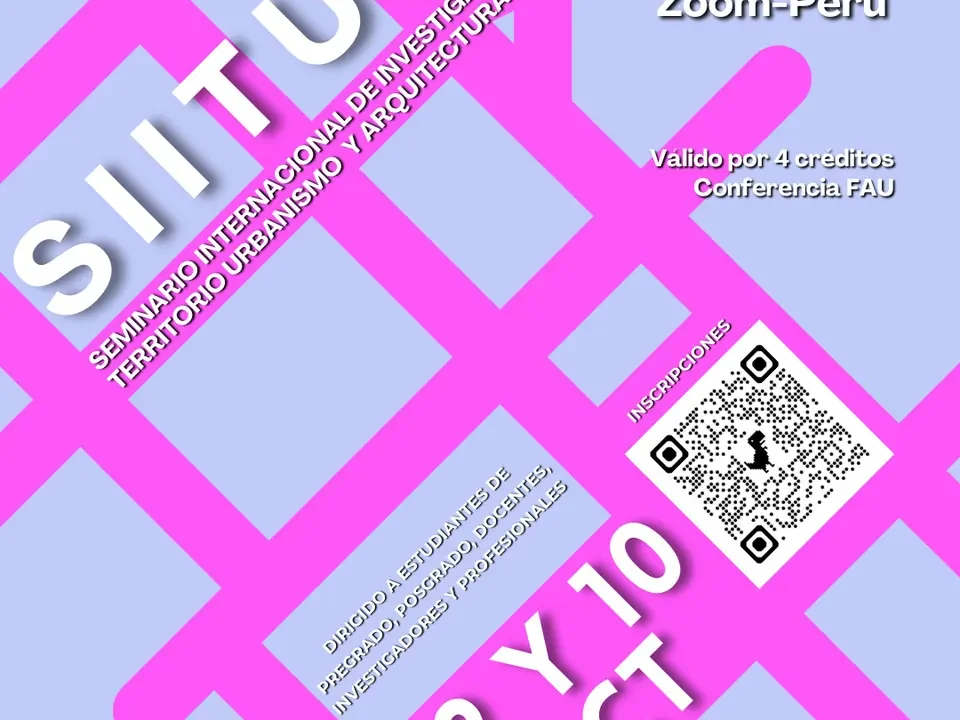
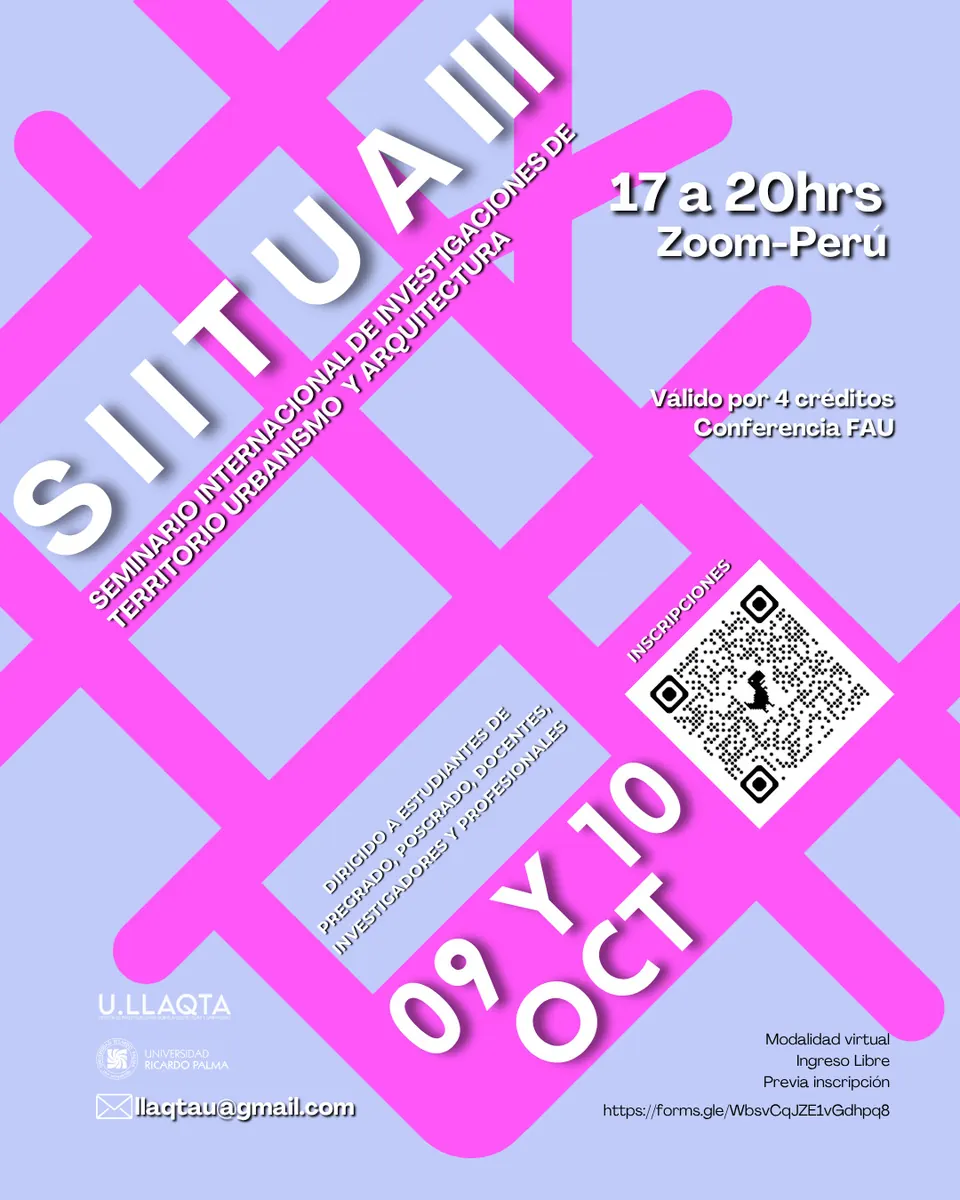
The third edition of the International Seminar on Research in Territory, Urbanism, and Architecture (SIITUA III) will convene researchers, educators, and professionals from seven countries in Lima, Peru. Organized by Ricardo Palma University and the U.Llaqta Research Journal, the seminar aims to share current research and critical reflections on architecture, urbanism, territory, and the environment.
Scheduled to take place over two days, SIITUA III is structured around four thematic blocks: Habitat and Public Space, Architecture and Materiality, Urbanism and the City, and Territory and the Environment. These categories are designed to cover a broad spectrum of contemporary urban and architectural challenges, from micro-scale design interventions to macro-level territorial planning.
Participating countries include Peru, Colombia, Spain, Mexico, Bolivia, Chile, and Luxembourg, reflecting a mix of Latin American and European academic perspectives. The seminar provides a platform for cross-border dialogue, allowing researchers to compare methodologies and findings across different geographical and cultural contexts.
Key facts
| Detail | Information |
|---|---|
| Event | 3rd International Seminar on Research in Territory, Urbanism, and Architecture (SIITUA III) |
| Organizers | Ricardo Palma University, U.Llaqta Research Journal |
| Participating countries | Peru, Colombia, Spain, Mexico, Bolivia, Chile, Luxembourg |
| Thematic blocks | Habitat and Public Space, Architecture and Materiality, Urbanism and the City, Territory and the Environment |
Habitat and Public Space
The first thematic block will examine the relationship between built environments and public life. Topics include public space and thermal comfort, urban regeneration, and the design of inclusive, care-oriented architecture. Researchers will present case studies on how public spaces can be adapted to improve social interaction and environmental performance, particularly in dense urban settings.
Architecture and Materiality
This block focuses on the physical substance of buildings and their construction processes. Presentations will address industrial heritage, artisanal production techniques, and the material choices that define architectural identity. The session aims to bridge traditional craftsmanship with contemporary design challenges, exploring how materiality influences sustainability and cultural continuity.
Urbanism and the City
Urban growth patterns, densification strategies, and the conversion of industrial areas into new urban districts are central to this block. Researchers will discuss social housing models, the transformation of obsolete infrastructure, and the role of urban planning in fostering equitable development. The session responds to pressing issues in many Latin American cities, where rapid urbanization often outpaces formal planning.
Territory and the Environment
The final block tackles large-scale environmental concerns, including territorial vulnerability, water conservation, risk management, and adaptation to glacial retreat. These topics are particularly relevant for Andean and coastal regions facing climate-related pressures. The seminar will explore how territorial research can inform policy and community-based adaptation strategies.
Why this matters for architecture and urbanism professionals
For practitioners and academics in architecture, urban planning, and landscape design, SIITUA III offers a rare opportunity to engage with peer-reviewed research from multiple countries in a single forum. The seminar’s focus on both local case studies and comparative international analysis provides actionable insights for professionals working on similar challenges in their own contexts. Topics such as thermal comfort in public spaces, industrial heritage conversion, and glacial retreat adaptation have direct implications for project design, policy advocacy, and community engagement.
The event also strengthens academic networks between Latin American and European institutions, potentially opening pathways for future collaborative research, student exchanges, and joint publications. For professionals based in or working with Peru, the seminar provides direct access to the latest research from local universities and international partners.
Source: ArchDaily, https://www.archdaily.com/1185472/siitua-iii-international-seminar-on-research-in-territory-urbanism-and-architecture
Source
ArchDaily Original publication: 2026-09-21T12:00:00+00:00
Related news

Christopher Kane brings streamlined, heritage-driven vision to Mulberry in London Fashion Week debut
The Scottish designer presented his first collection for the British leather goods house at London Fashion Week, blending sharp tailoring, archival references…
Read more
When Film Directors Become Interior Designers: Guadagnino, Lynch, Anderson and Almodóvar Step Off Screen
From Luca Guadagnino’s Zara Home collection to David Lynch’s Paris club and Wes Anderson’s train carriage, a wave of collaborations is blurring…
Read more
Jesus Mari Lazkano Examines Changing Landscapes Through Painting and Animated Film at Basque Luxury Studio
The Basque artist’s exhibition ‘Azken Natura’ brings together six large-scale paintings and a 22-minute animated film that traces the melting of the…
Read more
Glenn Spiro opens intimate jewellery atelier in Mayfair with designer Valerie Name Bolaño
The London jewellery house’s new boutique at 26 Bruton Street blends antiques, bespoke furniture and a monochrome palette to create a residential…
Read moreRelated wiki

Adaptive Reuse in Architecture
Reference page for reuse, retrofit, conversion, embodied carbon and design constraints.
Read more