Augmental MouthPad Public Sales Bring Tongue-Controlled Cursor to US Users
The San Francisco startup Augmental opens public sales of its hands-free MouthPad, a custom-fit dental retainer that turns tongue gestures into cursor control, alongside a new wearable microphone called VOX.
By Paionia7 Staff
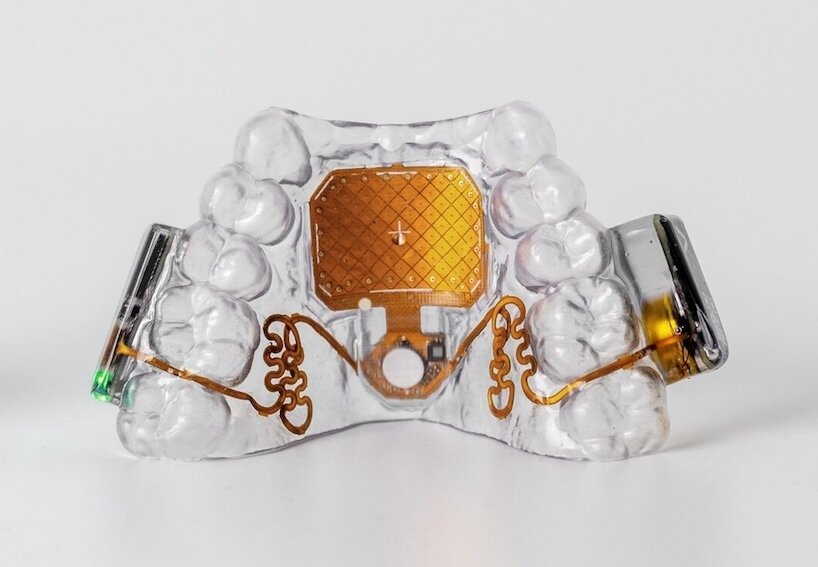
Three years after revealing its experimental tongue-controlled interface, San Francisco-based startup Augmental is opening public sales of the MouthPad across the United States. The device, which resembles a slim dental retainer fitted over the upper teeth, allows users to control a computer cursor by moving their tongue across a pressure-sensitive trackpad and by using head gestures. What began as an early access program in 2024 now counts more than 100 regular users, including students, artists, gamers and professionals, some of whom wear the device for up to 16 hours a day.
The public launch arrives alongside VOX, a wearable microphone pendant that Augmental calls an “invisible keyboard” and that can be paired with the MouthPad to enable hands-free voice input without speaking aloud.
From early access to public sales
The MouthPad was first reported by design media in 2023, when Augmental began testing the concept with a small group of users. After a year of refinement, the company opened an early access program in 2024. The device is now available for purchase by anyone in the United States, with Augmental reporting that more than 6,300 people have joined its waiting list. The company lists surgeons, technicians, pianists, boxers, mechanics and parents among those seeking access to hands-free digital control.
The shift from experimental prototype to a market-ready product reflects the growing demand for alternative input methods, particularly for people with limited hand mobility or those who need to keep their hands occupied. The MouthPad is currently sold for $1,400, excluding the cost of a required intraoral dental scan used to create each custom-fit unit.
How the MouthPad works
The MouthPad is moulded from dental resin and weighs approximately 10 grams. It fits over the upper teeth, with a pressure-sensitive trackpad positioned against the palate. The user’s tongue acts as a stylus: pressing, swiping and tapping on the trackpad translates into cursor movements, clicks and scrolls. Integrated motion sensors detect head movements, allowing users to reposition the cursor by tilting or rotating their head. A sipping motion provides an additional input command.
The device connects to phones, tablets and computers via Bluetooth. Battery life exceeds seven hours per charge, and the dental-resin construction is designed for daily wear. The company says the device is manufactured individually for each user based on a digital scan of their mouth.
Second generation expands functionality
The second-generation MouthPad goes beyond basic cursor control. Tongue gestures can now be programmed to trigger keyboard shortcuts, such as copy, paste or application switching. The pressure-sensitive trackpad can be remapped to WASD-style controls for gaming, 3D modelling and other software that uses keyboard-driven navigation. The updated hardware also supports multi-device pairing, allowing users to switch between a phone, a tablet and a computer by pressing a physical button on the device.
According to Augmental, a user named Tomás Baptista achieved 10.47 bits per second in a cursor speed-and-accuracy test. The company compares this performance to state-of-the-art implanted brain-computer interfaces, but notes that the MouthPad achieves comparable pointer control without requiring surgery.
VOX: a wearable microphone for silent dictation
Alongside the MouthPad, Augmental introduced VOX, a wearable microphone pendant that captures sound traveling through the air and the user’s body. The design is inspired by the stethoscope: it picks up the wearer’s voice through bone conduction and air conduction while rejecting background noise and conversations nearby. This allows users to dictate text, compose messages or interact with voice assistants at low volume, even in noisy environments or quiet spaces like libraries and cafés.
VOX records only when the user presses a button on the pendant or, when paired with the MouthPad, performs a programmed tongue gesture. This deliberate activation avoids the always-listening behaviour of many voice assistants. The pendant is available during a beta release at $200.
Augmental describes the combination of MouthPad and VOX as “Skinware” – body-coupled interfaces that replace the traditional mouse and keyboard without requiring a desk, hands or audible speech.
Key facts
| Fact | Detail |
|---|---|
| Product | MouthPad (tongue-controlled cursor) and VOX (wearable microphone) |
| Company | Augmental, San Francisco, co-founded by Tomás Vega and Corten Singer |
| Availability | Public sales in the United States; MouthPad $1,400 + dental scan; VOX beta $200 |
| Users | Over 100 in early access; 6,300+ on waiting list |
Why it matters for design and technology readers
The MouthPad and VOX represent a shift in human-computer interaction that moves input away from hands and towards the body’s existing capabilities. For designers, architects and engineers who work with 3D modelling, CAD or digital sketching, the ability to control a cursor with tongue gestures and head movements could free up hands for other tasks. For accessibility specialists and product designers, the device offers a non-invasive alternative to implants and a practical solution for users with limited hand function. The integration of a wearable microphone that works in low-volume settings also expands the potential for voice-driven workflows in shared workspaces.
Source: Designboom – https://www.designboom.com/technology/mouse-augmental-mouthpad-tongue-control/
Source
Designboom Original publication: 2026-07-26T21:48:45+00:00
Related news

Casa Contreras in Zapopan: A Passive Solar Home for a Retiring Couple
Bernardo Bross Arquitectura completes a single‑level residence in western Zapopan that uses solid blind walls, an interior courtyard, and local Cantera stone…
Read more
Biodiseño MX: Living Territories Explores Mexican Biodesign at Museo Franz Mayer
Over 74 works by more than 60 creatives bring together ancestral Mexican techniques and contemporary biomaterials at Museo Franz Mayer in Mexico…
Read more
What Bed Bug Research Reveals About Infestation Patterns in Modern Residential Design
New analysis of bed bug behavior shows how platform beds, upholstered headboards, and wall-to-wall carpet can hide infestations and drive severe multi-room…
Read more
Privacy Window Film: What Architects Need to Know About Light, View and Limits
A practical breakdown of when reflective, frosted and solar-control films actually work, based on lighting conditions and glazing type – and where…
Read moreRelated wiki

Adaptive Reuse in Architecture
Reference page for reuse, retrofit, conversion, embodied carbon and design constraints.
Read more