
Love Hultén’s latest synthesizer continues his pursuit of tactile, playful sound machines
The Swedish artist’s new custom console synthesizer, built around Black Corporation’s Deckard’s Dream, combines woodworking, electronics and a philosophy of slow, physical interaction.
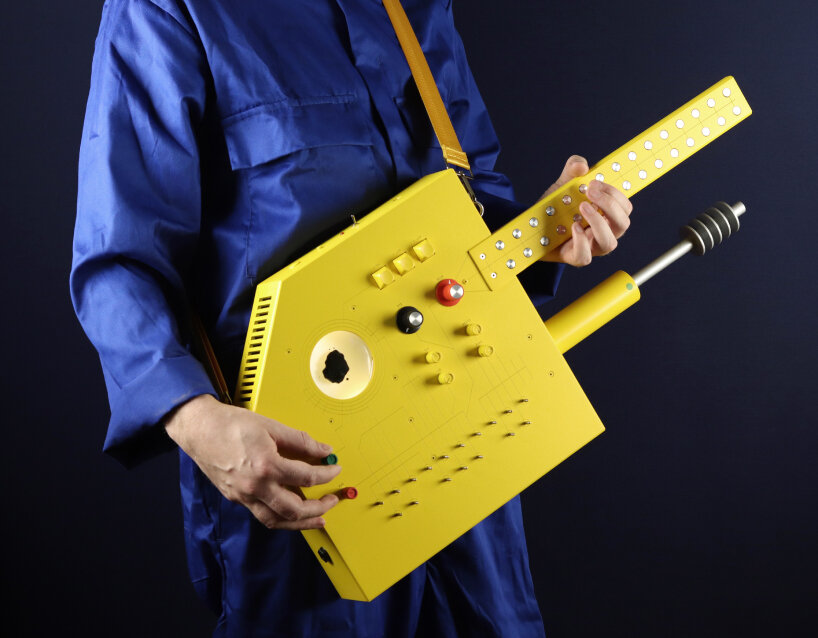
Swedish artist Love Hultén has built a new custom synthesizer console that deliberately resists the frictionless, screen-dominated logic of most contemporary technology. The instrument, commissioned by a client, is housed in a handcrafted mahogany cabinet and built around Black Corporation’s Deckard’s Dream module. It features a motorised pull-out keyboard, rows of tactile sliders and a CRT-inspired display. The console is the latest in a long line of bespoke sound machines that include a crane-operated record player, a cactus garden that generates music from biodata, and a marble-powered music device.
The project is not a commercial product but a one-off commission, part of a practice that consistently asks users to slow down and engage physically with sound. Hultén, who studied at HDK-Valand in Sweden, began combining woodworking and electronics as a student. “I started to experiment with audiovisual contraptions combining traditional craftsmanship with modern technology, and found my niche,” he told designboom in 2024. “The industry is pretty monotonous and I guess I offer something different. A personal view on the world, via objects. My pieces are one-offs and while often being very conceptual, they still have to work in order to become genuine alternatives, be something more than just eye-catching objects.”
Play as a design method
Hultén’s work consistently reframes interaction as a form of play. Rather than making interactions faster or more efficient, his machines introduce friction, novelty and surprise. A turntable is operated by steering a red crane across the record. A synthesizer is animated by a dancing crab that responds to MIDI signals. Cacti and bonsai trees become musical collaborators through biodata interpreted by small devices such as Plantwave. Ferrofluid pulses inside transparent chambers, and marbles trigger melodies as they move through miniature mechanisms.
Each project proposes its own interface, often borrowing visual language from arcade cabinets, vintage laboratory equipment, science fiction and mid-century electronics. “I play a lot with values and standards, suggesting a different perspective on how to relate and interact with objects,” Hultén explains. The result is a body of work that feels both retro and contemporary, but Hultén rejects nostalgia as a goal. “Nostalgia is involved to a certain extent, yes, but it’s not looking backwards,” he says. “It’s taking steps in different directions simultaneously by using fragments from both past and today, creating unique and balanced objects.”
Key facts
| Element | Details |
|---|---|
| Artist | Love Hultén, Swedish, studied at HDK-Valand, Gothenburg |
| Latest project | Custom synthesizer console based on Black Corporation’s Deckard’s Dream, with motorised keyboard and sliders |
| Core philosophy | Design for slow, physical, playful interaction; expose mechanisms rather than hide them |
| Notable earlier projects | Crane-operated record player, cactus biodata synthesizer, marble-powered music machine, ferrofluid handheld synths |
Craft and technology as complementary forces
A distinctive feature of Hultén’s practice is the hybrid process that brings together woodworking, laser cutting, resin casting, electronics, programming and mechanical engineering. The console, like many of his objects, reveals its mechanisms: motors, switches, sliders and moving parts are visible and offer immediate physical feedback. “The instant feedback we get when interacting with something physical connects all the right dots in ways a digital interface never could,” he says.
This approach stands in contrast to the current trend in consumer electronics toward flat, invisible, gesture-controlled interfaces. Hultén’s machines expose the mechanics of interaction, inviting the user to understand and participate in the process. Projects such as “Desert Songs” and “Tegel” place living plants into technological contexts, while “Sebastian” uses a mechanical crab to interpret MIDI data. The objects often resemble fictional scientific instruments, borrowing the aesthetic of exploratory technology to spark curiosity.
Why this matters for designers and technologists
For readers interested in technology, design culture and the future of human-computer interaction, Hultén’s work offers a tangible counterpoint to the prevailing idea that better technology means less friction. His machines demonstrate that tactile, slow, even whimsical interfaces can be viable and desirable. They also highlight the value of cross-disciplinary making: combining traditional craft with contemporary electronics to produce objects that are both functional and conceptually rich.
The console is not available for purchase, but Hultén continues to accept commissions and exhibit his work. His practice raises questions about what we lose when interfaces become invisible and whether the pleasure of physical interaction can be reintroduced into digital tools. For architects and designers, the projects also serve as a reminder that materiality, craftsmanship and user engagement remain central to meaningful design, even in an increasingly digital world.
Source: Designboom – “why love hultén keeps building sound machines we want to interact with” – https://www.designboom.com/technology/love-hulten-sound-machines-interaction/
Source
Designboom Original publication: 2026-07-27T23:55:30+00:00
Related news

What Bed Bug Research Reveals About Infestation Patterns in Modern Residential Design
New analysis of bed bug behavior shows how platform beds, upholstered headboards, and wall-to-wall carpet can hide infestations and drive severe multi-room…
Read more
Privacy Window Film: What Architects Need to Know About Light, View and Limits
A practical breakdown of when reflective, frosted and solar-control films actually work, based on lighting conditions and glazing type – and where…
Read more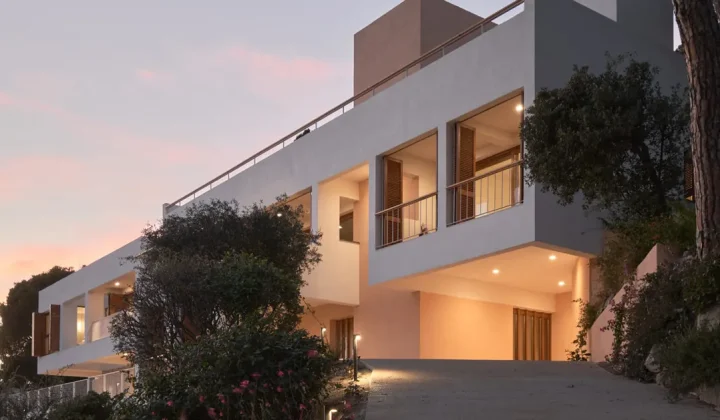
Exitprojectes completes restrained extension of Josep Lluís Sert’s Casa Blajot on the Catalan coast
Barcelona-based Exitprojectes rehabilitates and extends the late architect’s 1979 house in Premià de Dalt without altering its original spatial logic.
Read more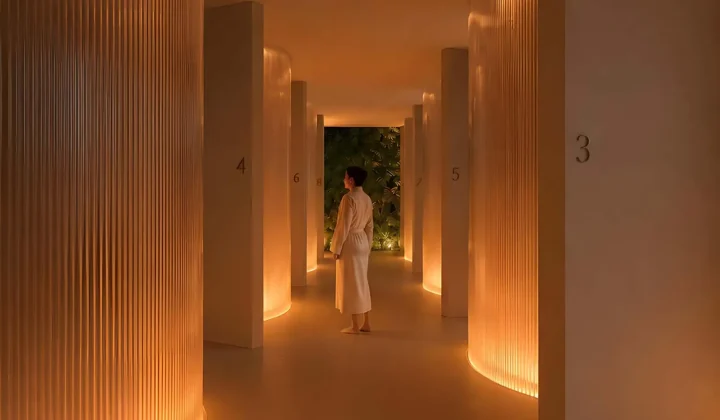
Midjourney Spa in San Francisco: AI Wellness Center Designed by Basalt Architects and Rapt Studio
Midjourney reveals plans for a 24,000-square-foot spa in San Francisco’s Union Square, blending traditional saunas and cold plunges with AI-powered ultrasound body…
Read moreRelated wiki
Adaptive Reuse in Architecture
Reference page for reuse, retrofit, conversion, embodied carbon and design constraints.
Read more