
Fiberglass shells and bronze skeletons define Salina light and furniture collection by Federico Stefanovich
Designer Federico Stefanovich combines hand-laid fiberglass and cast bronze to create a lighting and furniture series that echoes the morphology of marine organisms, with a controlled sense of imperfection.
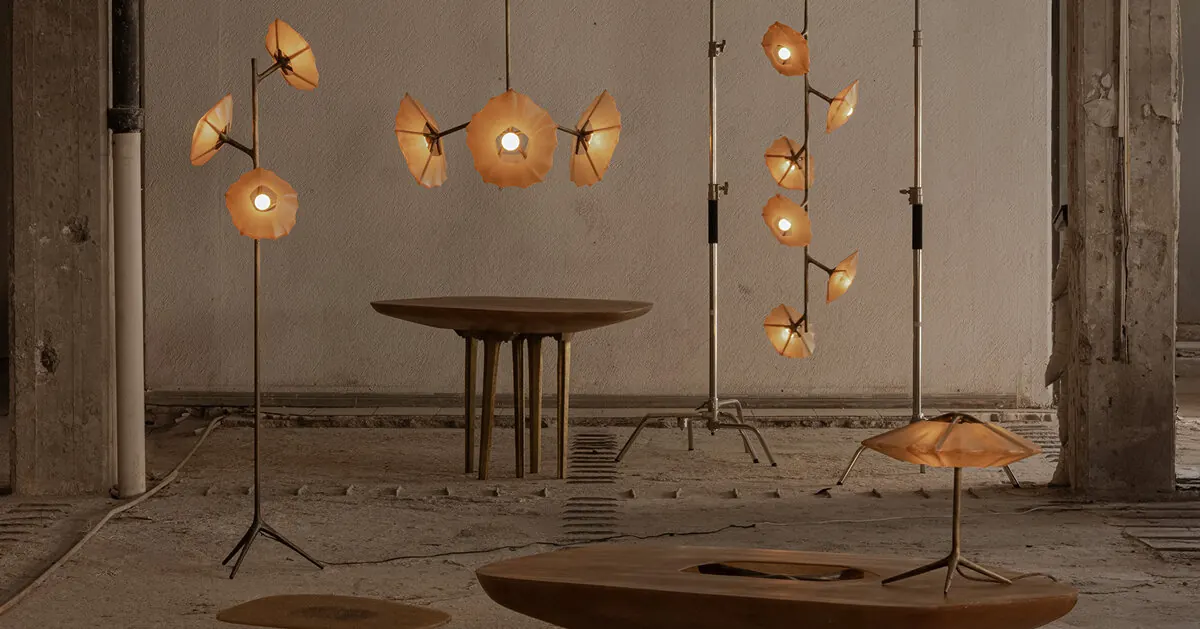
Designer Federico Stefanovich has developed a lighting and furniture series called Salina that draws directly on the morphology of marine organisms. The collection, presented through images by Alejandro Ramirez Orozco, uses fiberglass shells and cast bronze frameworks to create objects that feel both organic and engineered. Each piece carries visible textures, trapped air bubbles, and slight surface irregularities that result from the hand-laid fiberglass process, giving the series a deliberate, controlled imperfection.
Materials and production process
The Salina collection centers on fiberglass as the primary material for its organic volumes. Stefanovich first uses 3D printing to create molds that reproduce the complex forms with a high level of definition. The subsequent artisanal fiberglass lay-up introduces variations into each piece: visible textures within the resin, small trapped air bubbles, and slight surface irregularities. These characteristics are not defects but are accepted as part of the production method, contributing to a sense of authenticity and manual process.
Por que importa
Cast bronze elements are then integrated without visible fastening. Internal structural components support both the fiberglass shells and the light sources, locking the pieces together from within. The result is that the outer volumes appear to have formed around the underlying structure, as if the shell grew over the skeleton.
Design language and marine references
The fiberglass components reference the structure of shells and carapaces, while the cast bronze elements draw on the skeletal forms of marine organisms through branching supports, limbs, and structural frameworks. In the lighting pieces, a white spherical light source positioned at the center of each volume acts as a visual reference to a pearl inside an oyster. This element establishes a direct relationship between illumination and the collection’s marine theme, positioning light as an integral part of the sculptural composition rather than a separate functional add-on.
Contexto
Tables and structural tension
The tables in the Salina collection extend the exploration of physical tension, structural calculation, and balance. Asymmetrical tabletops and supports introduce a sense of apparent instability, which is countered by carefully calculated geometry. The Salina Side Table, for example, is created through the calculation of volume and mass of the different elements, with a solid pedestal that acts as a counterweight. The coffee table features a large-scale fiberglass volume resting on a solid bronze cast structure, while the dining table combines a broad fiberglass top with a slender bronze base.
Controlled imperfection and translucency
The designer emphasizes that the visible irregularities in the fiberglass surface are intentional and inherent to the process. The material’s translucency also plays a key role in the lighting pieces: when illuminated, the fiberglass shell glows softly, revealing the inner bronze structure and the central light source. This interplay of light, material, and structural logic is central to the collection’s expression.
Key facts
| Element | Detail |
|---|---|
| Designer | Federico Stefanovich |
| Collection name | Salina |
| Materials | Hand-laid fiberglass, cast bronze |
| Production method | 3D-printed molds, artisanal fiberglass lay-up |
| Key visual references | Shells, carapaces, pearls, marine skeletal forms |
| Photography | Alejandro Ramirez Orozco |
| Source | Submitted to Designboom via the DIY submissions feature |
Why this matters for Paionia7 readers
The Salina collection demonstrates how contemporary design can bridge material experimentation and organic morphology. For architects, interior designers, and product specifiers, it offers a case study in combining industrial methods (3D-printed molds) with handcraft processes (fiberglass lay-up) to achieve a controlled, non-repetitive aesthetic. The use of fiberglass and bronze in furniture and lighting also points to broader trends in material innovation within the design industry.
Source: Designboom, “fiberglass shells and bronze skeletal forms shape sculptural light and furniture collection” – https://www.designboom.com/design/fiberglass-shells-bronze-skeletal-forms-sculptural-light-furniture-collection-salina-federico-stefanovich/
Source
Designboom Original publication: 2026-07-29T02:10:52+00:00
Related news

How to Read Venice Architecture Biennale Coverage Without Getting Lost in the Spectacle
A practical guide to reading Venice Architecture Biennale coverage with more clarity: how to separate image-making from argument, compare like with like,…
Read more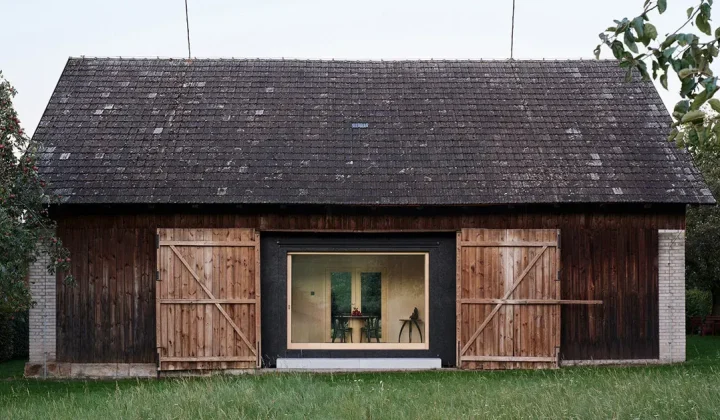
Facha architekti inserts black asphalt retreat into a Czech agricultural barn
Facha architekti has completed a compact seasonal dwelling inside a historic agricultural barn in Brtev, Czech Republic, using a lightweight timber frame…
Read more
Studiofont Completes Casa Diez Pies on a Steep Cliff in Mazunte, Oaxaca
The Mexican architecture studio uses a single repeated module and ten concrete feet to lift a four-level house above a 40-degree rocky…
Read more
PollenNav app redraws city routes around what you can breathe, not just where you can walk
A navigation app designed by Yani Shi treats pollen exposure as a routing variable, offering allergy sufferers block-level air-quality information instead of…
Read moreRelated wiki

Adaptive Reuse in Architecture
Reference page for reuse, retrofit, conversion, embodied carbon and design constraints.
Read more