
Thornley Kelham Hand-Forms a Porsche 356 Body in Aluminum Over 2,000 Hours
The Cotswolds workshop revives the 1951 Le Mans SL with a hand-shaped aluminum skin, a widened chassis and a bespoke flat-four, limited to 50 coupes.
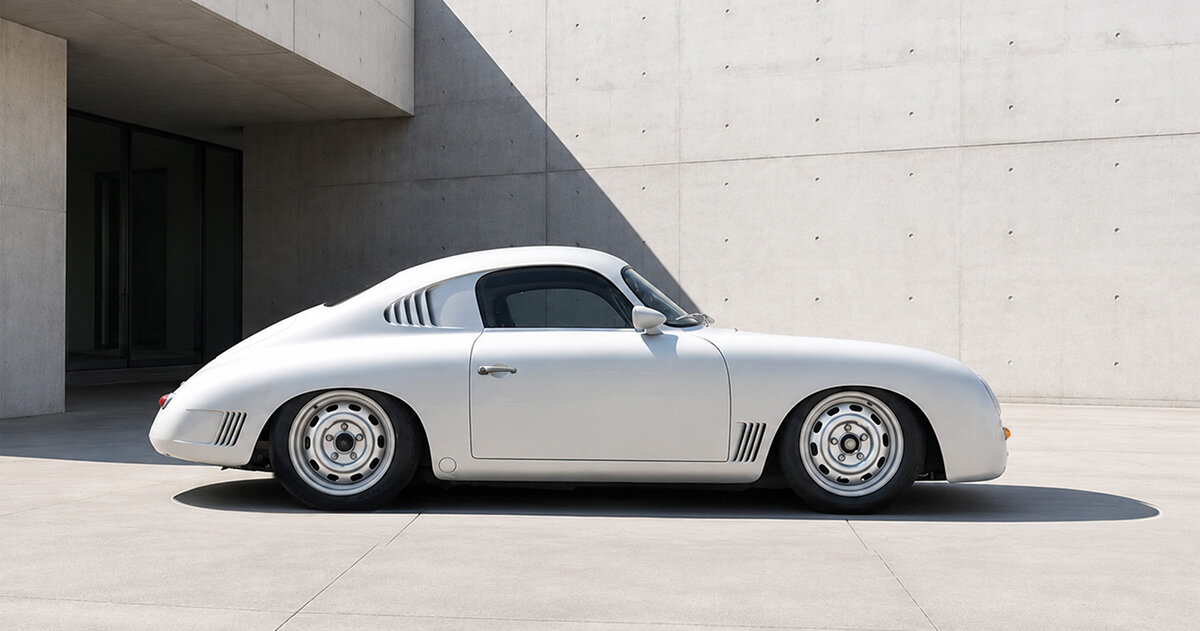
Thornley Kelham, a restoration and customisation workshop based in the Cotswolds, has unveiled the Porsche 356 European SL, a hand-formed aluminum restomod that revives the lightweight design of Porsche’s 1951 Le Mans racer. The project reinterprets the original 356 silhouette with a broader, lower body shaped entirely by hand, requiring more than 2,000 hours of metalwork per car.
The European SL takes its name and concept from the Type 514, an all-aluminum 356 SL built for the 1951 24 Hours of Le Mans. Four examples were made, and one won its class in Porsche’s first international motorsport appearance. Seventy-five years later, Thornley Kelham translates that aerodynamic simplicity into a road-going coupe that remains unmistakably a 356 while sharpening its proportions.
Hand-formed aluminum body
The body is the centrepiece of the build. Each panel is shaped by hand, then assembled on a precision jig so that door openings and body seams meet contemporary tolerances. CAD and CNC processes support the underlying geometry, but the final curves are achieved through traditional metalworking. The outer joints are smoothed into a continuous skin, allowing light to slide across the hood and rear fenders with few interruptions. At 930 kilograms, the coupe’s low mass defines its proportions and performance. The car sits closer to the road with a wider stance, giving the compact body a firmer presence from every angle. Simon Thornley, co-founder of the workshop, describes the result as ‘handcrafted panels’ set against a ‘stripped-down, minimalist interior.’
Beneath the aluminum shell, the car uses the original 356 chassis, which is restored, seam welded for greater rigidity, and widened. The body is stretched and lowered, while the teardrop profile is preserved. The overall effect is a balance between the rounded character of the original and the sharper lines of a modern restomod.
Key facts
| Item | Details |
|——|———|
| Base vehicle | 1950s Porsche 356 chassis (restored) |
| Body material | Hand-formed aluminum |
| Weight | 930 kg |
| Engine | 2.33L air-cooled flat-four, 180 hp (Touring) or 200 hp (Sport) |
| Transmission | Five-speed dogleg manual |
| Production limit | 50 coupes |
| Price | Not disclosed |
Engine and chassis
The bespoke 2.33L air-cooled flat-four is based on the original 356 engine but built to modern specifications. The Touring version produces 180 hp; the Sport version raises output to 200 hp and 180 lb-ft of torque. At 930 kilograms, the stronger setup achieves more than 200 hp per ton. A five-speed dogleg manual replaces the period four-speed gearbox and sends power to the rear wheels.
The chassis receives a thorough engineering revision. Thornley Kelham strengthens and seam welds the original structure, then fits rack-and-pinion steering and a rear suspension geometry influenced by early 911s. Ventilated disc brakes sit at both axles, with carbon-ceramic units available for clients seeking a more aggressive setup. Buyers can choose between passive or active dampers, and power assistance can be added to the steering.
Interior and customisation
Inside, the cabin follows the same lean direction as the exterior. The dashboard is low and spare, with circular instruments set into a slim horizontal panel. Bespoke seats and leather trim add warmth without clutter. Fitted luggage can be developed around each commission. Modern electronics—such as audio, navigation or air conditioning—are available according to the owner’s preference, but the layout keeps switches and screens from dominating the view. The cabin frames the windshield and the painted metal around it, preserving the close relationship between driver and road that defines an early 356.
Each of the 50 cars is built to the owner’s specifications at the company’s Gloucestershire workshop. Program director Pim van de Riet, a longtime 356 owner, says he wanted to create ‘a car that Porsche themselves might have done’ with access to current engineering. The price has not been disclosed, but given the 2,000‑hour handwork and bespoke nature, each unit is expected to be a significant investment.
Why this matters for design and architecture readers
The European SL is not a pure restoration or a modern replica. It is a study in materiality, process and proportion. The 2,000 hours of hand shaping demonstrate what can be achieved when digital design tools are used to support rather than replace manual craft. For architects and designers interested in bespoke fabrication, the project offers a real-world example of how aluminium can be stretched, pinched and smoothed into a unified skin. The attention to panel gaps, surface continuity and weight reduction echoes the principles of minimalist architecture, where every element must earn its place.
Source: Designboom https://www.designboom.com/technology/thornley-kelham-porsche-356-aluminum-car-restomod/
Datos clave
| Punto | Detalle |
|---|---|
| Fuente | Designboom |
| Fecha | 2026-07-28T18:10:28+00:00 |
| Tema | thornley kelham hand-shapes porsche 356 body in aluminum over 2,000 hours |
Source
Designboom Original publication: 2026-07-28T18:10:28+00:00
Related news
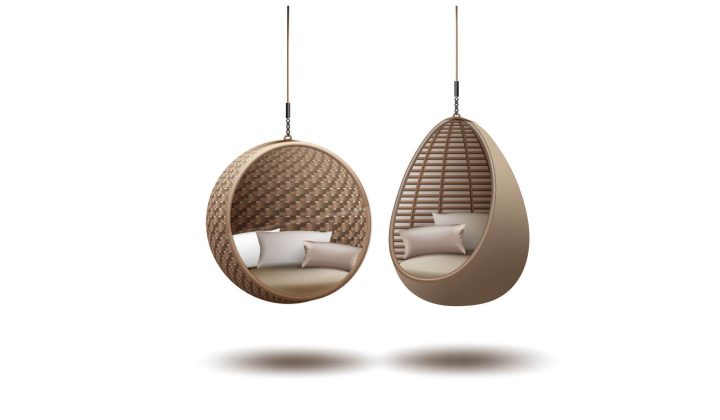
How to Specify a Commercial-Grade Outdoor Swing Chair That Lasts Beyond Two Years
A procurement expert with 15 years in hospitality furniture sourcing explains why most outdoor swing chairs fail within five years of resort…
Read more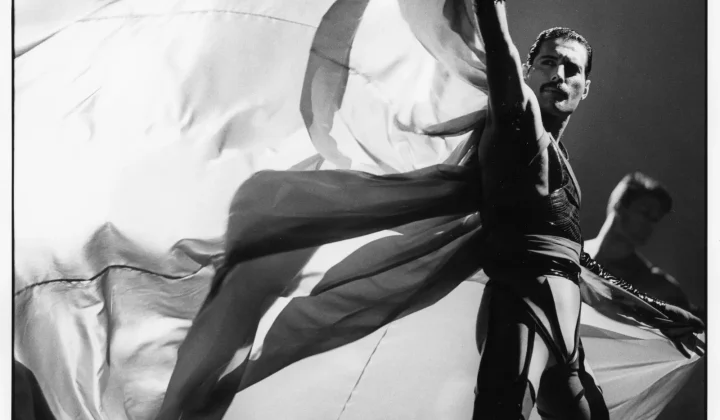
Freddie Mercury’s stage costumes go on display at V&A in free 2026 exhibition
The V&A marks the 80th anniversary of Freddie Mercury’s birth with ‘Splendid Things’, a free exhibition of eight iconic looks lent by…
Read more
Armenian Designer Shushana Khachatrian Debuts ‘The Woman’s Chair,’ a Deliberately Uncomfortable Reflection on Social Structures
Armenian designer Shushana Khachatrian's 'The Woman's Chair' uses polished stainless steel and a deliberately unstable geometry to question expectations around comfort, posture,…
Read more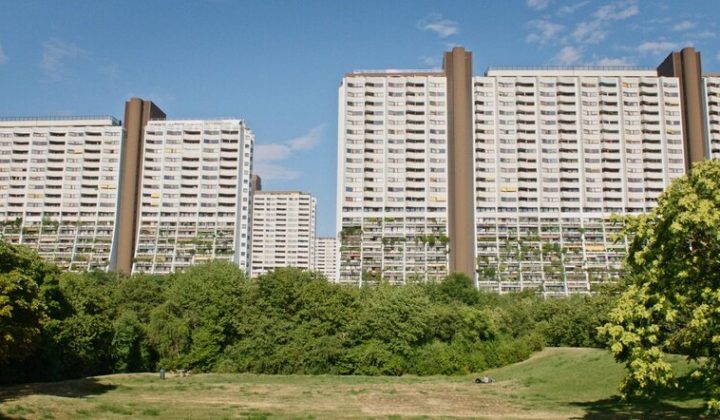
27 Storeys Documentary Revisits Vienna’s Alterlaa and the Utopian Promise of Collective Living
Director Bianca Gleissinger returns to her childhood home in the Alterlaa housing complex to explore how a 1970s social housing project achieved…
Read moreRelated wiki
Adaptive Reuse in Architecture
Reference page for reuse, retrofit, conversion, embodied carbon and design constraints.
Read more