
Social Media Creators Bring Architecture to New Audiences Through TikTok and Instagram
A wave of practitioners and students is using short-form video to demystify the built environment, from corner-condition ratings to deep dives on shot towers and queer visibility in design.

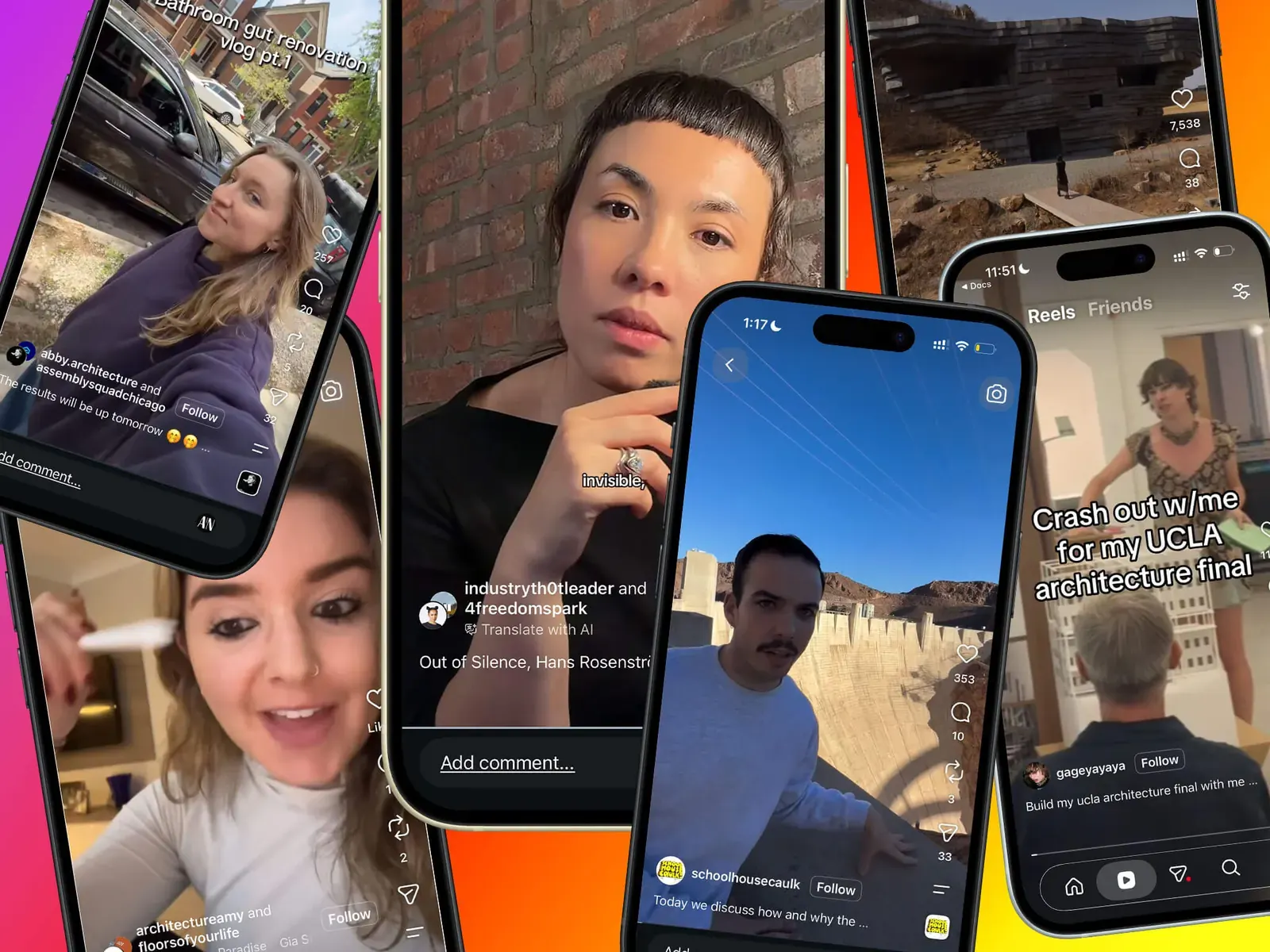
The role of social media in architecture is shifting from casual documentation to a deliberate platform for critique, education, and inclusion. A recent roundup in The Architect’s Newspaper highlights six creators who are using TikTok and Instagram to explain the built environment in ways that conventional design media rarely reach. Their work reflects a broader movement: practitioners and students reclaiming the conversation from algorithm-driven hot takes and inviting audiences who were never part of the architectural discourse.
The article, published July 29, 2026, notes that the early nuance of architecture TikTok has given way to louder opinions, but a subset of creators is pushing back with informed, engaging content. These voices range from an architectural designer rating facade corners to a UCLA graduate weaving queer identity into architectural education. Together, they illustrate how short-form video can turn passive viewers into active, curious citizens.
Por que importa
Key facts
| Creator | Platform | Focus |
|———|———-|——-|
| Abby Happel | TikTok/Instagram | “Corner Talks” series on facade conditions, “Sexy Libraries” |
| Lauren Sinclair | TikTok | Overlooked landmarks, museum redesigns, fashion-architecture links |
| Michael Sampson | TikTok | Engineering infrastructure, shot towers, urban logistics |
| Gage Garduno | TikTok/Instagram | Architectural student life, queer visibility, rave culture intersection |
| Daniel Moffat | Instagram | Cinematic, ASMR-style building tours emphasizing spatial experience |
| Amy Bass | Instagram | “Floors of Your Life” series, housing insecurity, urban illustration |
Abby Happel: Making facades a talking point
Architectural designer Abby Happel started her “Corner Talks” series as an undergrad and saw early videos go viral. She now uses her platform to rate the corner conditions of building facades, a niche topic that surprisingly draws comments from people outside the field. “People are more interested in their built environment than we give them credit for. They just have not always been invited into the conversation before,” she told the publication. Her content bridges technical observation and everyday curiosity.
Contexto
Lauren Sinclair: Finding stories in the overlooked
Lauren Sinclair, co-director of Sinclair Collective, began her channel after a visit to Kengo Kuma’s M2 project. She now examines questionable redesigns, such as the New Museum, and historic references in fashion shows. “I’m making my own education,” she said. “If I find something is compelling, there is a reason why—whether it’s a technical detail or an interesting story. I just have to dig to uncover it.” Her approach turns architecture into a detective story for viewers.
Michael Sampson: Engineering as public service
Engineering consultant and educator Michael Sampson demystifies shot towers, earthquake infrastructure, and plumbing catastrophes. His recent all-nighter documenting the logistics of Lower Manhattan’s Knicks Ticker Tape Parade exemplifies his ambition to show how engineering shapes urban life. He calls on architects and engineers to introduce more visual drama: “The more visual drama we introduce to our designs, the more curiosity it builds. We need more details that serve no purpose other than to interrupt the impersonal and monotonous days most of us experience.”
Gage Garduno and Amy Bass: Identity and inclusion
Gage Garduno, a recent UCLA Architecture graduate, initially focused on fashion and nightlife but found an audience for his academic content. He emphasizes self-confidence and visibility for queer creatives in architecture. “To show other young queer creatives that there is a space for us in the highest level of educational and professional opportunities is what inspires me most to remain visible,” he said.
Amy Bass, an illustrator and designer, uses her “Floors of Your Life” series to illustrate how buildings can address housing insecurity. She also contributed to The Architect’s Newspaper’s coverage of urbanism and the World Cup. “A basic understanding of the built environment would make us more informed citizens,” she said. “You don’t need an architecture degree to appreciate buildings or to have an opinion on the spaces that shape your life.”
Daniel Moffat: Spatial experience over static images
Daniel Moffat’s Instagram account, @scalienn, uses cinematic editing, ambient sound, and ASMR-style narration to convey the spatial and temporal qualities of architecture. He warns against judging buildings by photographs alone. “Architecture is fundamentally spatial and temporal. You experience it through movement, scale, acoustics, light,” he said. His videos reach beyond architecture circles, aiming to open the door for people who are curious but have not had a way in.
Why this matters for professionals and enthusiasts
For Paionia7 readers—architects, urbanists, students, and design-minded citizens—this crop of creators signals a shift in how architectural knowledge is disseminated. The traditional gatekeeping of academic language and professional jargon is being challenged by accessible, personality-driven content. These creators are not just popularizing buildings; they are fostering a more informed public that can engage with planning, preservation, and design decisions. The trend also highlights a growing demand for representation: queer voices, infrastructure literacy, and a focus on social impact are moving from the margins to the center of online architecture discourse.
The rise of these independent voices does not replace professional criticism or academic rigor, but it complements them by reaching audiences who might never pick up a design magazine. As the built environment becomes a more visible part of public conversation, the role of these creators may become as important as the projects they document.
Source: The Architect’s Newspaper – “A crop of social media creators dedicate their platforms to architecture and the built environment” (https://www.archpaper.com/2026/07/social-media-creators-architecture-built-environment/)
Datos clave
| Punto | Detalle |
|---|---|
| Fuente | The Architect's Newspaper |
| Fecha | 2026-07-29T18:09:25+00:00 |
| Tema | A crop of social media creators dedicate their platforms to architecture and the built environment |
Source
The Architect's Newspaper Original publication: 2026-07-29T18:09:25+00:00
Related news
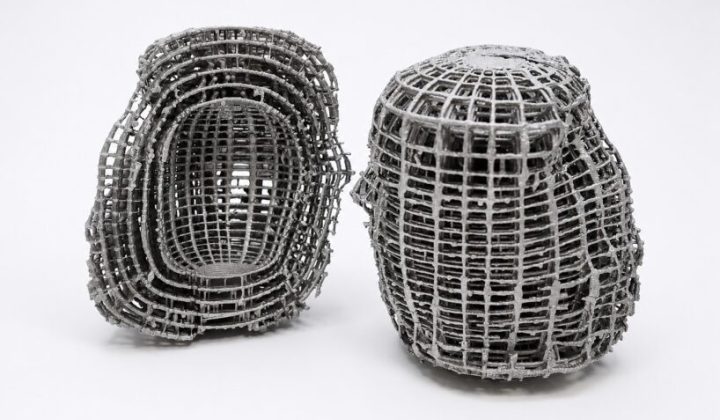
Free-form 3D-printed cloak reroutes heat to outsmart infrared cameras
Researchers at the University of Illinois Urbana-Champaign and the Technical University of Denmark have developed a 3D-printed thermal cloak that hides irregular…
Read more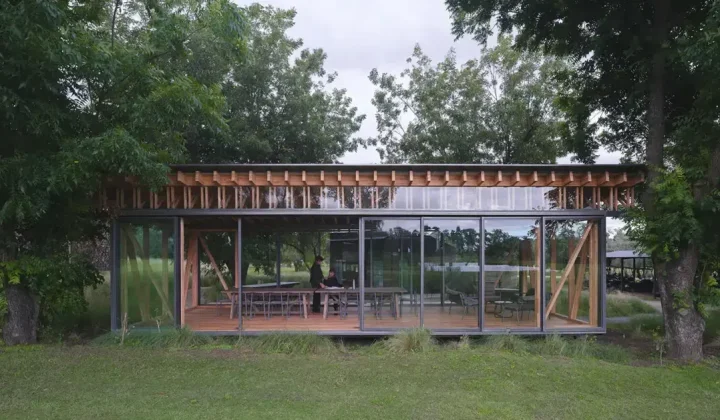
Galetto Estudio Completes Timber and Glass Pavilion Beneath Pecan Canopy in Córdoba
Galetto Estudio has completed Pabellón Los Troncos, a lightweight gathering pavilion nestled beneath mature pecan trees beside the Estancia La Paz Golf…
Read more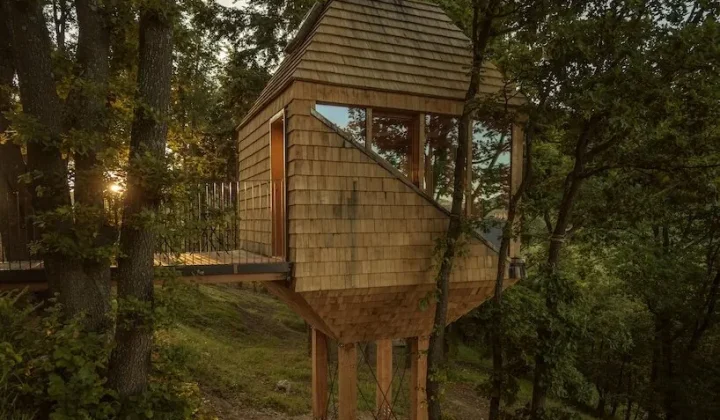
Studio Officina82 Elevates TreeBOX Timber Retreat Within Alpine Hamlet of Selucente
Studio Officina82 has completed TreeBOX, a timber accommodation raised on four wooden posts among the oak canopy of Selucente, Italy, reinterpreting traditional…
Read more
SPF Architects Renovates Santa Monica Mountain Residence with Fire-Resistant Asphalt Shingles
California-based SPF Architects has completed a comprehensive renovation of an octagonal 1980s home in the Santa Monica Mountains, incorporating asphalt shingles and…
Read moreRelated wiki
Adaptive Reuse in Architecture
Reference page for reuse, retrofit, conversion, embodied carbon and design constraints.
Read more