
Free-form 3D-printed cloak reroutes heat to outsmart infrared cameras
Researchers at the University of Illinois Urbana-Champaign and the Technical University of Denmark have developed a 3D-printed thermal cloak that hides irregular objects from infrared detection by guiding heat around them, rather than simply blocking it.
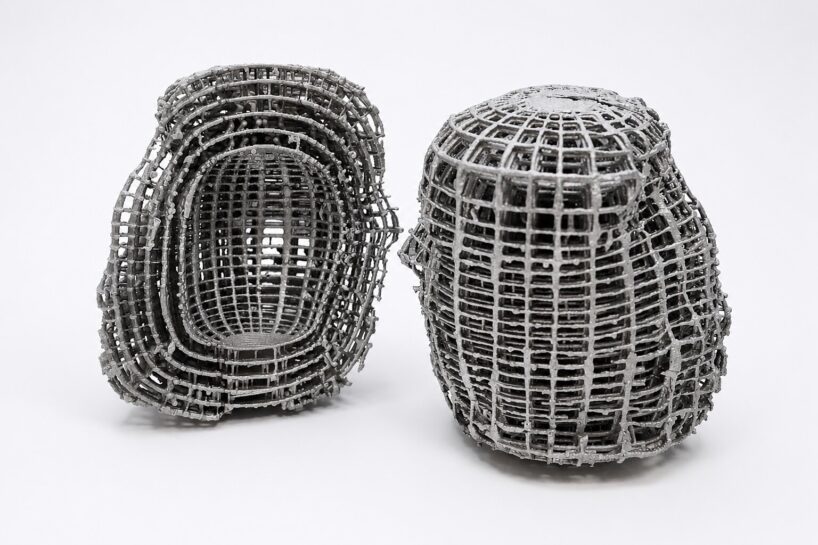
Researchers at the University of Illinois Urbana-Champaign (UIUC) and the Technical University of Denmark (DTU) have created a free-form 3D-printed thermal cloak that can hide irregularly shaped objects from infrared cameras. Unlike conventional heat shields that simply block thermal radiation and leave a telltale cold patch, the new device guides heat around the hidden object, allowing the temperature pattern on the far side to remain largely undisturbed.
The work, led by UIUC’s Weichen Li, Yibo Wang, and Xiaojia Shelly Zhang alongside DTU’s Ole Sigmund, was published in late July 2026. It addresses a long-standing limitation in thermal camouflage: earlier cloaks generally worked only on flat surfaces, simple geometric shapes, or heat arriving from a single fixed direction. This new version is designed for complex three-dimensional forms and changing heat flows.
Key facts
| Aspect | Detail |
|---|---|
| Researchers | Weichen Li, Yibo Wang, Ole Sigmund, Xiaojia Shelly Zhang |
| Institutions | University of Illinois Urbana-Champaign, Technical University of Denmark |
| Core material | 3D-printed aluminum lattice combined with PDMS (a low-conductivity rubber) |
| Key capability | Hides irregular 3D objects from infrared detection without leaving a cold signature |
How the cloak works
The cloak is built from a 3D-printed aluminum lattice embedded in PDMS, a rubber-like material that conducts very little heat. The aluminum is printed with bars of varying thickness and orientation, creating carefully designed pathways that thermal energy must follow. The PDMS slows heat movement elsewhere, ensuring the energy is channeled along the intended routes rather than diffusing naturally. The result is less like a traditional invisibility cape and more like a highly organized traffic system for heat, redirecting it around a protected inner core before allowing it to continue on its original path.
Testing the prototype
For the main experiment, the team placed an apple-shaped core inside a pear-shaped shell and positioned the structure between two aluminum plates. One plate was heated to 40°C while the other was cooled with iced water. After one hour, infrared images showed heat flowing around the inner object and returning to a nearly uninterrupted pattern outside the cloak, whether the heat traveled vertically or horizontally. The apple, thermally speaking, remained invisible.
The method was tested on several other free-form shapes, including a second metal prototype and more intricate face-like structures produced from digital surface data. Some versions were printed in plastic to confirm manufacturability, while simulations showed that the face-shaped cloaks could handle heat arriving along three different axes. The researchers note that circles and spheres were no longer offering enough challenge.
Beyond invisibility: practical applications
While the technology is not yet ready for real-world deployment, the researchers point to several potential applications beyond military or security-oriented thermal concealment. The cloak could help redirect heat around delicate sensors, electronic components, batteries, or equipment exposed to extreme temperatures. In architecture and building technology, similar principles could eventually be applied to manage heat flow around structural elements or sensitive building systems.
Current limitations and next steps
For now, the cloak remains a rigid, shape-specific laboratory prototype operating inside a controlled solid environment. It cannot yet be draped over a person or a heat-generating machine. The next stage of research will explore active systems capable of managing internal heat sources — the point at which thermal invisibility may finally begin edging closer to practical use.
Source: Designboom – https://www.designboom.com/technology/3d-printed-cloak-infrared-cameras-redirected-heat/
Source
Designboom Original publication: 2026-07-30T20:45:12+00:00
Related news

Pachapasa Studio turns Bangkok house into ARVIE restaurant with lantern-like pavilion and recycled brick bar
Pachapasa Studio adapts an existing house in Bangkok’s Yannawa district into a restaurant, adding a flexible pavilion that glows after dark and…
Read more
Galetto Estudio Completes Timber and Glass Pavilion Beneath Pecan Canopy in Córdoba
Galetto Estudio has completed Pabellón Los Troncos, a lightweight gathering pavilion nestled beneath mature pecan trees beside the Estancia La Paz Golf…
Read more
Studio Officina82 Elevates TreeBOX Timber Retreat Within Alpine Hamlet of Selucente
Studio Officina82 has completed TreeBOX, a timber accommodation raised on four wooden posts among the oak canopy of Selucente, Italy, reinterpreting traditional…
Read more
SPF Architects Renovates Santa Monica Mountain Residence with Fire-Resistant Asphalt Shingles
California-based SPF Architects has completed a comprehensive renovation of an octagonal 1980s home in the Santa Monica Mountains, incorporating asphalt shingles and…
Read moreRelated wiki

Adaptive Reuse in Architecture
Reference page for reuse, retrofit, conversion, embodied carbon and design constraints.
Read more