ADDI Designstudio’s Octagonal STEKA Pan Rethinks Cookware as a Repairable, Long-Term Object
Swedish studio ADDI Designstudio and Japanese brand Mozambique have launched the STEKA sauté pan, an octagonal raw aluminum vessel designed for repair, maintenance, and decades of use rather than replacement.
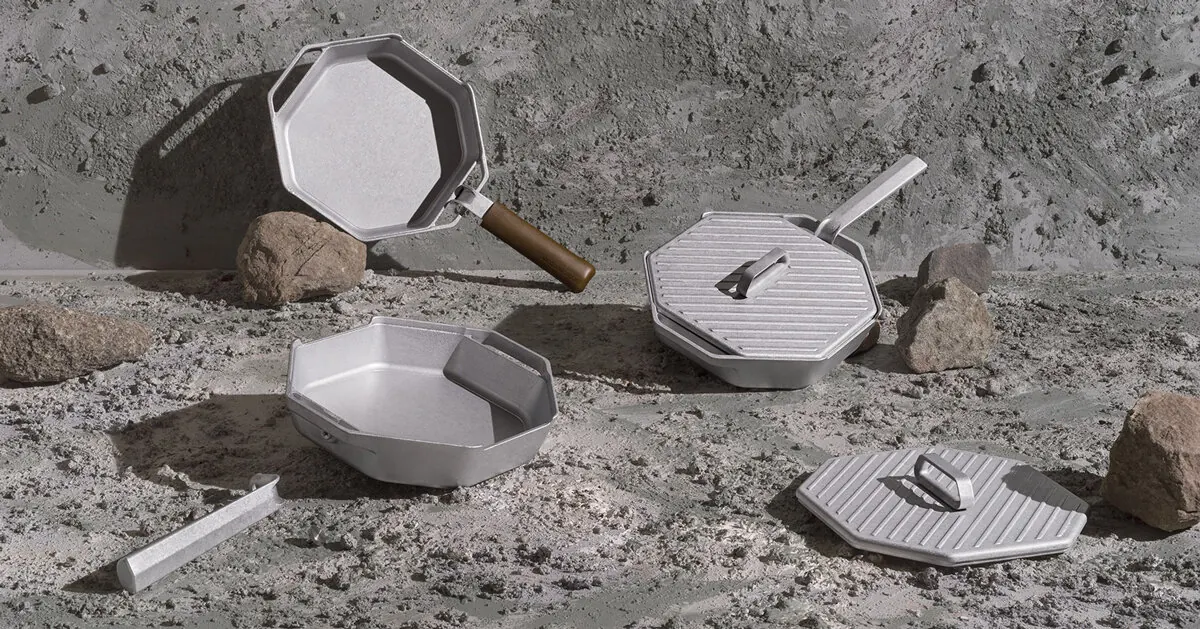
Swedish design studio ADDI Designstudio has introduced the STEKA sauté pan, developed with Japanese cookware brand Mozambique. The pan replaces the conventional round geometry with an octagonal raw aluminum body, a decision driven not by functional superiority but by a deliberate strategy to make the object worth keeping visible, repairing, and using over decades rather than discarding.
The project began with a critical look at why most cookware is round. The shape is efficient for casting and mass production, but ADDI saw an opportunity to create a form that would stand out and remain in the kitchen rather than being stored away. The eight-sided body provides no specific cooking advantage over a round pan, but it establishes a distinct visual identity. The design reflects a shared brief between ADDI and Mozambique, combining Scandinavian reduction with the Japanese brand’s material-focused approach and local manufacturing expertise. Development involved repeated testing and adjustments between Sweden and Japan.
Key facts
| Aspect | Detail |
|---|---|
| Designer | ADDI Designstudio (Sweden) |
| Brand | Mozambique (Japan) |
| Material | 5 mm solid aluminum, uncoated |
| Key feature | Octagonal body, repairable handle attached with a single screw |
Design for repair and longevity
The STEKA pan is cast from 5 mm solid aluminum, a thickness that provides heat retention comparable to cast iron while keeping the pan lighter. The cooking surface is left uncoated, allowing direct contact between aluminum and ingredients. The surface is intended to change with use, developing marks, softened edges, and other signs of wear that become part of the object’s material character rather than being treated as defects.
The construction prioritizes maintenance. The cast-aluminum handle is attached with a single stainless-steel screw rather than a permanent rivet, allowing it to be removed for oven use, compact storage, or replacement. This approach extends the functional lifespan by making individual components accessible. A matching cast-aluminum lid, inspired by the Japanese otoshibuta drop-lid, includes raised points on its underside to help circulate moisture during simmering and braising, supporting a self-basting process.
Hand production at a century-old foundry
Each STEKA pan is produced by hand at a Japanese aluminum foundry with more than a century of casting experience. Production combines gravity die casting, CNC machining, hand finishing, and specialist polishing. Current output is limited to ten pans per day, reflecting the labor-intensive process. Mozambique offers a five-year warranty with the pan, reinforcing the product’s focus on long-term use.
The pan is designed for use on both kitchen stoves and open fires, moving between domestic and outdoor cooking. The straight, high sides expand its applications from searing to simmering, frying, and preparing sauces. Mozambique worked with chef Kohei Horiuchi, chef at nôtori, an auberge in the northern foothills of Mount Fuji, to develop a set of recipes built around the pan’s full range of use.
Why this matters for design readers
The STEKA pan represents a shift in how everyday objects are conceived. Rather than optimizing for manufacturing cost or market convenience, ADDI and Mozambique have prioritized durability, repairability, and material honesty. The octagonal form is not a gimmick but a deliberate choice to create an object that resists the disposable logic of most consumer goods. For readers interested in materials, product design, and sustainability, the pan raises questions about how design can extend the lifespan of functional objects through geometry, construction, and maintenance access.
The project also highlights the value of cross-cultural collaboration. ADDI’s Scandinavian design sensibility, focused on reduction and clarity, meets Mozambique’s Japanese material culture, which values the patina of use and the skill of traditional casting. The result is a product that is both a cooking tool and a statement about what design can prioritize.
Source: Designboom – ADDI rethinks sauté pan’s geometry through octagonal raw aluminum form designed to last (https://www.designboom.com/design/addi-saute-pan-geometry-octagonal-raw-aluminum-form-steka-mozambique/)
Source
Designboom Original publication: 2026-07-30T17:55:24+00:00
Related news
Pachapasa Studio turns Bangkok house into ARVIE restaurant with lantern-like pavilion and recycled brick bar
Pachapasa Studio adapts an existing house in Bangkok’s Yannawa district into a restaurant, adding a flexible pavilion that glows after dark and…
Read more
Free-form 3D-printed cloak reroutes heat to outsmart infrared cameras
Researchers at the University of Illinois Urbana-Champaign and the Technical University of Denmark have developed a 3D-printed thermal cloak that hides irregular…
Read more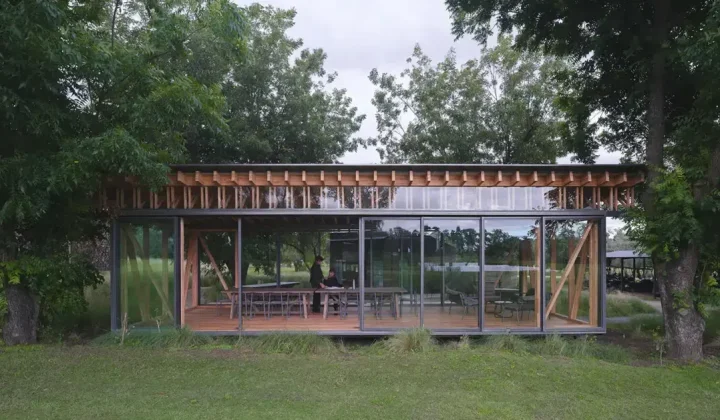
Galetto Estudio Completes Timber and Glass Pavilion Beneath Pecan Canopy in Córdoba
Galetto Estudio has completed Pabellón Los Troncos, a lightweight gathering pavilion nestled beneath mature pecan trees beside the Estancia La Paz Golf…
Read more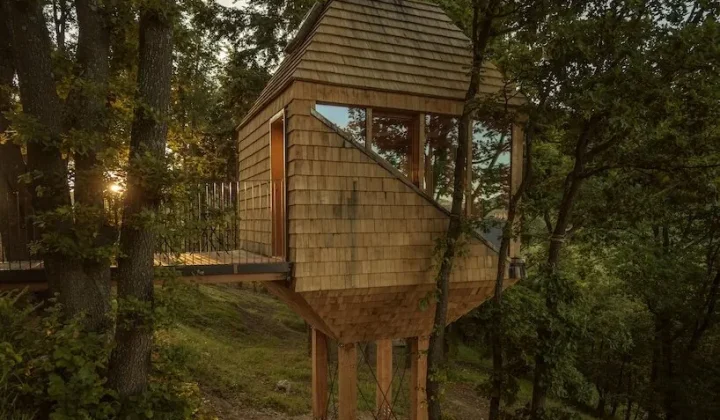
Studio Officina82 Elevates TreeBOX Timber Retreat Within Alpine Hamlet of Selucente
Studio Officina82 has completed TreeBOX, a timber accommodation raised on four wooden posts among the oak canopy of Selucente, Italy, reinterpreting traditional…
Read moreRelated wiki
Adaptive Reuse in Architecture
Reference page for reuse, retrofit, conversion, embodied carbon and design constraints.
Read more