
Looking South House by PLUG Arquitectura Modular Explores Maritime Climate in Chapadmalal
PLUG arquitectura modular completes Looking South House in Chapadmalal, Argentina, balancing a maritime climate and rural surroundings.
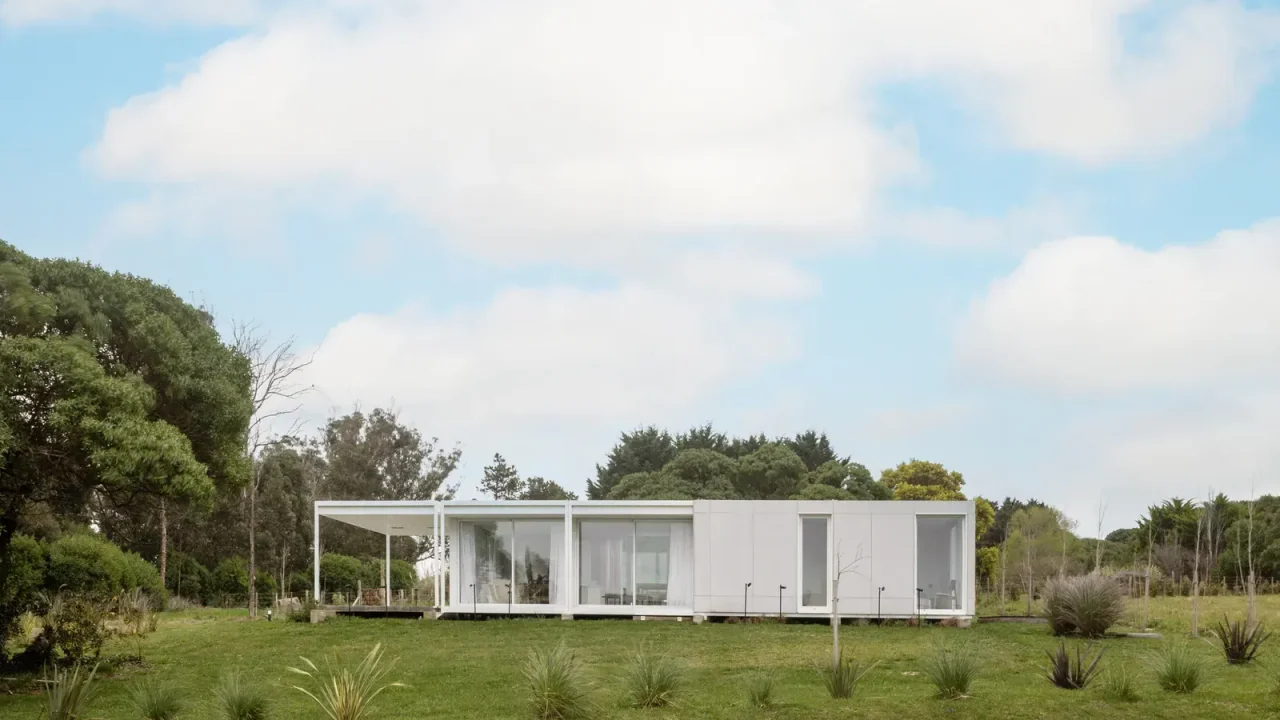
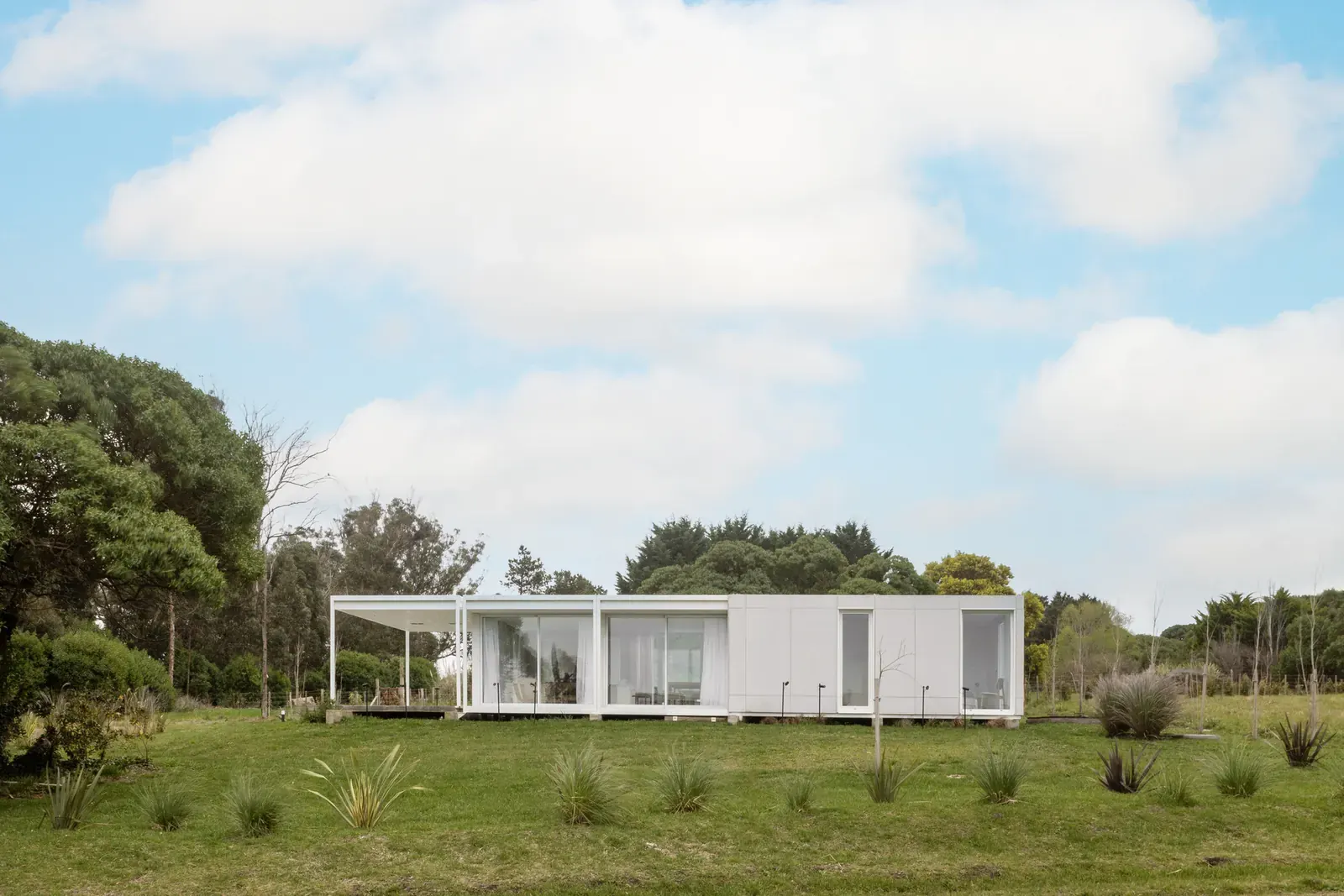
PLUG arquitectura modular has completed Looking South House, a residential project situated in the coastal town of Chapadmalal within the southeast of the Buenos Aires province, Argentina. Positioned halfway between Mar del Plata and Miramar, the project responds directly to the distinct geographical and climatic conditions of a region known for water sports, surfing culture, and an evolving culinary scene.
The surrounding area presents a unique architectural and environmental context by merging an open rural atmosphere with an active maritime climate. Architects working along this stretch of the Argentine coast must account for high humidity, strong winds, and shifting weather patterns while preserving open views toward the Atlantic Ocean. The design strategy focuses on how prefabricated and modular construction methods can address these rigorous site demands without disrupting the surrounding landscape.
Key facts
Project Name | Looking South House
Architects | PLUG arquitectura modular
Location | Chapadmalal, Buenos Aires Province, Argentina
Source Context | ArchDaily coverage of built residential projects
Architectural Approach and Materiality
The design integrates modular construction techniques to streamline assembly and minimize site disruption in a sensitive coastal environment. By utilizing prefabricated components, the office addresses construction timelines and waste reduction, which are critical factors when building in semi-rural and coastal locations. The structure is oriented to optimize natural ventilation and daylighting, reducing reliance on mechanical climate control systems during milder seasons.
Material selection plays a primary role in weathering the maritime atmosphere. Exterior finishes and structural frames are chosen to resist salt air and moisture accumulation, ensuring long-term durability with minimal maintenance. The interior layouts prioritize visual connections to the exterior, framing views of the rolling terrain and the distant coastline while maintaining sheltered private spaces for residents.
Contextual Significance for Regional Design
For architects and practitioners tracking South American residential architecture, Looking South House serves as a practical example of deploying modular systems outside major urban centers. While cities like Buenos Aires often dominate architectural discourse, coastal enclaves like Chapadmalal demand localized responses to material degradation and seasonal occupancy fluctuations. The project highlights how off-site manufacturing can adapt to specific regional topographies without sacrificing contextual sensitivity.
Readers interested in modular typologies can observe how standardized structural bays accommodate custom spatial configurations tailored to specific site orientations. The completed home demonstrates a viable path for residential commissions located between dense urban hubs and remote natural preserves.
Verification and Source Limitations
Details regarding interior floor plans, exact square footage, and specific technical specifications for insulation were not provided in the initial architectural release. Observers looking to evaluate the long-term performance of the modular assemblies will need to monitor subsequent technical reviews or post-occupancy evaluations from the design team.
Source: ArchDaily, https://www.archdaily.com/1182021/looking-south-house-plug-arquitectura-modular
Datos clave
| Punto | Detalle |
|---|---|
| Fuente | ArchDaily |
| Fecha | 2026-08-01T16:00:00+00:00 |
| Tema | Looking South House / PLUG arquitectura modular |
Source
ArchDaily Original publication: 2026-08-01T16:00:00+00:00
Related news

Handwoven Teak and Cord Outdoor Seating Debuts from Masaya and Abril Zepeda
Nicaraguan furniture brand Masaya has introduced two new handcrafted outdoor chairs — a rocking chair and a lounge chair — designed by…
Read more
Place in Mind: Hendricks Churchill Launches Hospitality Group to Revive Historic Properties
The architecture and interior design studio Hendricks Churchill has launched Place in Mind, a new hospitality group focused on acquiring, restoring, and…
Read more
Adalberto Dias Architects Complete Restoration of Lisbon’s Patriarchal Cathedral and Archaeological Center
The restoration of the Sé de Lisboa by Adalberto Dias Arquitecto integrates a new archaeological center, preserved cloisters, and seven centuries of…
Read more
Vantieghem Talebi’s ‘House of Cards’ Brings Timber Geometry to Belgian Family Home
A new family house in Belgium by US- and Swiss-based practice Vantieghem Talebi uses a steeply pitched, card-house-inspired form clad in Douglas-fir…
Read moreRelated wiki

Adaptive Reuse in Architecture
Reference page for reuse, retrofit, conversion, embodied carbon and design constraints.
Read more