
Alexander Calder’s Miniature Wire Circus Returns to Paris for Exhibition
Fashioned from wire, cork, and yarn during the Roaring Twenties, Alexander Calder’s foundational Cirque Calder has returned to Paris for a special exhibition at the Fondation Louis Vuitton.
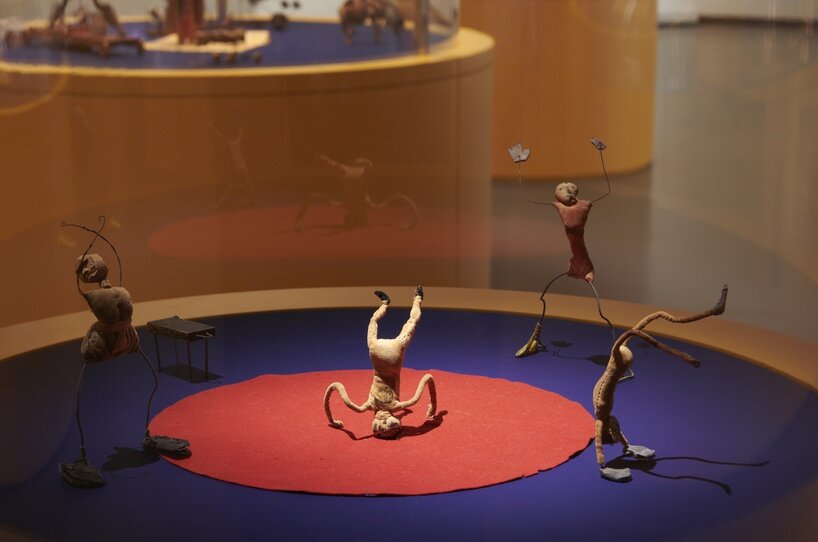
One hundred years after American artist Alexander Calder first arrived in Paris, his foundational miniature creation, Cirque Calder, has returned to the French capital. Currently featured in the exhibition Calder. Rêver en équilibre at the Fondation Louis Vuitton, the delicate wire troupe offers contemporary visitors a rare look at the origins of kinetic sculpture.
The exhibition, which runs through August 16, 2026, brings together the pint-sized circus figures on an exceptional loan from the Whitney Museum of American Art in New York. The display follows the Whitney’s own recent retrospective, High Wire: Calder’s Circus at 100, celebrating the centennial of Calder establishing his artistic footprint in Europe.
Key facts
– Artist: Alexander Calder
– Exhibition: Calder. Rêver en équilibre at Fondation Louis Vuitton, Paris
– Dates: April 15 to August 16, 2026
– Lending Institution: Whitney Museum of American Art, New York
The Origins of Kinetic Art in the Roaring Twenties
Created between 1926 and 1931, the circus began taking shape after Calder was assigned by the National Police Gazette to illustrate the Ringling Bros. and Barnum & Bailey Circus in 1925. Fascinated by the athleticism of the performers, the young artist constructed a comprehensive troupe of acrobats, animals, and props engineered to fit neatly inside a suitcase.
During the Les Années folles period in Paris, Calder would crouch around the miniature set on the floor, manipulating the wire and fabric figures for an avant-garde audience that included artists like Piet Mondrian. Curator Olivier Michelon notes that this kinetic exploration laid the direct groundwork for Calder’s later invention of suspended mobiles, where motion, balance, and play define the structural experience.
Exhibition Design and Conservation Challenges
Displaying a collection of fragile wire, cork, and yarn sculptures built to be manually handled presented significant hurdles for the Fondation Louis Vuitton. Guest curators Dieter Buchhart and Anna Karina Hofbauder, alongside exhibition architect Jean-François Bodin, chose to present the collection act by act within circular display cases evocative of a traditional circus ring.
To heighten the historical context, the exhibition incorporates archival film footage from 1961 by Carlos Vilardebó, showing Calder manipulating the pieces later in life. Audio recordings of the music Calder originally played during his live performances are also piped into the gallery space, allowing visitors to experience the installation through both visual and auditory dimensions.
Relevance to Design and Spatial Culture
For architects, designers, and spatial practitioners, Calder’s circus remains a masterclass in economy of means, spatial interaction, and structural balance. The project bridges the gap between static sculpture and performance art, demonstrating how lightweight materials can articulate complex spatial narratives. Understanding these foundational experiments provides essential context for how modernism embraced movement, play, and industrial wirework in gallery and urban environments alike.
Source: Designboom, https://www.designboom.com/art/before-calder-s-mobiles-this-mini-circus-brought-his-wire-figures-to-life-in-paris/
Datos clave
| Punto | Detalle |
|---|---|
| Fuente | Designboom |
| Fecha | 2026-08-08T20:35:23+00:00 |
| Tema | before calder’s mobiles, this mini circus brought his wire figures to life in paris |
Source
Designboom Original publication: 2026-08-08T20:35:23+00:00
Related news

Handwoven Teak and Cord Outdoor Seating Debuts from Masaya and Abril Zepeda
Nicaraguan furniture brand Masaya has introduced two new handcrafted outdoor chairs — a rocking chair and a lounge chair — designed by…
Read more
Place in Mind: Hendricks Churchill Launches Hospitality Group to Revive Historic Properties
The architecture and interior design studio Hendricks Churchill has launched Place in Mind, a new hospitality group focused on acquiring, restoring, and…
Read more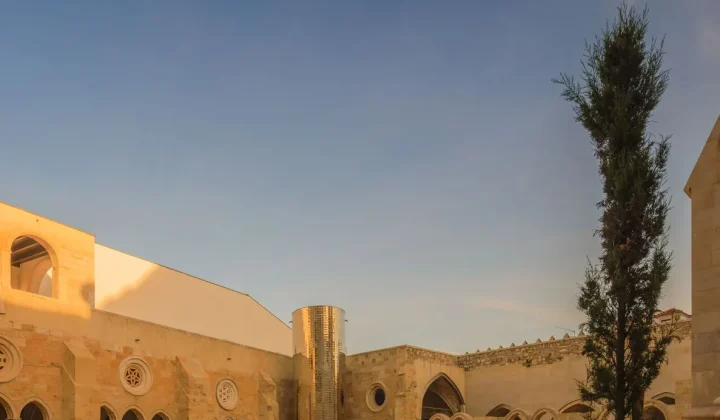
Adalberto Dias Architects Complete Restoration of Lisbon’s Patriarchal Cathedral and Archaeological Center
The restoration of the Sé de Lisboa by Adalberto Dias Arquitecto integrates a new archaeological center, preserved cloisters, and seven centuries of…
Read more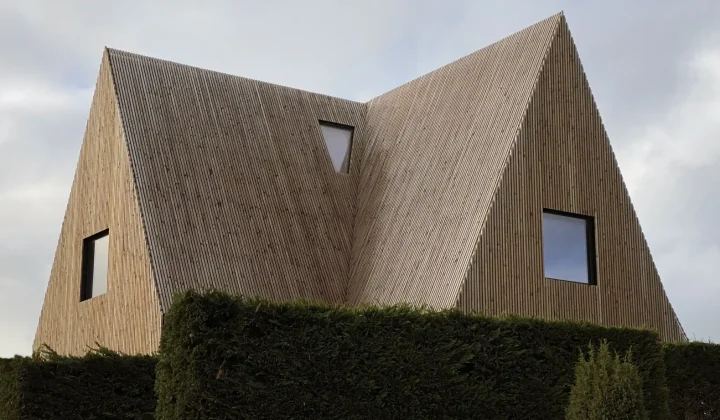
Vantieghem Talebi’s ‘House of Cards’ Brings Timber Geometry to Belgian Family Home
A new family house in Belgium by US- and Swiss-based practice Vantieghem Talebi uses a steeply pitched, card-house-inspired form clad in Douglas-fir…
Read moreRelated wiki

Adaptive Reuse in Architecture
Reference page for reuse, retrofit, conversion, embodied carbon and design constraints.
Read more