
How AI Tools Are Reshaping Academic Writing for Architecture Students
Architecture students face intense demands on their time. A new generation of AI-assisted writing platforms offers a way to streamline coursework without sacrificing quality. Here is what to consider.


Sponsored content
Architecture school is a marathon of studio projects, technical drawings, material research and written assignments. Between pin-up critiques and deadline crunches, finding time to produce well-structured papers—whether a course essay, a research abstract or a full thesis chapter—can feel like an impossible extra load.
A growing number of students are turning to AI-assisted writing tools to help manage this workload. One such platform, online coursework help, offers a way to generate structured drafts, bibliographies and outlines based on a topic and specific formatting requirements. While the tool cannot replace deep design thinking or original research, it can free up hours for the creative and analytical work that truly matters in architectural education.
Why Architecture Students Need Efficient Writing Support
Architecture programmes demand both visual and verbal articulation of ideas. A design studio might require a written brief, a technical report, a theoretical essay and a reflective statement—all in the same semester. Many students find themselves spending as much time formatting references and structuring arguments as they do developing their actual design proposals.
AI writing tools address a specific pain point: the mechanical aspects of academic writing. Instead of staring at a blank page, a student can input their topic, select their document type (essay, report, dissertation chapter) and receive a structured plan with suggested headings. This scaffolding helps maintain focus on content rather than structure.
How an AI Writing Assistant Works in Practice
The typical workflow on a platform like online coursework help follows a logical sequence:
Set parameters – Choose the type of work (coursework, diploma, essay, etc.), the subject and the required page length. Upload any specific instructions or formatting guidelines from your university.
2. Generate a free plan – The AI returns a proposed structure with chapter headings and a list of potential sources. You can review, edit or reject sections before proceeding.
3. Produce a draft – Once the structure is approved, the system generates a complete document with an introduction, body chapters, conclusion and a bibliography formatted to standards like GOST or other citation styles.
4. Download and refine – The result comes as a DOCX file with a table of contents, ready for further editing, citation checking and personalisation.
This process is particularly useful for architecture students who need to document design research, compare case studies or compile literature reviews for their final projects.
What to Look for in an AI Writing Tool
Not all AI writing assistants are equal. When evaluating a platform, architecture and design students should consider these factors:
| Feature | Why It Matters |
|---|---|
| Formatting compliance | The tool should support your university’s citation style (e.g., GOST, APA, Harvard). |
| Source generation | A credible list of references is essential; the tool should suggest real, verifiable sources. |
| Custom instructions | Uploading a syllabus or assignment brief helps the AI tailor the output to specific requirements. |
| Privacy | Your research topics and files should not be published or shared without consent. |
| Free plan preview | Being able to see the structure before paying reduces risk and allows quality assessment. |
The platform mentioned above offers a free plan preview and accepts uploaded PDF or DOCX instructions, which aligns well with the detailed briefs architecture professors often provide.
Practical Tips for Using AI in Architecture Coursework
Even the best AI writing tool is a starting point, not a final product. Here are ways to integrate it effectively into your academic workflow:
- Use it for structure first. Generate an outline, then fill in your own analysis, drawings and case studies. The AI handles the skeleton; you provide the muscle.
- Verify every source. Always check that suggested references actually exist and are relevant to your topic. Never cite a source you have not read.
- Adapt the tone. Academic writing should be clear and formal. Read the AI-generated text aloud and adjust phrasing to match your own voice and the expectations of your tutor.
- Keep your design work central. Written assignments in architecture are meant to support your visual portfolio. Use the tool to save time on writing so you can invest more in drawing, modelling and iterating.
The Bottom Line
AI-assisted writing is not a shortcut to a degree, but it can be a practical tool for managing the paperwork that surrounds architectural education. By automating formatting, structuring and initial drafting, platforms like online coursework help allow students to focus on what they entered architecture school to do: design, critique and build.
As with any academic resource, the responsibility for quality, originality and integrity remains with the student. Use these tools to support your work, not replace it, and always verify the output against your institution’s guidelines.
Related news

MIV Architects Proposes Wetland Pavilion That Prioritizes Non-Human Habitats Over Human Comfort
The Spanish firm’s “Nidos de Agua” concept for the Albufera natural park in Valencia aims to rebalance the relationship between building and…
Read more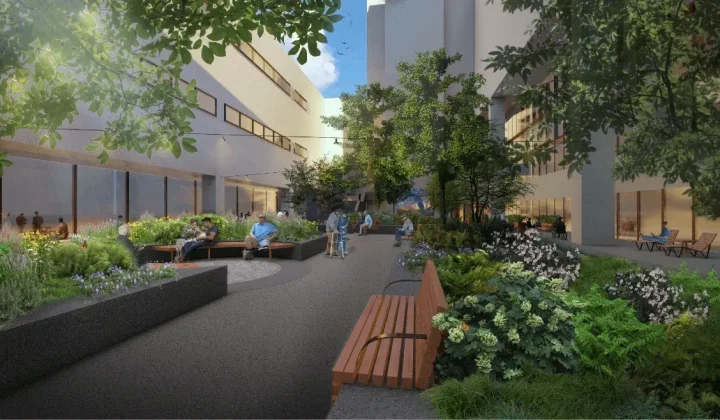
Nelson Byrd Woltz Begins Construction on Restorative Eagle Courtyard at Walter Reed Medical Center
Construction has started on a redesigned Eagle Courtyard at Walter Reed National Military Medical Center, led by Nelson Byrd Woltz Landscape Architects.…
Read more
London’s listening bar boom reflects a deeper shift in hospitality design and music culture
A wave of Japanese-inspired listening bars is reshaping London’s nightlife, but owners and critics are asking whether the concept can survive commercial…
Read more
Performing Colonial Toxicity Exhibition in Valencia Examines Architecture’s Role in Nuclear Colonialism
From 24 October to 1 November 2026, Aguas Internacionales in Valencia hosts Samia Henni’s exhibition on French nuclear testing in the Algerian…
Read moreRelated wiki
Adaptive Reuse in Architecture
Reference page for reuse, retrofit, conversion, embodied carbon and design constraints.
Read more