
Cables and steel recast Rodin’s Thinker as a sculpture of the networked age
Artist Kasey McMahon has built a life-size version of Rodin’s iconic figure using a welded steel armature and hundreds of feet of CAT5 and CAT6 network cable, turning the infrastructure of digital communication into a contemporary monument.
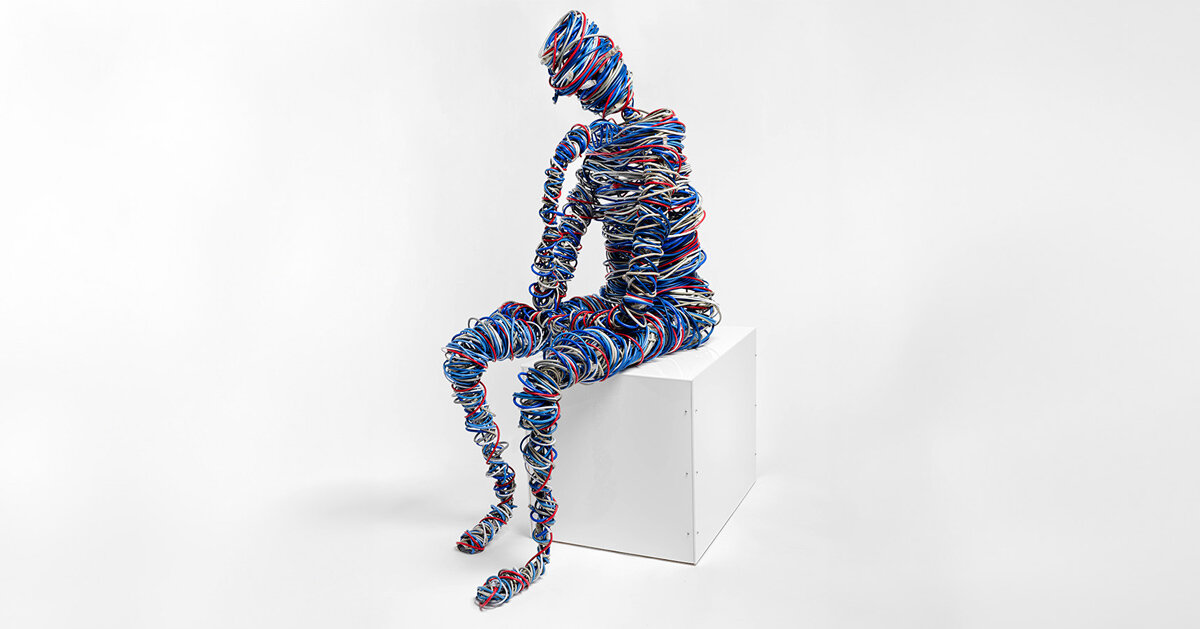
Artist Kasey McMahon has completed a life-size version of Rodin’s The Thinker using a welded steel skeleton and hundreds of feet of CAT5 and CAT6 network cable, turning the physical infrastructure of digital communication into a contemporary sculpture. The work, privately commissioned and now installed in Austin, Texas, is the fourth life-size human figure in McMahon’s ongoing body of work that transforms discarded or everyday network materials into figurative art.
The sculpture began with a hand-fabricated steel armature that established the figure’s anatomy and seated posture. McMahon then wrapped and layered hundreds of feet of network cable around the frame, building up the figure’s mass and contours by hand. Unlike traditional bronze casting, the construction leaves connectors, printed markings and individual lengths of cable visible, making the material itself part of the finished form. Blue, gray, and white cables dominate the palette, punctuated by strands of red.
A material drawn from digital infrastructure
McMahon began working with network cable as a sculptural material more than a decade ago. The artist has said the choice was driven by an interest in turning the infrastructure behind digital life into something physical and tangible. The Thinker is the first male figure in that series, following earlier life-scale works that explored similar themes using the same cable types.
The sculpture was fabricated in McMahon’s Portland-area studio, a converted 120-year-old garage. The process moved between welding and metal fabrication, anatomical adjustment, and the slower work of wrapping and layering cable to give the figure its final gesture. Each layer of cable adds both structure and texture, with the material’s industrial origins remaining visible throughout.
The pose of Rodin’s 1880 original, a figure deep in thought with chin resting on hand, is immediately recognisable. But the material shifts the question. The figure is unmistakably human, yet its body is built from the same cables that carry contemporary communication, data and information across networks.
Context within a charged technological moment
The work arrives amid an increasingly public conversation about artificial intelligence, data privacy and the physical systems that support digital life. McMahon’s sculpture does not attempt to resolve those tensions. The figure simply sits and thinks, offering a contemplative counterpoint to the speed and abstraction of networked technology.
By making the infrastructure of digital communication visible and human-scale, the work invites viewers to consider the physical reality behind concepts such as cloud storage, data transmission and connectivity. The cables that surround us in offices, data centres and walls become a sculptural medium that carries its own meaning.
| Key facts | |
|---|---|
| Artist | Kasey McMahon |
| Title | The Thinker |
| Materials | Welded steel armature, hundreds of feet of CAT5 and CAT6 network cable |
| Location | Austin, Texas (private commission) |
| Studio | Portland, Oregon area |
A sculpture that asks rather than answers
The Thinker is not a commentary on technology as such. It is a physical object that uses the materials of the networked age to ask what it means to think, to sit still, and to be present in a world defined by constant digital flow. The figure’s familiar pose, borrowed from Rodin, gains new weight when rendered in the very material that enables instant global communication.
For readers interested in contemporary sculpture, material culture and the intersection of art with technology, McMahon’s work offers a tangible example of how artists are repurposing the physical remnants of digital life. The piece also raises questions about the lifespan of network infrastructure and what happens to the cables that connect us once they are no longer in use.
The sculpture is currently installed in a private setting in Austin. No public exhibition schedule has been announced at the time of writing.
Source: Designboom – https://www.designboom.com/art/hundreds-of-feet-of-cable-and-steel-reimagine-rodins-thinker-for-networked-age/
Source
Designboom Original publication: 2026-09-24T20:35:32+00:00
Related news
TC 175 Monograph Chronicles Two Decades of Moneo Brock’s Global Practice
The latest issue of TC Cuadernos examines nearly twenty years of work by the Madrid- and New York-based firm, from urban infrastructure…
Read more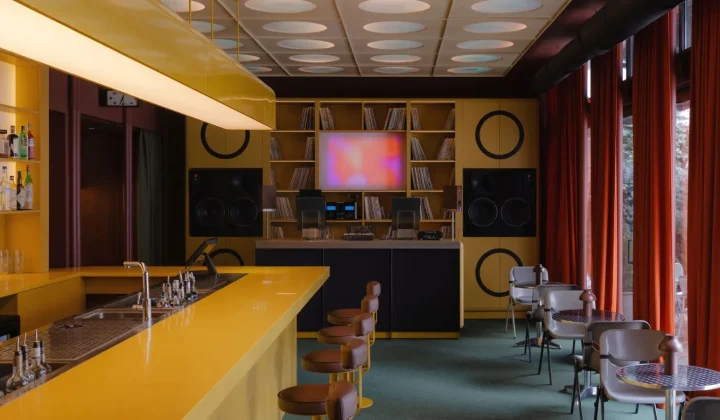
EJE brings K67-inspired futurism to a Belgrade listening bar
Esthetic Joys Embassy combines Yugoslav modernist references, high-fidelity vinyl listening and Asian-influenced dining inside a 1927 villa in Belgrade.
Read more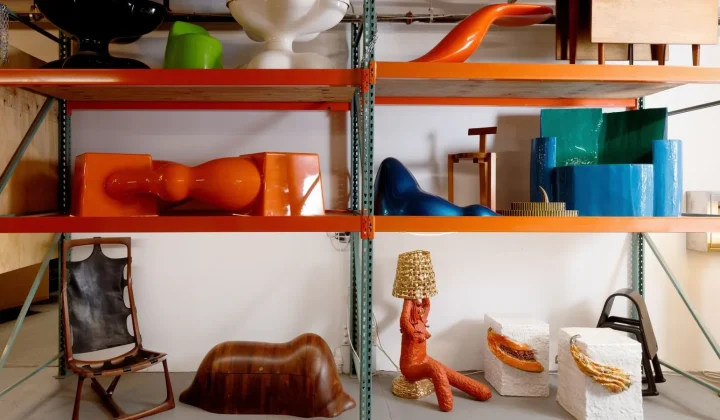
R & Company Opens Its Brooklyn Archive to the Public, Revealing 10 Rare Design Finds
The celebrated design gallery R & Company has opened its 16,000 sq ft storage facility, Building 86, in the Brooklyn Navy Yard…
Read more
SIITUA III to Gather International Researchers on Territory, Urbanism, and Architecture in Lima
The third edition of the International Seminar on Research in Territory, Urbanism, and Architecture (SIITUA III) will take place in Lima, organized…
Read moreRelated wiki

Adaptive Reuse in Architecture
Reference page for reuse, retrofit, conversion, embodied carbon and design constraints.
Read more