
Scaffolding as Interior Architecture: Adaptable Systems Challenge the Divide Between Temporary and Permanent
A new article by Jonathan Yeung examines how modular scaffolding systems, from steel frames to Dieter Rams’ shelving, demonstrate that longevity in architecture can come from adaptability rather than fixed permanence.
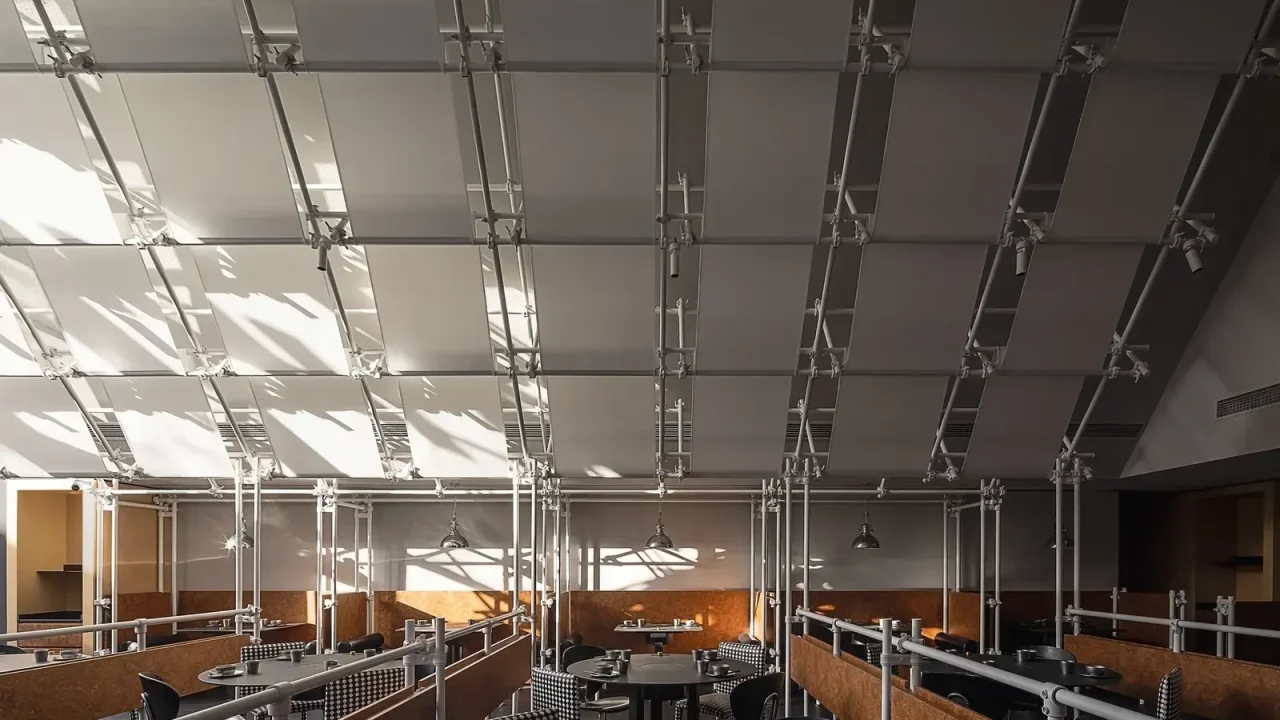
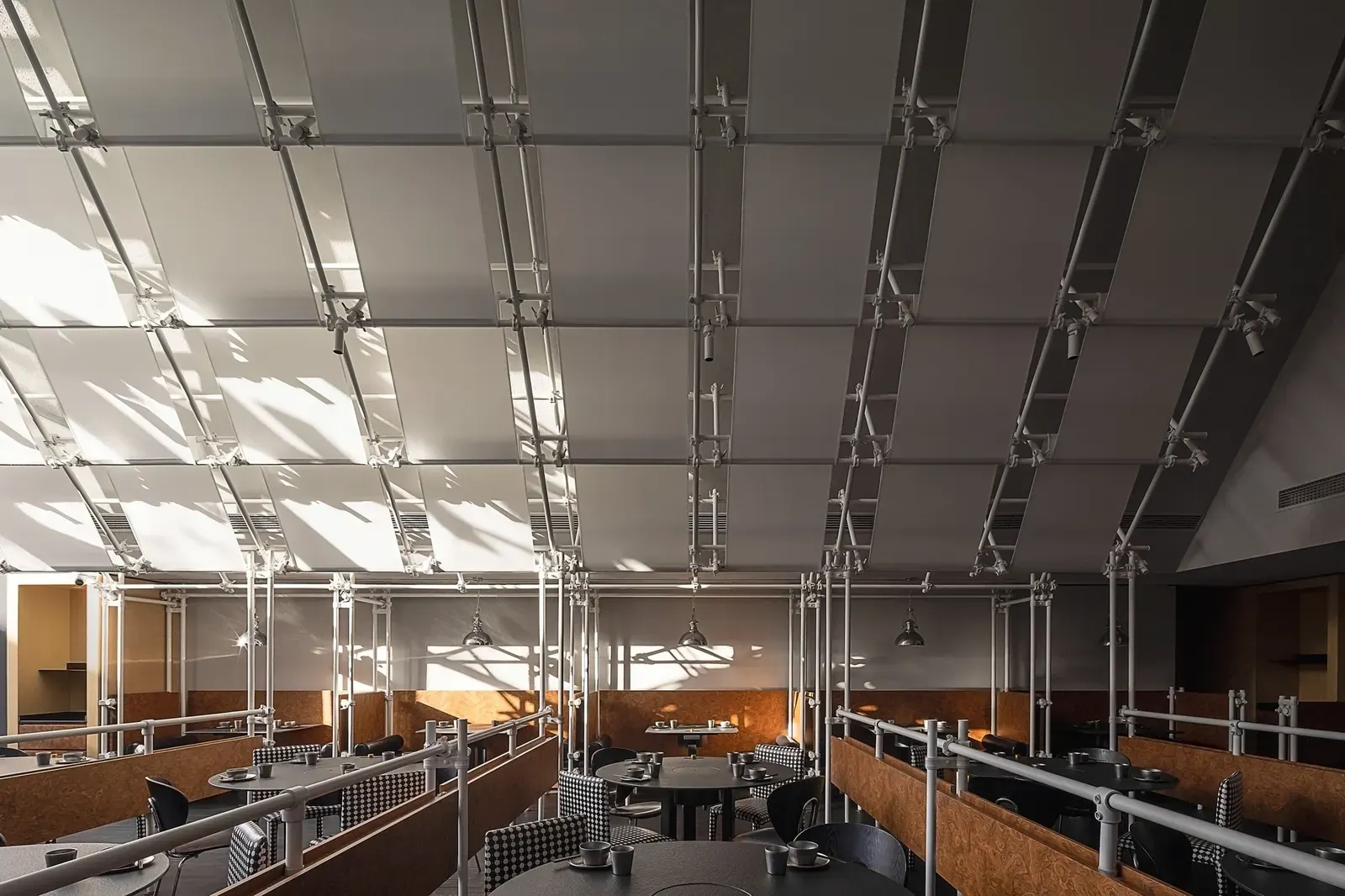
Architecture has long treated scaffolding as a purely temporary companion to construction, a system that appears during building, renovation, or maintenance and vanishes when the work is finished. A new article by Jonathan Yeung, published on ArchDaily, argues that this view overlooks a deeper kind of durability. Standardized scaffolding components are designed for repeated assembly, disassembly, transport, and reuse, making them robust over decades of handling. Their temporary character, Yeung suggests, lies not in the material itself but in the duration of each specific installation. This logic connects scaffolding to a broader tradition of modular design, from Dieter Rams’s 606 Universal Shelving System to contemporary interiors that treat industrial components as deliberate architectural elements.
Key facts
| Aspect | Detail |
|——–|——–|
| Author | Jonathan Yeung |
| Publication | ArchDaily, October 23, 2026 |
| Core argument | Scaffolding’s longevity comes from adaptability, not permanence of arrangement |
| Design parallel | Dieter Rams’s 606 Universal Shelving System (Vitsœ, 1960) and IKEA modular storage |
| Featured project | Jinhui Restaurant, Livat Shanghai / Atelier Alittle (image credit: Xiang Cheng) |
A principle of longevity through adaptability
Yeung frames the discussion around a central observation: scaffolding systems are built to last, but their lifespan is expressed through reuse rather than static endurance. Galvanized steel scaffolding, in particular, can withstand repeated handling and changing site conditions, making it a durable product that happens to be assembled temporarily. The article draws a direct parallel to furniture design, citing Dieter Rams’s 606 Universal Shelving System, introduced in 1960. Rams’s system allowed shelves, cabinets, and other components to be rearranged, expanded, or moved as needs changed. IKEA’s modular storage lines later popularized the same principle: furniture understood as a collection of interchangeable parts rather than a finished, singular object.
The shared principle is that longevity can be achieved through adaptability. Instead of designing for a fixed configuration, these systems anticipate change. Yeung writes that although scaffolding and shelving differ in material and intended lifespan, both demonstrate that a product can be long-lasting without being permanent in its arrangement.
Scaffolding as a deliberate interior material
The article goes beyond theory by pointing to real projects where scaffolding has been used as an overt interior design element. The Jinhui Restaurant in Livat Shanghai, designed by Atelier Alittle, is cited as an example. In that space, scaffolding components are not hidden or temporary but are exposed and integrated into the design language, functioning as shelving, partitions, and spatial dividers. This approach treats the system as a material with its own aesthetic and structural logic, rather than a utility to be concealed.
For architects and interior designers, this opens a practical conversation about specification. If a scaffolding system is robust enough for repeated use and can be adapted to different spatial layouts, it becomes a candidate for projects that value flexibility, future reconfiguration, or a raw industrial look. The article also touches on the use of bamboo scaffolding in parts of Asia, contrasting its material properties and lifespan with steel, though it notes that the principle of reuse remains consistent.
Standardization and design for deconstruction
The piece connects scaffolding to broader movements in construction technology, including design for deconstruction and modular building systems. Standardized components, whether in scaffolding or furniture, reduce waste and allow parts to be replaced or reconfigured without demolishing the whole. This aligns with current interest in circular economy principles and material efficiency in the built environment.
Yeung’s list of associated tags for the article includes “design for deconstruction,” “multi-use,” “construction systems,” and “adaptability,” indicating that the discussion is part of a wider editorial focus on how buildings and their components can be planned for change. For practitioners, the implication is that specifying modular, standardized systems—whether for structure, cladding, or interiors—can support long-term adaptability without sacrificing durability.
Why this matters for design professionals
For readers of Paionia7, the article offers a concrete example of how a familiar construction element can be reconsidered as a design resource. Scaffolding is often taken for granted as a temporary necessity, but Yeung’s analysis reframes it as a system with inherent design intelligence: it is standardized, reusable, adaptable, and capable of lasting for decades. The parallel with Rams’s shelving system makes the argument accessible beyond construction specialists, linking it to a well-known design lineage.
The article also raises practical questions for project planning. If a scaffolding system can be used as interior architecture, what does that mean for procurement, fire safety, load calculations, and building codes? Yeung does not address these directly, but the article invites further investigation by architects and specifiers who want to apply the principle in real projects.
Source: ArchDaily – “Scaffolding as Interior Architecture: The Longevity of Temporary Structures” by Jonathan Yeung, published October 23, 2026. Available at: https://www.archdaily.com/1187248/scaffolding-as-interior-architecture-the-longevity-of-temporary-structures
Datos clave
| Punto | Detalle |
|---|---|
| Fuente | ArchDaily |
| Fecha | 2026-10-23T07:30:00+00:00 |
| Tema | Scaffolding as Interior Architecture: The Longevity of Temporary Structures |
Source
ArchDaily Original publication: 2026-10-23T07:30:00+00:00
Related news

MIV Architects Proposes Wetland Pavilion That Prioritizes Non-Human Habitats Over Human Comfort
The Spanish firm’s “Nidos de Agua” concept for the Albufera natural park in Valencia aims to rebalance the relationship between building and…
Read more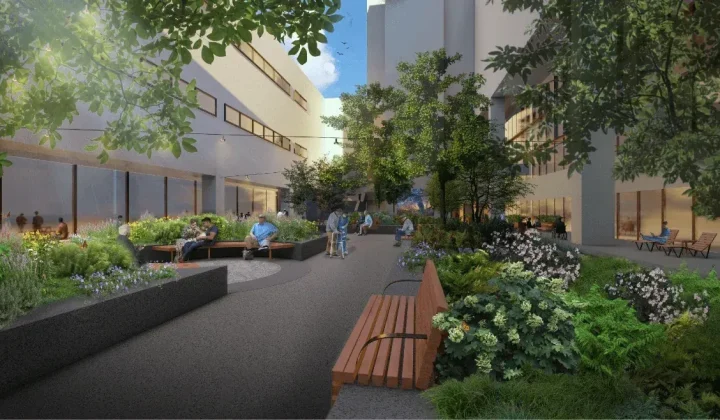
Nelson Byrd Woltz Begins Construction on Restorative Eagle Courtyard at Walter Reed Medical Center
Construction has started on a redesigned Eagle Courtyard at Walter Reed National Military Medical Center, led by Nelson Byrd Woltz Landscape Architects.…
Read more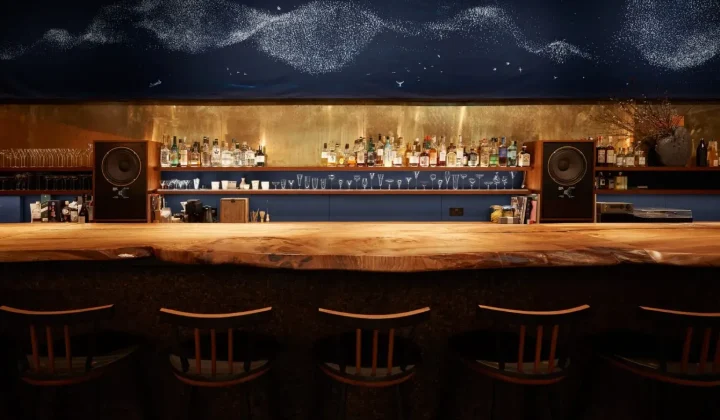
London’s listening bar boom reflects a deeper shift in hospitality design and music culture
A wave of Japanese-inspired listening bars is reshaping London’s nightlife, but owners and critics are asking whether the concept can survive commercial…
Read more
Performing Colonial Toxicity Exhibition in Valencia Examines Architecture’s Role in Nuclear Colonialism
From 24 October to 1 November 2026, Aguas Internacionales in Valencia hosts Samia Henni’s exhibition on French nuclear testing in the Algerian…
Read moreRelated wiki

Adaptive Reuse in Architecture
Reference page for reuse, retrofit, conversion, embodied carbon and design constraints.
Read more