
Jaguar Type 01: a blank-slate electric gran turismo resets the brand’s design language
The Jaguar Type 01 electric gran turismo breaks cover as the first production model conceived entirely under the marque’s reset strategy, combining a clean-sheet platform, dramatic proportions and a cabin defined by material honesty rather than luxury clichés.
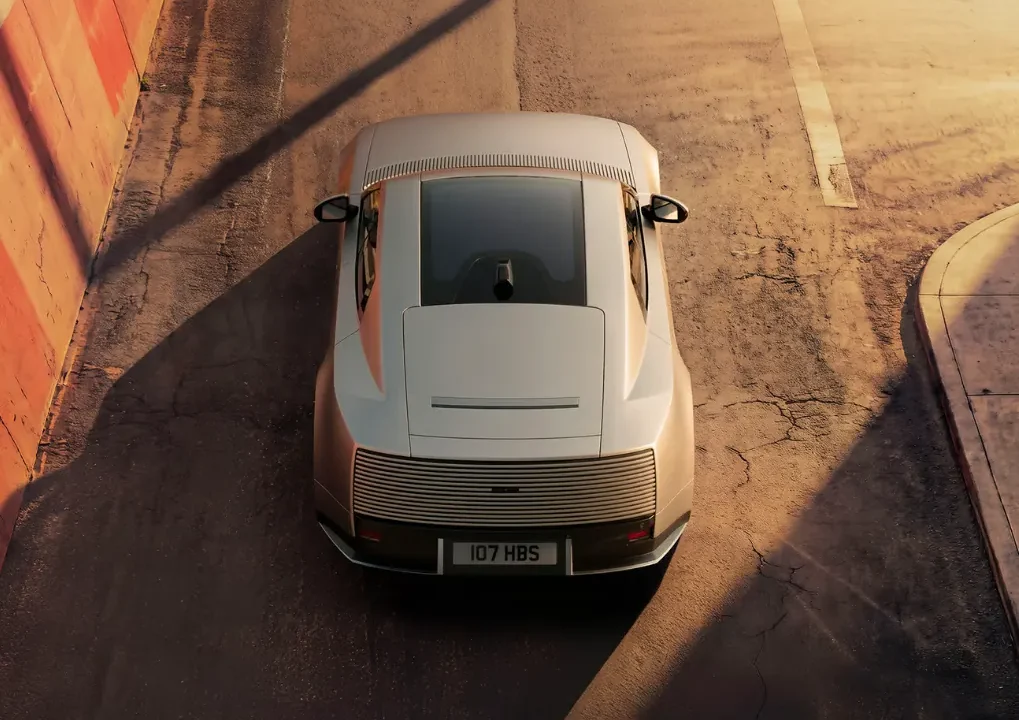
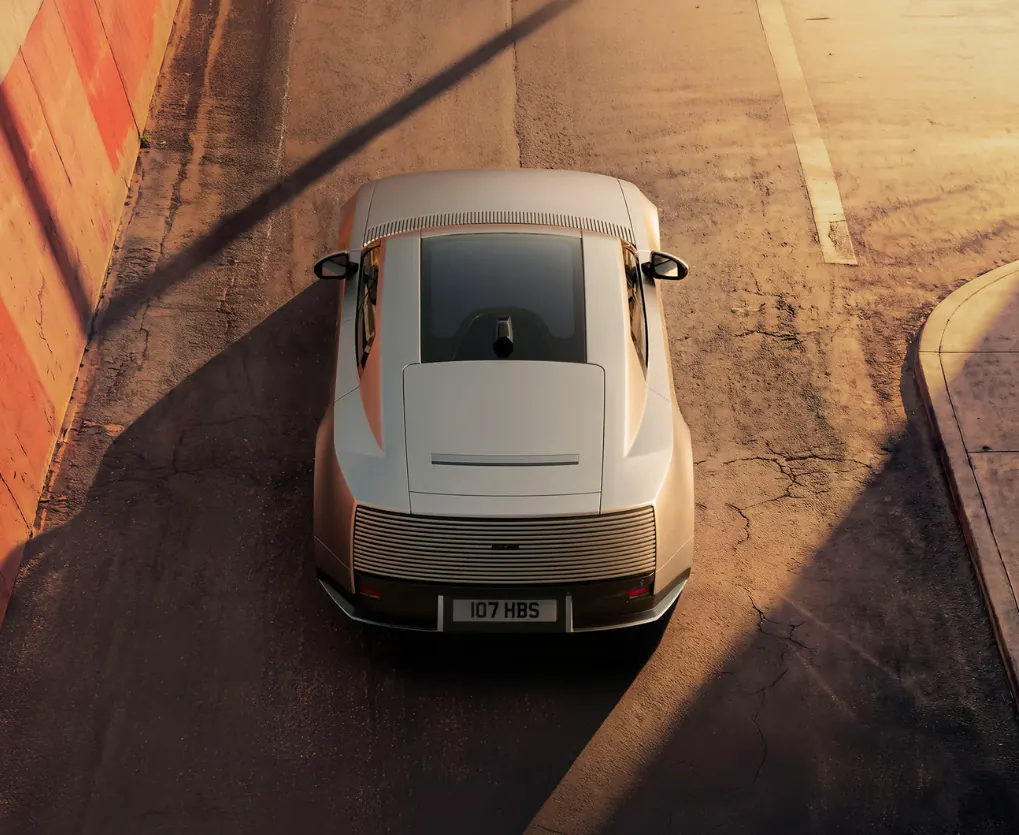
Jaguar has pulled the cover off the Type 01, a four-door electric gran turismo that represents the first production car designed and engineered entirely under the brand’s much-discussed reset. The car moves beyond the concept-stage provocations of the Type 00 show car and arrives as a road-ready statement of what the marque believes a luxury electric vehicle should look like in the second half of the 2020s.
The Type 01 is built on a dedicated electric architecture that Jaguar calls JEA. That clean-sheet platform freed the design team from the packaging constraints of a combustion-era floorpan, enabling a long wheelbase, a cab-rearward stance and a fastback silhouette that reads more like a grand tourer than a conventional saloon. The proportions are the story here: a low nose, exaggerated haunches over the rear wheels and a tapered glasshouse that pulls the visual mass toward the back axle.
A design language without nostalgia
Jaguar’s design leadership, under Gerry McGovern, has made it clear that the Type 01 was not meant to quote the brand’s back catalogue. There are no retro cues, no E-Type references and no chrome grilles shaped like historical models. Instead, the front fascia is dominated by a flush panel that houses the sensors and lighting in a single graphic, while the rear treatment uses a full-width light bar that wraps into the body sides.
That restraint carries into the surfacing. The body sides are largely free of creases, relying on the volume of the metal itself to catch light. Door handles sit flush, the glass meets the pillars without visible trim and the charging port is hidden behind a powered panel on the front wing. It is a design approach that privileges sculptural mass over decorative linework, something that places the Type 01 closer to contemporary product design than to traditional automotive styling.
Material honesty inside the cabin
The interior applies a similar logic. Jaguar has avoided the default luxury signifiers—no piano-black plastic, no over-stitched leather on every surface—in favour of what the studio calls material honesty. The dashboard is a single floating beam that spans the width of the cabin, housing a curved digital instrument panel and a central touchscreen that runs a new interface built on the brand’s software platform.
Surfaces that occupants touch frequently, such as the seat bolsters and armrests, use a wool-blend textile and a vegetable-tanned leather alternative. Trim pieces that would traditionally be veneer or metal are made from a compressed stone composite. The floor mats are woven from recycled nylon. None of these choices are presented as eco-compromises; they are framed as aesthetic decisions that happen to carry a lower carbon footprint.
The cabin layout is strictly four-seat, with a full-length centre console that separates the rear passengers. That configuration reinforces the gran turismo brief: this is a car for covering long distances with two people or four, not a family hauler. Boot space is rated at 480 litres, accessed through a powered tailgate that opens to a flat load floor.
Engineering for range and charging speed
Jaguar has not released full powertrain specifications, but the Type 01 targets a range above 700 kilometres on the WLTP cycle. The 800-volt electrical architecture supports charging at up to 350 kW, which the company claims can add 300 kilometres of range in approximately 15 minutes under optimal conditions.
The battery pack is integrated into the floor structure as a stressed member, lowering the centre of gravity and increasing torsional rigidity. Suspension is by double wishbones at the front and a multi-link setup at the rear, with air springs and adaptive dampers standard across the range. Rear-axle steering is also included, reducing the turning circle at low speeds and improving stability during high-speed lane changes.
Key facts
| Aspect | Detail |
|---|---|
| Model | Jaguar Type 01 electric gran turismo |
| Platform | Jaguar Electrified Architecture (JEA), clean-sheet EV platform |
| Target range | Over 700 km WLTP |
| Charging speed | Up to 350 kW, ~300 km in 15 minutes |
| Interior approach | Four-seat layout, wool-blend textile, stone composite trim |
Why the Type 01 matters for design professionals
For architects, interior designers and anyone working at the intersection of form and industrial production, the Type 01 is a useful case study in how a legacy brand can attempt a hard reset without leaning on heritage. The decisions around material selection—particularly the use of stone composite and wool textiles in a production car—parallel conversations happening in furniture design and high-end interiors, where clients increasingly ask for surfaces that read as authentic rather than simulated.
The car’s surfacing language also invites comparison with contemporary architecture’s taste for monolithic volumes and minimal detailing. Whether Jaguar can translate this design philosophy across a full model range remains an open question, but the Type 01 sets a clear direction that design studios, materials researchers and branding strategists will be watching closely.
Source: Wallpaper, Jaguar’s new dawn, https://www.wallpaper.com/transportation/jaguars-new-dawn
Source
Wallpaper Original publication: 2026-10-26T16:50:26+00:00
Related news
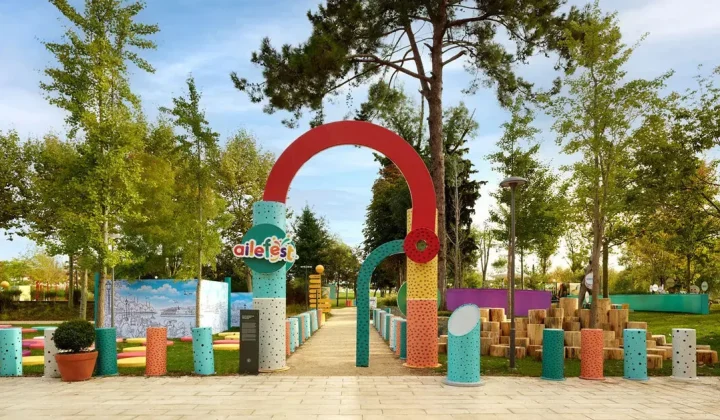
Milimetrik Architects turns Istanbul’s Rami Library into a 91,000-sqm temporary landscape for family play
AileFest 2026 used modular timber-and-steel pavilions, chromatic gathering nodes and house-shaped book-fair booths to adapt the historic Rami Library courtyard and interiors…
Read more
NEST — The Canopy Village Proposes Elevated Forest Hospitality for Squamish, British Columbia
A concept by Razieh Shams Aalm lifts prefabricated accommodation pods into the forest canopy above Squamish, British Columbia, pairing an elevated structural…
Read more
Herzog & de Meuron to Turn a Former Birkenstock Warehouse Into the Eames Institute Museum in Novato
Herzog & de Meuron and EHDD will convert a 1965 McGraw-Hill warehouse in Novato, California, into the Eames Institute of Infinite Curiosity…
Read more
Rótulo em Branco Scales Up the Construction Nail Into a Three-Piece Steel Table Collection
Brazilian studio Rótulo em Branco has released PREGO, a collection by architect Ingrid Sani Lang that turns the construction nail into side,…
Read moreRelated wiki

Adaptive Reuse in Architecture
Reference page for reuse, retrofit, conversion, embodied carbon and design constraints.
Read more