
Concept cars turned the act of entry into a design experiment
A Designboom feature revisits concept cars that made entering part of the design, from a sliding canopy on the Ferrari 512S Modulo to the floor-hugging Lancia Stratos Zero.
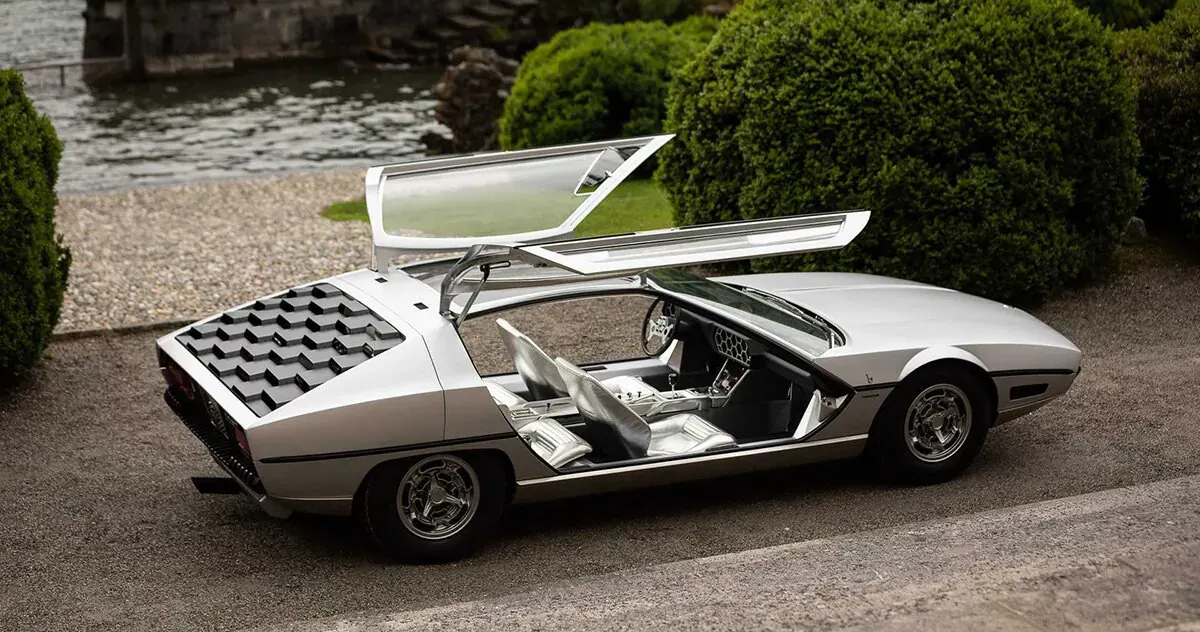
Experimental concept cars of the 1960s and 1970s made getting into a car part of the design spectacle. A Designboom feature traces how designers replaced conventional side doors with sliding canopies, hinged windshields and moving body sections, using the freedom of prototypes to explore the relationship between a vehicle’s shape and its occupants.
The examples range from the 1963 Chevrolet Corvair Testudo to the Ferrari 512S Modulo, shown at the 1970 Geneva Motor Show. Their entry systems were not simply unusual hardware: they changed how people approached the car and how its body opened around them.
Key facts
| Concept car | Design and presentation | Entry approach |
|---|---|---|
| Chevrolet Corvair Testudo | Bertone, 1963 | Windshield and roof pivot forward |
| Ferrari 512S Modulo | Paolo Martin, 1970 | Canopy slides forward |
| Lancia Stratos Zero | Marcello Gandini, 1970 | Hinged windshield opens at the nose |
| Holden Hurricane | General Motors’ Australian division, 1969 | Canopy opens as seats rise and tilt |
Rethinking the car’s entrance
The Testudo, designed by Giorgetto Giugiaro at Bertone, treated the windshield and roof as one assembly. That glazed section pivoted forward to expose the seats, allowing the body to keep a continuous, rounded profile without relying on a conventional side-door opening.
The Ferrari Modulo pushed the idea further. Designed by Paolo Martin and built on a Ferrari 512S racing-car chassis, it had a low, two-part form and a glazed upper canopy that slid forward. In the feature’s account, opening the canopy transformed the car’s appearance: the top enclosure shifted away from the lower body rather than merely swinging a door out from its side.
The designs appeared during a period when aircraft and space-age imagery influenced industrial design. A canopy offered a way to rethink the passenger compartment’s outline, though these concepts also raised practical questions about access that their dramatic shapes could obscure.
The wedge as a point of arrival
Marcello Gandini’s Lancia Stratos Zero, unveiled at the 1970 Turin Motor Show, approached entry from the nose. The car stood 84 centimetres tall, according to Designboom. A concealed handle released its hinged windshield, and a hydraulic linkage connected that movement to the steering column.
Instead of walking to the side, an occupant approached the front, stepped onto a rubber mat on the bodywork and lowered into a reclining seat. The arrangement made the wedge-shaped exterior part of the entry sequence. It is an especially clear example of how a concept car’s form could dictate not only how it looked, but how a person interacted with it.
Designing around the occupant
Other prototypes explored whether the interior itself could adapt to the challenge of a low body. Chevrolet’s Astro I, introduced at the 1967 New York Auto Show, had a large upper body section that hinged upward from the rear; its seats rose with the canopy. The 1969 Holden Hurricane used a more elaborate sequence: its hydraulically operated canopy pivoted forward, while the seats lifted and tilted to help occupants climb aboard. The steering column also moved out of the way, before the seats lowered into driving position.
These mechanisms make entry a staged transition between two interior arrangements: one for getting in and another for traveling. The source feature presents them as experiments rather than evidence that such systems became mainstream production solutions.
Glass, visibility and exposure
The 1967 Lamborghini Marzal, also designed by Gandini at Bertone, explored access through enormous gullwing doors. Their glazing extended far down the sides, making the passenger area unusually exposed when the doors were raised. Designboom reports approximately 4.5 square metres of glass and notes that Ferruccio Lamborghini had reservations about the privacy the doors afforded.
That tension links automotive design to a wider architectural question: transparency can open up a space visually, but it can also leave its occupants more visible. The Marzal made the trade-off tangible at the scale of a car’s cabin.
What these experiments show
The concepts are useful to architecture and design readers because they treat movement, thresholds and human scale as parts of a designed object. A canopy or lifting roof is both a mechanical device and a spatial gesture; the occupant’s route into the cabin becomes inseparable from the vehicle’s geometry.
The examples are historical design experiments, not a comparison of current vehicle safety, accessibility or usability. Designboom’s feature revisits a selection of cars from the 1960s through the end of the century, and the available material does not establish how each mechanism performed in routine use. Readers looking for technical specifications or production histories should check museum, manufacturer or archival records for each individual concept.
Source: Designboom, “the spectacle of entry: how concept car designers set entire bodies in motion,” https://www.designboom.com/technology/car-open-architecture-automotive-entry-doorless-wedge-experimental-concept/
Source
Designboom Original publication: 2026-11-25T21:35:48+00:00
Related news
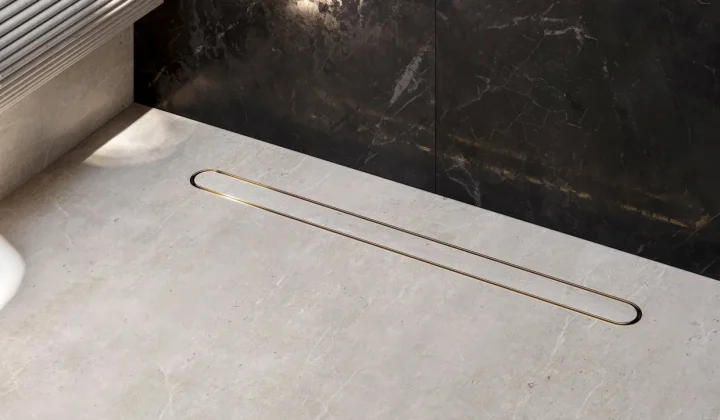
Infinity Drain showcases hospitality-focused products at BDNY 2026
Infinity Drain presented five drainage products at the November 8–9 BDNY trade fair in New York, including adjustable and fixed-length linear drains…
Read more
London Museum opens in Smithfield’s transformed market buildings
The London Museum opens to the public on 28–29 November in a first phase that adapts Smithfield’s historic market buildings for exhibitions…
Read more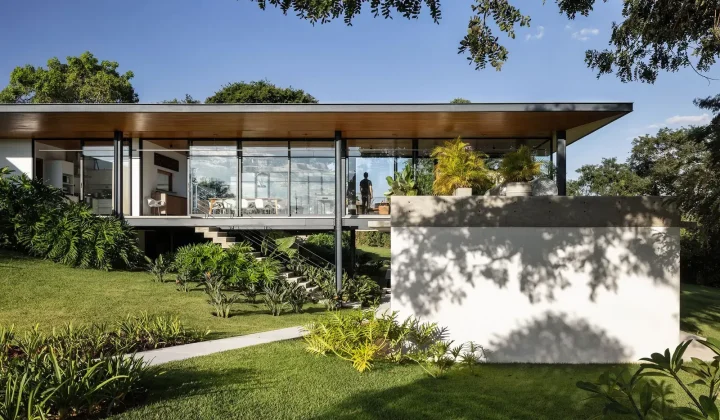
Canoa Arquitetura’s House Duas Marias I sits among mature trees in Jaguariúna
The residence occupies a roughly 6,000-square-metre plot in the countryside of São Paulo state, where mature trees were already a defining feature…
Read more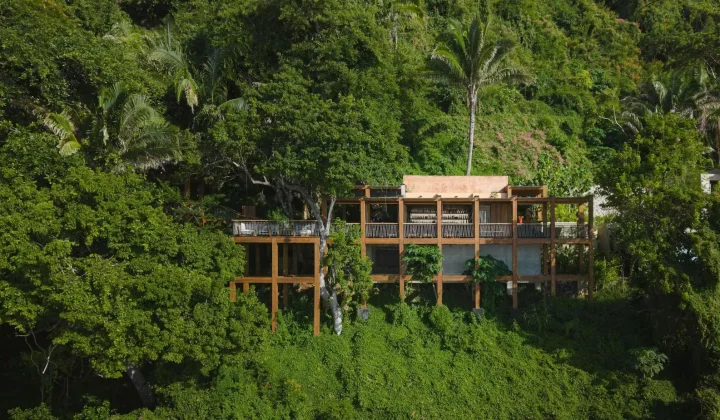
Estudio CR designs cliffside Barra Peñasco for Rosewood Mandarina
The open-air bar in Riviera Nayarit is arranged around its Pacific-facing cliffside setting, with a sequence of spaces for dining, drinks and…
Read moreRelated wiki

Adaptive Reuse in Architecture
Reference page for reuse, retrofit, conversion, embodied carbon and design constraints.
Read more