
Futurewave Unveils Furny: A Furniture-Like Robot That Communicates Through Movement
Brussels-based studio Futurewave has introduced Furny, a home robot designed to integrate seamlessly into domestic spaces by communicating through subtle movements and gestures, eschewing screens and voice commands.
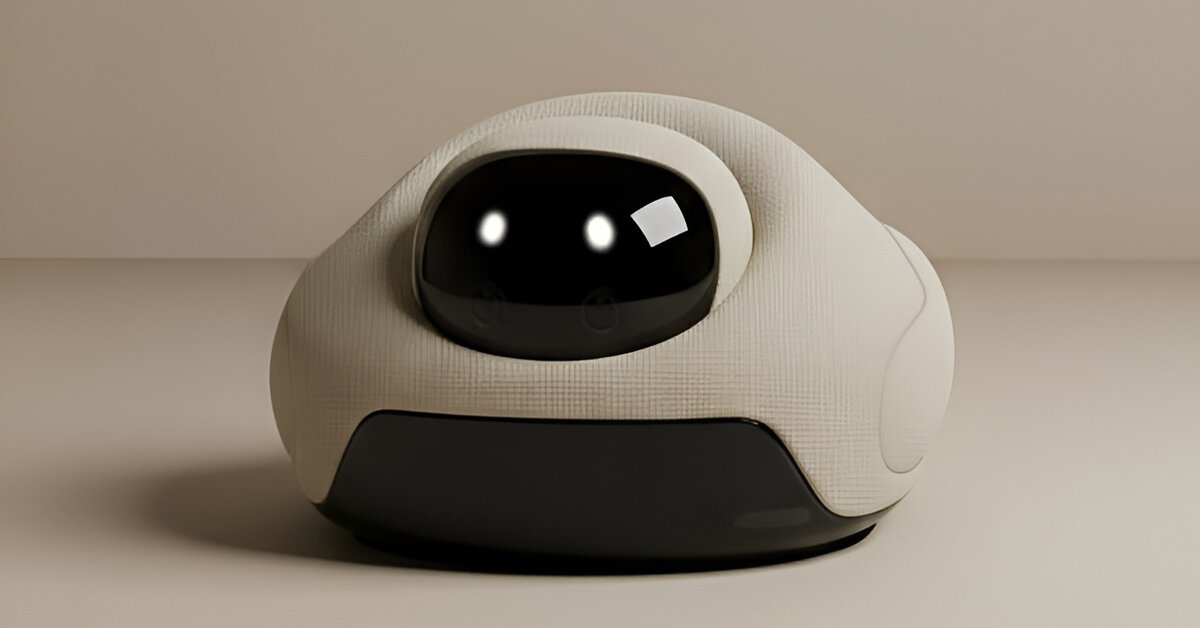
Brussels-based studio Futurewave has introduced Furny, an innovative home robot that reimagines human-robot interaction by prioritizing non-verbal communication through movement and gesture. Presented at Milan Design Week 2026, Furny is designed not as a high-tech appliance, but as a piece of furniture that can integrate harmoniously into contemporary interiors.
Designed to communicate intention and presence without relying on screens or voice interfaces, Furny draws inspiration from research into expressive movement for non-anthropomorphic robots. The project focuses on how subtle shifts in posture, orientation, and tilting can convey internal states and foster a sense of interaction between the user and the machine.
Furniture-Like Integration
Futurewave deliberately avoided anthropomorphic characteristics in Furny’s design. Instead, the robot adopts a restrained, furniture-like aesthetic, intended to blend into domestic environments without being visually intrusive. This approach aims to make robots more approachable and less alienating within the home.
The robot features a movable head element that responds to its surroundings through controlled changes in posture and orientation. These subtle movements signal intent and awareness before any action is taken, creating a more intuitive and less demanding form of interaction.
Movement as the Primary Interface
At the core of Furny’s design philosophy is the concept of movement as the central communication language. Every tilt, repositioning, and sequence of motion is meticulously calibrated to convey behavior through the robot’s physical form itself. This transforms the robot’s surface and posture into its primary interface, moving beyond traditional screens or voice commands.
This focus on movement proposes an alternative paradigm for domestic robotics, where interaction is shaped by spatial behavior, physical presence, and nuanced motion. It seeks to establish a more organic and less intrusive relationship between humans and their automated domestic companions.
The project integrates industrial design principles with embedded electronics and sophisticated software-controlled movement systems, all within a framework designed for manufacturability. Motion is not an add-on feature but the fundamental design language, enabling the robot to communicate its state and intentions through its physical presence alone.
Bridging Design and Technology
Furny represents a convergence of furniture design and robotics, aiming to create a more integrated and aesthetically pleasing robotic presence in the home. By abstracting away from humanoid forms and focusing on fluid, communicative gestures, Futurewave is exploring a future where technology is not only functional but also emotionally resonant and visually harmonious with its environment.
The project’s success lies in its ability to imbue a mechanical object with a sense of presence and intention through carefully choreographed movements. This approach could pave the way for a new generation of domestic robots that are more intuitively understood and more readily accepted into daily life.
The design deliberately sidesteps the common trend of making robots mimic human form, opting instead for an abstract representation that communicates through its inherent physical properties and programmed behaviors. This allows Furny to integrate quietly into contemporary interior spaces, fostering interaction through subtle shifts in its form and position.
Datos clave
| Feature | Description |
|—|—|
| Name | Furny |
| Designer | Futurewave |
| Presentation | Milan Design Week 2026 |
| Communication | Movement and gesture |
| Design Philosophy | Furniture-like integration, non-anthropomorphic |
This development is significant for Paionia7 readers as it highlights a new direction in how technology can be integrated into living spaces. By blurring the lines between furniture and robotics, Furny offers a vision of domestic technology that prioritizes aesthetics, intuitive interaction, and a less intrusive presence, aligning with contemporary interests in design, sustainability, and human-centric technology.
Fuente: designboom https://www.designboom.com/technology/futurewave-designs-furniture-like-home-robot-that-communicates-through-movement-furny/
Datos clave
| Punto | Detalle |
|---|---|
| Fuente | Designboom |
| Fecha | 2026-05-28T23:50:28+00:00 |
| Tema | futurewave designs furniture-like home robot that communicates through movement |
Source
Designboom Original publication: 2026-05-28T23:50:28+00:00
Related news

India’s ‘Anthill’ House Mimics Insect Mounds for Passive Cooling
A new residential project in India draws inspiration from the natural ventilation and thermal regulation of anthills, utilizing brick chambers and cavernous…
Read more
How to Read Project Changes in Architecture and Urban Design
A reliable project analysis starts by checking what version of a scheme you are looking at, what documents support it, and which…
Read more
Atelier AJO Transforms Vacant French Farmhouse into a Family Gathering Retreat
A once-vacant farmhouse in Pont-de-Salars, France, has been revitalized by Atelier AJO, creating a dynamic and welcoming space for family and friends,…
Read more
Jefferson OH Homeowners Guide to Roof Replacement: Key Considerations for Durability and Value
A comprehensive overview for Jefferson, Ohio homeowners on essential factors to consider before undertaking a roof replacement project, from material selection to…
Read moreRelated wiki

Adaptive Reuse in Architecture
Reference page for reuse, retrofit, conversion, embodied carbon and design constraints.
Read more