
Amansara renovation revives a landmark of Cambodia’s New Khmer architecture
The renovated Amansara in Siem Reap preserves the 1960s character of the former Villa Princière while adding updated suites, new pool accommodation and a bar in a former royal dining room.
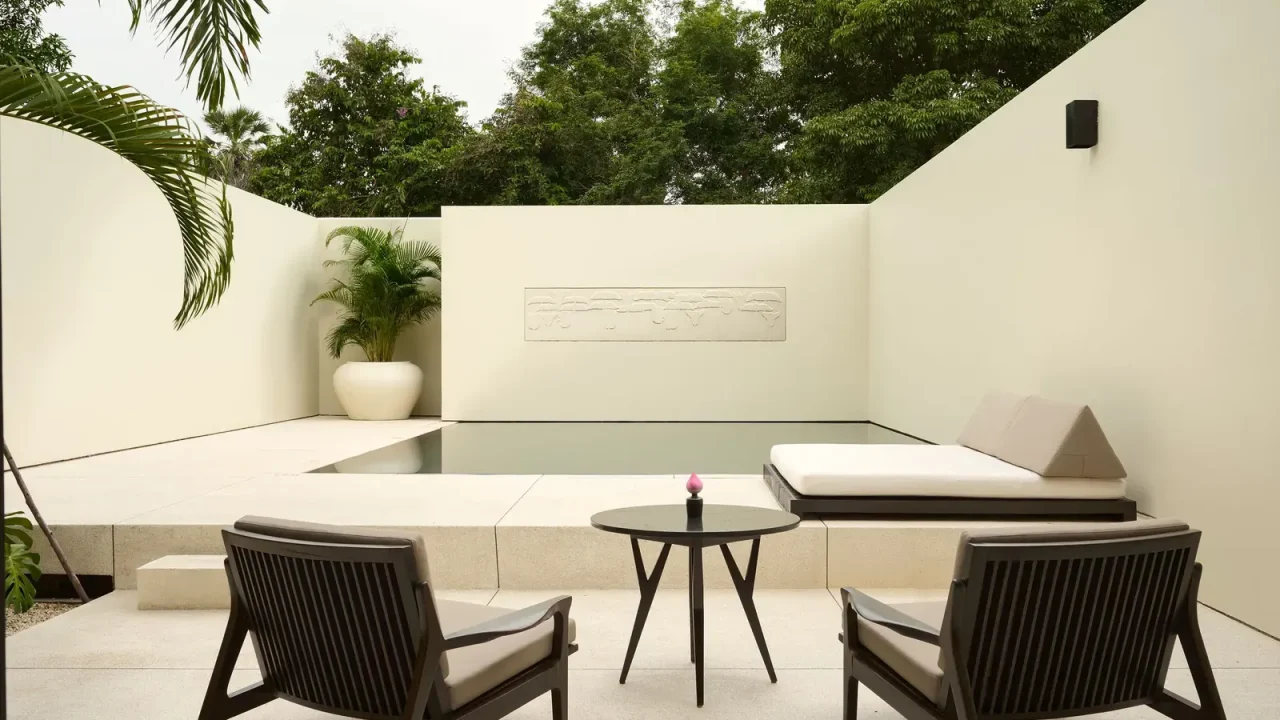
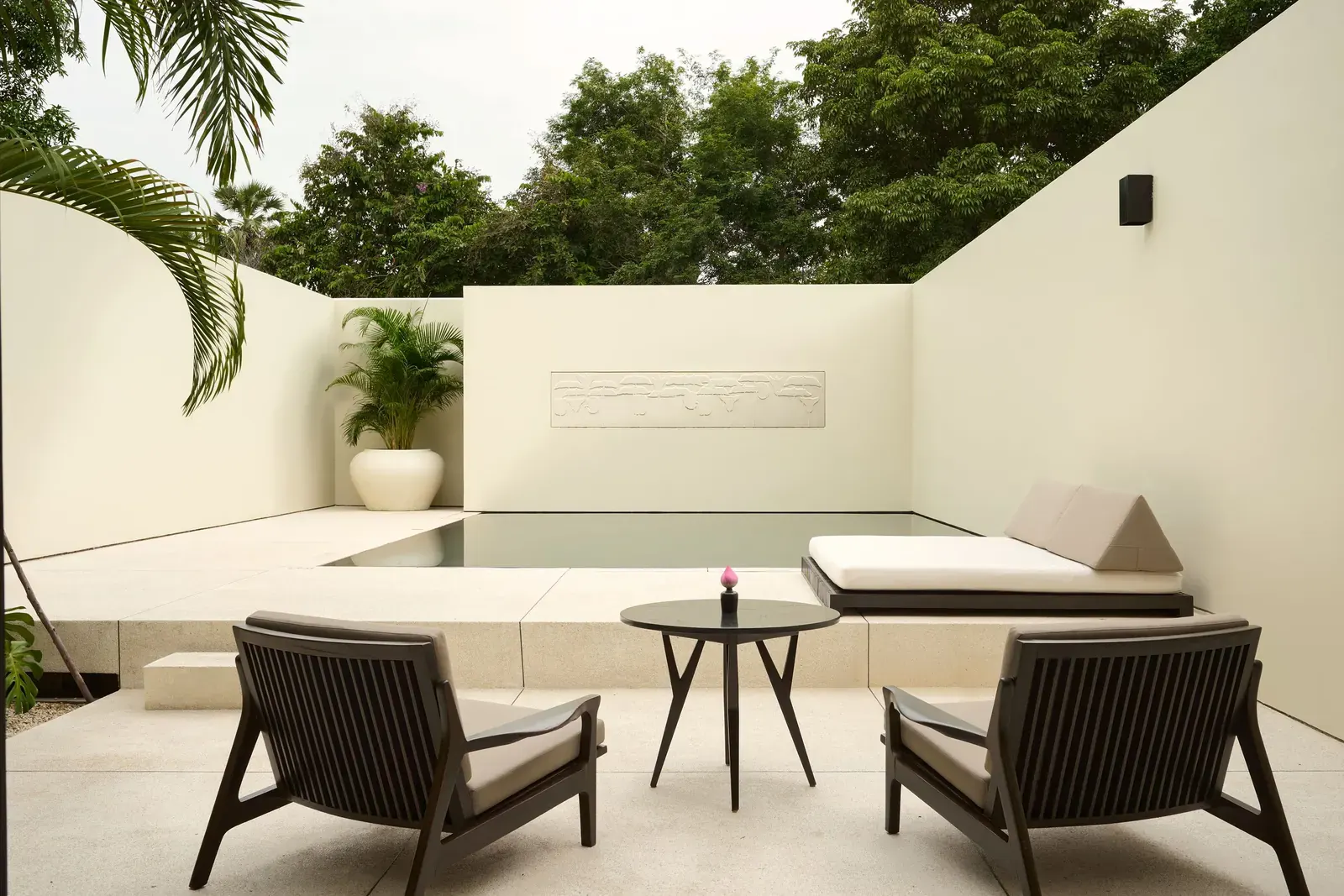
Amansara, the Siem Reap hotel developed from a former royal guesthouse, has completed a renovation that updates its suites and shared spaces while retaining the architectural character of the original 1960s complex. The work preserves the property’s connection to Cambodia’s New Khmer architecture, a modern movement associated with expressive concrete forms, open-air circulation and climate-responsive design.
The 24-suite hotel occupies the former Villa Princière, commissioned by Cambodia’s King Norodom Sihanouk. According to Wallpaper, the property was designed by French architect Laurent Mondet in 1962 as one of two state guesthouses for Prince Sihanouk. Its low-rise white cement buildings, stone details, columned corridors and central pools were conceived for privacy and for the country’s hot, humid climate.
Key facts
| Item | Detail |
|---|---|
| Location | Siem Reap, Cambodia |
| Original building | Villa Princière, commissioned in 1962 |
| Architect of the original complex | Laurent Mondet |
| Renovation architect | Kerry Hill Architects |
Preserving the original architectural language
The latest work was handled by Kerry Hill Architects, with the existing structure largely left intact. The project’s approach is less about introducing a new visual identity than about making careful adjustments to a building whose architectural value lies in its restraint and continuity.
The property’s long corridors, curved forms and layered concrete elements remain central to the experience. These details place Amansara within the broader history of New Khmer architecture, which emerged as Cambodian designers moved beyond French colonial references and explored more expressive modern forms in the middle of the 20th century.
The renovation also acknowledges the building’s patina. Rather than replacing its time-worn character with a wholly contemporary finish, the updated interiors continue to use a restrained palette of dusty browns, white and black. In the suites, small touches of orange reference the saffron robes worn by Buddhist monks.
New accommodation within a historic framework
All 24 suites have been refreshed. Five suites have also been upgraded with private swimming pools, expanding the hotel’s pool-suite offering. The renovation introduces a Junior Pool Suite and a Two-Bedroom Family Pool Suite, giving the property additional room types for families and longer stays.
The changes are significant for the hotel’s operation, but the source material indicates that the overall layout and architectural bones have not been substantially altered. The emphasis is on improving comfort and extending the range of accommodation while keeping the experience tied to the original building.
That balance is particularly relevant in Siem Reap, where hospitality developments operate alongside a dense concentration of historic and religious sites. Amansara is located on the road toward Angkor, close to Angkor Wat and other major temple complexes including Bayon and Ta Prohm.
A former royal room becomes a bar
The renovation also adds a bar in a room that originally served as a private dining space for King Sihanouk and the royal family between 1962 and 1965. The room now combines drinks and afternoon tea with historic photographs, adding a layer of interpretation to the building’s past without turning the hotel into a formal museum.
Dining elsewhere on the property continues to combine Cambodian dishes with international options. The menu includes Khmer salads, beef lok lak and traditional breakfast dishes such as Bor Bor Bangkear, a rice-based porridge served with bean sprouts, spring onion and prawns.
Beyond the hotel, the wider setting remains part of the property’s appeal. Amansara is within reach of Siem Reap’s markets and cultural districts, while excursions include boat trips on Tonlé Sap. These activities connect the hotel to the region beyond its protected grounds, although the architecture remains the strongest reason to read the renovation as more than a routine hospitality update.
Why the project matters
Amansara’s renewal is notable because it treats a modern Cambodian landmark as an existing architectural asset rather than a blank shell for a new hotel concept. The project keeps the relationship between structure, climate and landscape visible, while introducing practical changes to meet contemporary guest expectations.
The available account comes from Wallpaper’s review and does not provide a detailed construction timeline, project budget or technical breakdown of the interventions. Those details would be needed to assess the renovation’s environmental performance or conservation methodology more fully. For now, the clearest evidence is the decision to retain the original forms and materials while adapting selected rooms and amenities.
Source: Wallpaper, “Amansara: a revived royal guesthouse in Siem Reap,” published 7 November 2026: https://www.wallpaper.com/travel/hotels/amansara-review
Source
Wallpaper Original publication: 2026-11-07T04:00:00+00:00
Related news
RISCO Designs New Hospital da Luz Clinic in Figueira da Foz
The new Hospital da Luz clinic by Portuguese practice RISCO is located in a consolidated urban area in northern Figueira da Foz.
Read more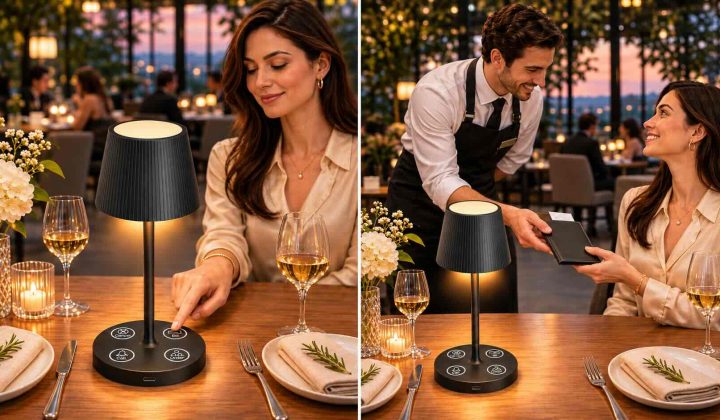
ANYAO Table Lamp Concept Links Guest Service Buttons to Restaurant Staff Apps
The ANYAO concept combines cordless table lighting with four service controls, connecting guest requests to a receiver, mobile app and restaurant service…
Read more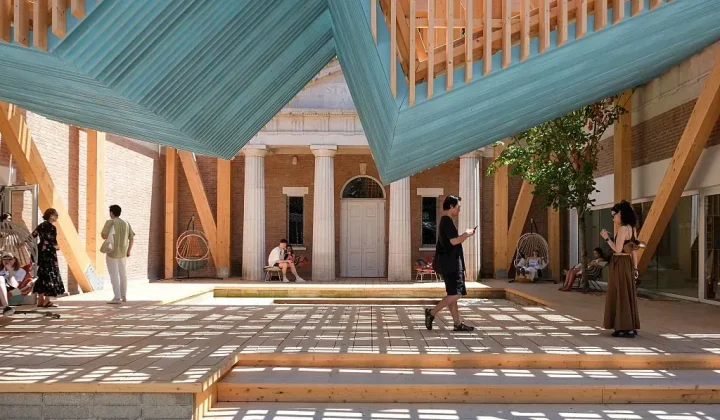
Germane Barnes to Curate the US Pavilion at the 2027 Venice Architecture Biennale
Architect and educator Germane Barnes will lead the 2027 US Pavilion in Venice with historian Vyta Pivo and the University of Miami.…
Read more
BDNY 2026 to spotlight hospitality interiors, adaptive reuse and material innovation
Boutique Design New York will bring architects, designers, hoteliers and product brands together in New York on November 8–9, with programming focused…
Read moreRelated wiki

Adaptive Reuse in Architecture
Reference page for reuse, retrofit, conversion, embodied carbon and design constraints.
Read more