ANYAO Table Lamp Concept Links Guest Service Buttons to Restaurant Staff Apps
The ANYAO concept combines cordless table lighting with four service controls, connecting guest requests to a receiver, mobile app and restaurant service system.
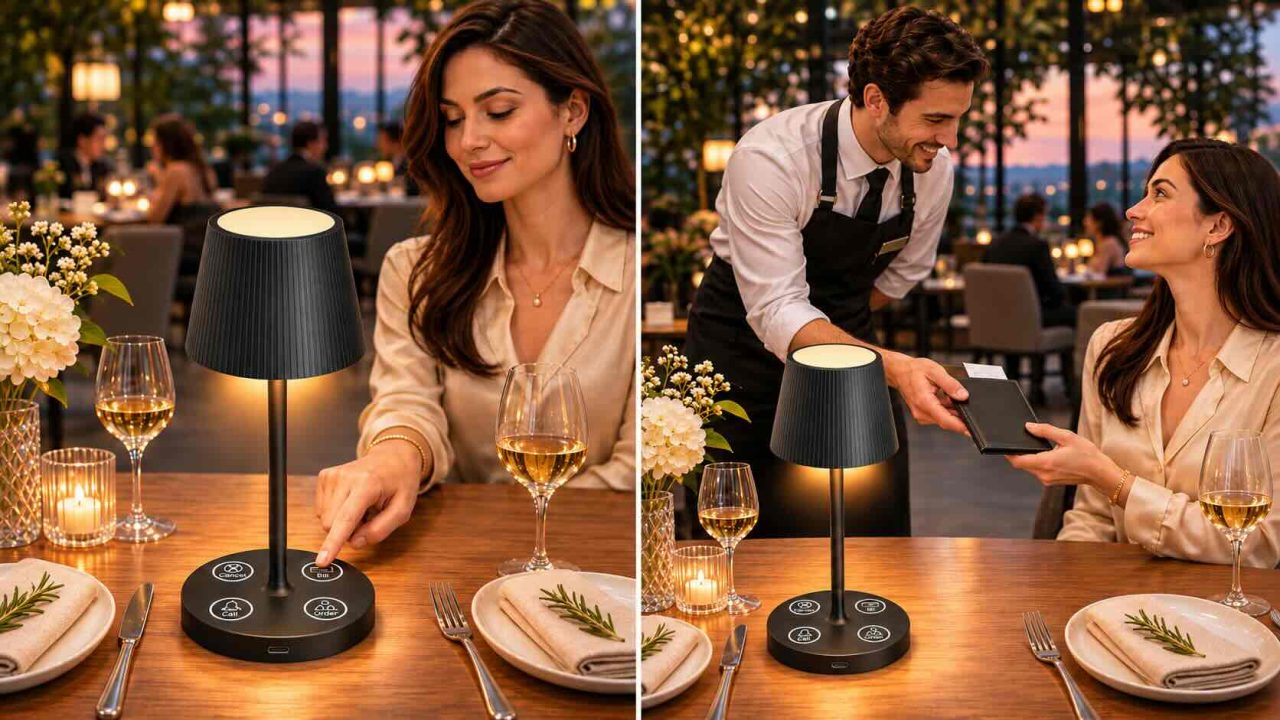
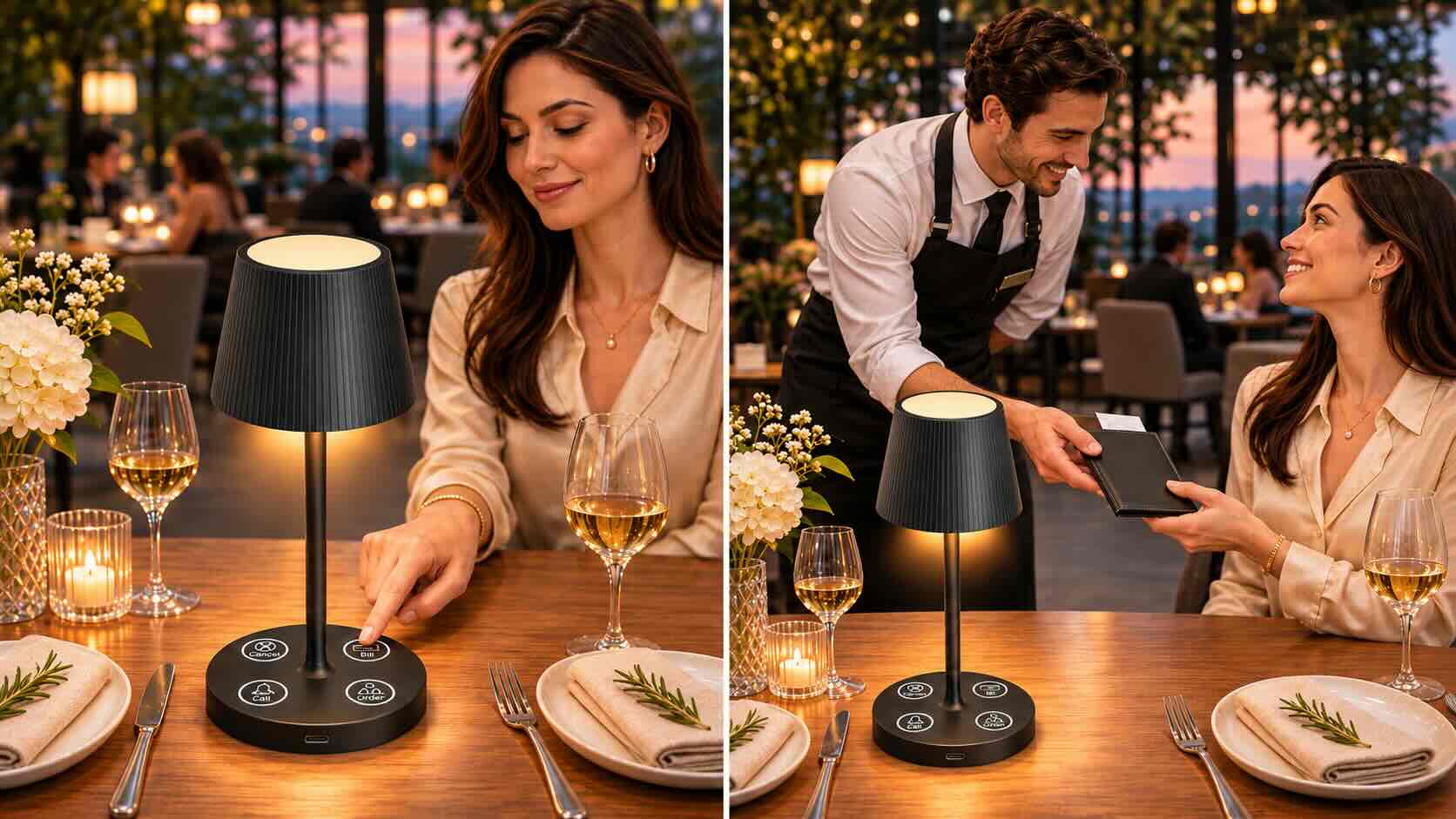
A table lamp concept by ANYAO combines ambient lighting with a direct channel for restaurant service requests. Four buttons on the top of the lamp base allow guests to call staff, request the bill, signal that they are ready to order or cancel a previous request.
Reported by Amazing Architecture on 8 November 2026, the concept connects the tabletop device to a receiver, then forwards each signal through a wireless network to a mobile app and the restaurant’s service system. The proposal places a familiar hospitality interaction—lighting the table—at the centre of a more structured service workflow.
The source presents the product as a concept and operational proposition. It does not provide independent confirmation of commercial availability, restaurant installations or performance in a live dining room.
Key facts
| Item | Detail |
|---|---|
| Product concept | ANYAO restaurant table lamp |
| Controls | Call, Bill, Order and Cancel |
| Signal path | Lamp, 433 MHz receiver link, wireless network, staff app and service system |
| Stated runtime | Eight hours standard; up to 12 hours with an optional battery configuration |
Four controls on the tabletop
The lamp’s controls are intended to give each common request a defined meaning. “Call” asks a staff member to come to the table, while “Bill” signals that the guests want the check. “Order” indicates that the table is ready to place an order, although the source makes clear that staff would still take the guests’ menu choices.
The fourth button, “Cancel”, introduces a more complex service scenario. A guest may withdraw a request after it has been sent, but the practical result depends on how the receiving app handles a cancellation that staff have already seen or acknowledged.
For restaurant designers and operators, the distinction between a visible control and a reliable service response is central. Each button needs to produce an understandable next action for the floor team. A request that reaches the receiver but is not clearly displayed on the staff side would not solve the communication problem.
From radio signal to staff workflow
The proposed connection uses two separate stages. The lamp sends the button signal to a receiver over a 433 MHz radio link. The receiver then uses a wireless network to forward the request to the mobile application and restaurant service system.
The source states a range of 500 metres for the lamp-to-receiver link, but does not provide the testing conditions behind that figure. It should therefore be treated as a specification requiring an on-site trial, rather than as a guaranteed range for every dining room.
Partitions, corners, multiple rooms and table rearrangements could all affect the practical setup. A pilot should test the most distant tables, areas behind obstructions and several requests made close together. Staff also need to confirm that the correct table and request type appear on each receiving interface.
Lighting and tabletop ergonomics
The product’s role as a lamp remains as important as its service function. A sample should be tested on the smallest table intended for the system, with plates, glasses, menus and other objects in their normal positions.
The base footprint, shade height and button visibility can affect both the dining experience and the work of servers. Guests should be able to see and reach the controls without moving tableware. Servers should also be able to set down and clear plates while the lamp remains in place.
The source recommends checking the controls from both sides of the table and testing whether labels remain visible beside menus, glassware or centrepieces. These details connect product design with the wider interior layout of a restaurant.
Battery planning and deployment
The standard configuration is described as providing eight hours of runtime, while an optional battery configuration is stated to support up to 12 hours. The appropriate choice depends on the restaurant’s opening hours, service pattern and charging routine.
A deployment plan would need to cover when lamps are charged, how fully charged units are distributed before service and what happens when a lamp or receiver is replaced. Table assignments should also be recorded, particularly in venues that regularly change layouts for events or different service periods.
The proposed pilot is therefore not limited to checking whether the lamp illuminates a table. It should establish whether guests can understand the controls, whether staff can respond consistently and whether the system remains legible during a busy service.
Why the concept matters
ANYAO’s proposition sits between hospitality furniture, lighting and front-of-house technology. For interior designers, the key question is not only whether a connected lamp can reduce verbal calls across a dining room, but whether its controls and equipment can be integrated without adding visual or operational clutter.
Before specifying a system of this kind, restaurants would need to verify the table assignment process, coverage in the actual room, behaviour after a cancelled request and the response procedure for each button. New staff would also require a short practice session using the same devices and interfaces planned for service.
Source: Amazing Architecture, “Restaurant Table Lamps with Service Buttons: From a Table Request to the Staff App,” https://amazingarchitecture.com/articles/restaurant-table-lamps-with-service-buttons-from-a-table-request-to-the-staff-app
Source
Amazing Architecture Original publication: 2026-11-08T18:09:13+00:00
Related news
RISCO Designs New Hospital da Luz Clinic in Figueira da Foz
The new Hospital da Luz clinic by Portuguese practice RISCO is located in a consolidated urban area in northern Figueira da Foz.
Read more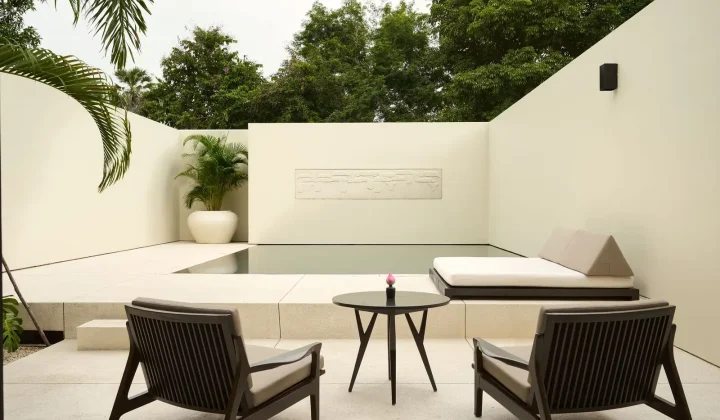
Amansara renovation revives a landmark of Cambodia’s New Khmer architecture
The renovated Amansara in Siem Reap preserves the 1960s character of the former Villa Princière while adding updated suites, new pool accommodation…
Read more
Germane Barnes to Curate the US Pavilion at the 2027 Venice Architecture Biennale
Architect and educator Germane Barnes will lead the 2027 US Pavilion in Venice with historian Vyta Pivo and the University of Miami.…
Read more
BDNY 2026 to spotlight hospitality interiors, adaptive reuse and material innovation
Boutique Design New York will bring architects, designers, hoteliers and product brands together in New York on November 8–9, with programming focused…
Read moreRelated wiki
Adaptive Reuse in Architecture
Reference page for reuse, retrofit, conversion, embodied carbon and design constraints.
Read more