
Germane Barnes to Curate the US Pavilion at the 2027 Venice Architecture Biennale
Architect and educator Germane Barnes will lead the 2027 US Pavilion in Venice with historian Vyta Pivo and the University of Miami. Their exhibition, Earth Craft, will examine earthen materials and the labour behind American architecture.
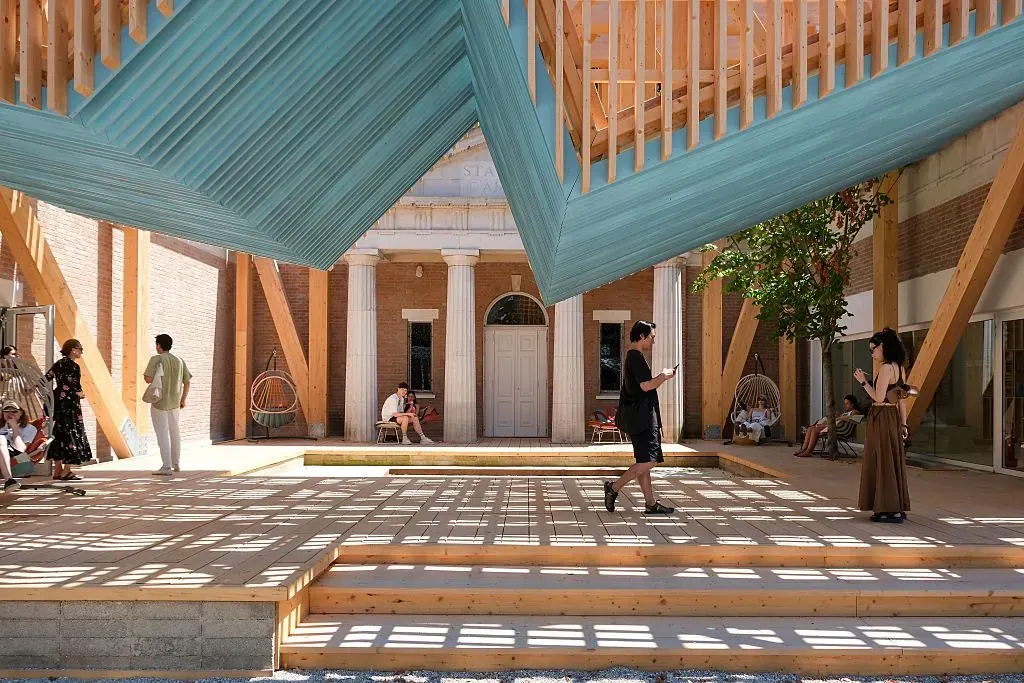
Architect and educator Germane Barnes will curate the United States Pavilion at the 2027 Venice Architecture Biennale, working with architectural historian Vyta Pivo and the University of Miami School of Architecture. Their exhibition, titled Earth Craft, will focus on materials including brick, adobe and rammed earth, while foregrounding the people and knowledge involved in making them.
The appointment was announced by the University of Miami and the US Department of State, according to Wallpaper. Barnes will organise the project with Pivo, while students and faculty from the University of Miami are expected to contribute to the installation.
Key facts
| Item | Detail |
|---|---|
| Exhibition | Earth Craft |
| Curators | Germane Barnes and Vyta Pivo |
| US representative | University of Miami School of Architecture |
| Location | US Pavilion, Giardini, Venice |
A material-led view of American architecture
Earth Craft will consider how American architecture is shaped by the extraction, preparation and use of earth-based materials. The preliminary description references brickworks, plantation kilns and Indigenous landscapes, linking construction materials to wider histories of land, labour and technology.
The exhibition is expected to examine not only the finished building but also the people who dig, shape, fire and assemble its constituent materials. That emphasis places construction knowledge alongside architectural authorship, challenging a history in which the designer is often more visible than the workforce responsible for making a project possible.
The final design has not yet been released. The project is planned for the US Pavilion, a 1930 Palladian-style building in the Giardini, and may include raw earthen materials and fabrication workshops, but the precise installation remains to be confirmed.
Barnes returns to Venice
Barnes has previously presented work in Venice. In 2023, Studio Barnes showed Griot in the Arsenale, an installation addressing architecture and overlooked histories of the African diaspora. His wider exhibition record includes the Chicago Architecture Biennale and Exhibit Columbus, while his work also appeared in the Museum of Modern Art’s 2021 exhibition Reconstructions: Architecture and Blackness in America.
The 2027 pavilion will extend this interest in cultural history and representation through the physical processes of construction. Rather than presenting a single national architectural image, the curatorial team intends to explore the material practices and labour histories embedded in the built environment.
Pivo’s research focuses on construction labour and materials. She is also writing a history of the US concrete industry, according to the announcement reported by Wallpaper. Her involvement gives the exhibition a research framework that connects material production with the economic and social systems behind it.
Students and invited contributors
University of Miami students will work with assistant professor Maxwell Jarosz on an installation for the pavilion courtyard. The preliminary list of participants also includes Nader Tehrani of NADAAA; Miami- and Guatemala-based architects Carie Penabad and Adib Cúre; Rodolphe el-Khoury, dean of the University of Miami School of Architecture and principal of RAD-Lab; and Leah Wulfman and Merritt Chase.
The involvement of students is consistent with the pavilion’s stated interest in making and teaching. It also places an architecture school at the centre of a major international exhibition, giving the project an educational dimension as well as a national representational role.
Technology alongside traditional knowledge
The curators have positioned Earth Craft as a conversation between established material knowledge and contemporary tools. The project is expected to place hand-based understanding of soil, water and heat alongside robotic fabrication and computational design.
For architects and material researchers, that framing raises a practical question: how can emerging technologies support, rather than erase, knowledge developed through direct contact with materials? The exhibition’s answer will depend on its final programme and installation, which have not yet been detailed.
Funding and delivery
The US Department of State provides a $375,000 seed grant for the US Pavilion, while curatorial teams are expected to raise additional funds. Past organisers have reported total costs exceeding $1 million, according to Wallpaper.
That financial structure makes the pavilion not only a curatorial project but also a substantial organisational undertaking. Further information about fundraising, fabrication and the completed exhibition will be needed before the full scope of Earth Craft can be assessed.
Source: Wallpaper, “Germane Barnes will curate the US Pavilion at the 2027 Venice Architecture Biennale,” https://www.wallpaper.com/venice-architecture-biennale-us-pavilion-2027-curators-germane-barnes
Source
Wallpaper Original publication: 2026-11-06T21:47:21+00:00
Related news
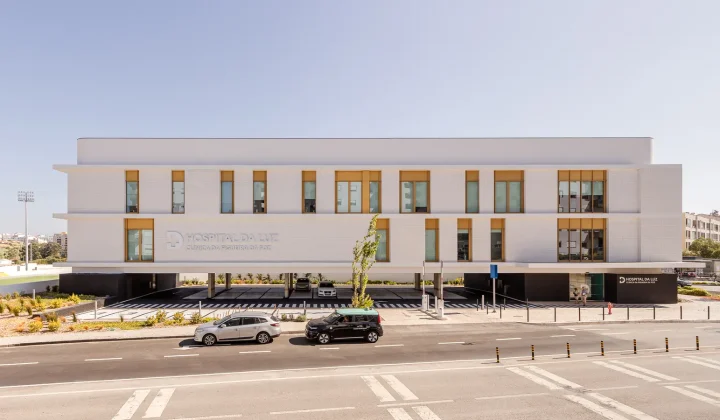
RISCO Designs New Hospital da Luz Clinic in Figueira da Foz
The new Hospital da Luz clinic by Portuguese practice RISCO is located in a consolidated urban area in northern Figueira da Foz.
Read more
ANYAO Table Lamp Concept Links Guest Service Buttons to Restaurant Staff Apps
The ANYAO concept combines cordless table lighting with four service controls, connecting guest requests to a receiver, mobile app and restaurant service…
Read more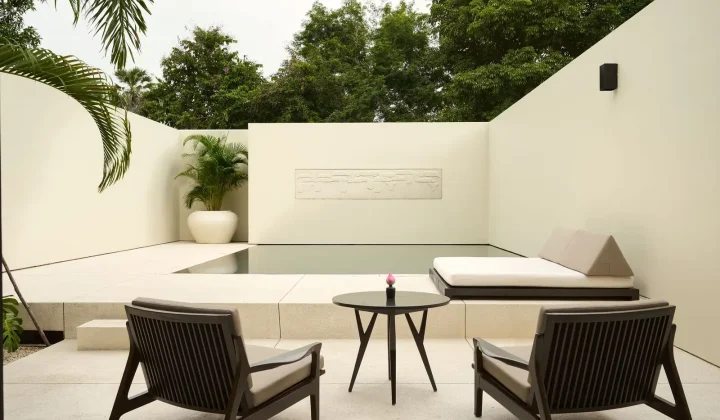
Amansara renovation revives a landmark of Cambodia’s New Khmer architecture
The renovated Amansara in Siem Reap preserves the 1960s character of the former Villa Princière while adding updated suites, new pool accommodation…
Read more
BDNY 2026 to spotlight hospitality interiors, adaptive reuse and material innovation
Boutique Design New York will bring architects, designers, hoteliers and product brands together in New York on November 8–9, with programming focused…
Read moreRelated wiki

Adaptive Reuse in Architecture
Reference page for reuse, retrofit, conversion, embodied carbon and design constraints.
Read more