
Brasília’s Essence Captured in São Paulo Installation
An exhibition by Debaixo do Bloco Arquitetura translates the spirit of Brasília into a domestic-scale installation within Oscar Niemeyer's iconic pavilion in São Paulo, reflecting on the Brazilian capital's unique architectural and urbanistic identity.


Debaixo do Bloco Arquitetura has created an interior installation that aims to encapsulate the defining characteristics of Brasília, Brazil’s modernist capital. The exhibition, titled “Debaixo do Bloco,” is housed within the renowned Bienal Pavilion in São Paulo, a masterpiece designed by Oscar Niemeyer, the same architect who shaped much of Brasília.
This installation seeks to translate the unique landscape, architectural language, and overall atmosphere of Brasília into a more intimate, domestic-scale experience for visitors. By situating the work within Niemeyer’s architectural context in São Paulo, the project draws a direct dialogue between two significant sites shaped by the architect’s vision.
Installation Elements
The exhibition features a curated arrangement of architectural elements that are synonymous with Brasília’s urban fabric and Niemeyer’s design philosophy. Visitors will encounter a series of pilotis, the characteristic stilts that elevate many of the city’s buildings, creating a sense of openness and lightness. Curved surfaces, another hallmark of Niemeyer’s work, are integrated throughout the space, evoking the fluid and organic forms that define Brasília’s public buildings. Continuous planes are also employed, reflecting the expansive and interconnected nature of the capital’s urban planning.
These elements combine to create an environment that prompts reflection on the experience of living in and moving through Brasília. The installation is designed not merely as a display of objects, but as an immersive environment intended to evoke the spatial qualities and sensory perceptions associated with the Brazilian capital.
Context and Significance
Brasília, inaugurated in 1960, was conceived as a planned city, a bold experiment in modern urbanism and architecture. Its design, heavily influenced by Lúcio Costa’s master plan and Niemeyer’s iconic buildings, is characterized by broad avenues, monumental structures, and a distinct separation of functions. The city has been recognized for its unique architectural heritage and was designated a UNESCO World Heritage site.
The Bienal Pavilion in Ibirapuera Park, São Paulo, designed by Niemeyer and inaugurated in 1954, is itself a significant example of modernist architecture. It has served as a venue for major art and design exhibitions, making it a fitting location for an installation that explores architectural themes. By presenting an installation about Brasília within this space, Debaixo do Bloco Arquitetura highlights the enduring legacy of Niemeyer and the architectural principles that have shaped Brazilian modernism.
The project invites contemplation on how the experience of a city—its scale, its forms, its atmosphere—can be distilled and reinterpreted in different contexts. For visitors familiar with Brasília, the installation may offer a sense of nostalgia or a renewed appreciation for its design. For those less familiar, it serves as an introduction to the core aesthetic and spatial concepts that define the capital.
The scale of the installation, described as “domestic-scale,” suggests an effort to bring the monumental aspects of Brasília’s architecture into a more relatable and personal setting, perhaps exploring how these grand designs translate to everyday life and living spaces.
Key facts
| Aspect | Details |
|---|---|
| Installation Name | Debaixo do Bloco |
| Location | Bienal Pavilion, Ibirapuera Park, São Paulo |
| Architect of Venue | Oscar Niemeyer |
| Concept | Evoking the landscape, architecture, and atmosphere of Brasília |
| Featured Elements | Pilotis, curved surfaces, continuous planes |
| Studio | Debaixo do Bloco Arquitetura |
This exhibition underscores the power of architectural installations to convey the essence of a place and its design philosophy. It serves as a reminder of Brasília’s significance as a modernist icon and Niemeyer’s profound impact on 20th-century architecture. The project’s presence in São Paulo, within a Niemeyer-designed venue, enriches the dialogue around Brazilian architectural heritage.
Source: Dezeen, https://www.dezeen.com/2026/07/04/debaixo-do-bloco-arquitetura-brasilia-installation-bienal-pavilion-oscar-niemeyer/
Source
Dezeen Original publication: 2026-07-04T17:00:33+00:00
Related news
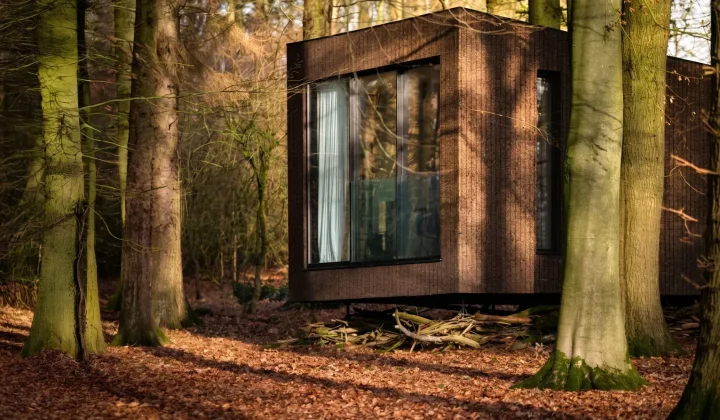
Koto launches Haku, a mobile prefab hotel suite built on a wheeled chassis to bypass UK planning restrictions
UK architecture studio Koto has unveiled Haku, a fully mobile prefabricated suite that legally qualifies as a caravan, allowing landowners and hotel…
Read more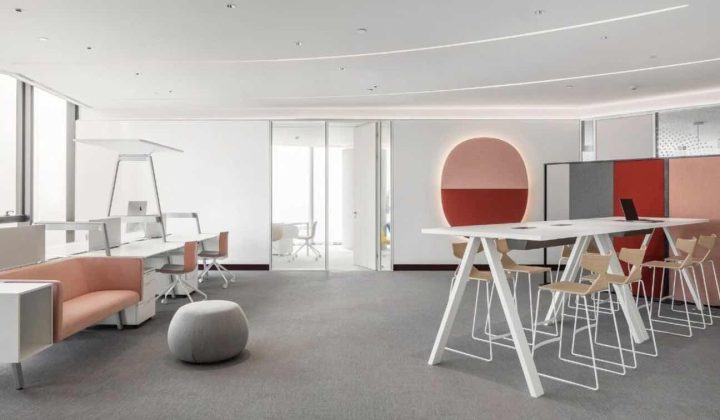
HONG Designworks Completes Private Office in Xi’an That Balances Memory, Materiality, and Long-Term Use
The Xi’an office by HONG Designworks integrates a folded steel staircase, retained furniture from a previous workspace, and a restrained purple-gray palette…
Read more
Handwoven Teak and Cord Outdoor Seating Debuts from Masaya and Abril Zepeda
Nicaraguan furniture brand Masaya has introduced two new handcrafted outdoor chairs — a rocking chair and a lounge chair — designed by…
Read more
Place in Mind: Hendricks Churchill Launches Hospitality Group to Revive Historic Properties
The architecture and interior design studio Hendricks Churchill has launched Place in Mind, a new hospitality group focused on acquiring, restoring, and…
Read moreRelated wiki

Adaptive Reuse in Architecture
Reference page for reuse, retrofit, conversion, embodied carbon and design constraints.
Read more