
Designing for Digital Entertainment: Architecture’s Influence on Virtual Spaces
This sponsored content explores how architectural principles and design considerations, traditionally applied to physical structures, are increasingly relevant in shaping immersive digital environments, including online gaming platforms and virtual casinos like Royal game casino.


The evolution of digital entertainment has opened new frontiers for design, extending architectural principles beyond physical structures into the virtual realm. This sponsored content explores the fascinating intersection of traditional architecture and digital space design, examining how concepts like spatial organization, user flow, and aesthetic coherence are applied to create engaging and intuitive online environments, including platforms such as Royal game casino.
From Bricks to Pixels: The Foundation of Digital Architecture
While a physical building relies on gravity and materials, a digital environment leverages code and algorithms to construct its reality. Yet, the foundational questions architects ask remain pertinent: How do users navigate this space? What is its purpose? How does it evoke emotion or facilitate specific actions? In digital environments, these questions translate into user interface (UI) and user experience (UX) design, where the ‘architecture’ dictates how seamlessly a player can move through a game world, or how intuitively a user can interact with an online service.
Consider the layout of a virtual lobby in an online gaming platform. Just as a physical casino might use lighting, sound, and open spaces to guide patrons, a digital platform employs visual cues, intuitive menus, and responsive design to create a sense of welcome and ease of navigation. The goal is to reduce friction, ensuring that users can quickly find what they are looking for, whether it’s a specific game, account information, or customer support.
User Flow and Navigation in Virtual Environments
Effective user flow is paramount in digital architecture. It’s the equivalent of designing clear pathways and logical room arrangements in a physical building. In an online setting, this means crafting interfaces that anticipate user needs and guide them effortlessly. For instance, an online casino, like many modern digital platforms, thrives on intuitive navigation. Users expect to easily browse game categories, access their balance, and understand promotional offers without confusion.
This involves several design considerations:
- Logical Grouping: Placing related functions or games together.
- Visual Hierarchy: Using size, color, and placement to emphasize important elements.
- Clear Signposting: Employing icons, labels, and breadcrumbs to inform users of their location and options.
- Feedback Mechanisms: Providing visual or auditory cues to confirm actions, much like a door opening or a light switching on in a physical space.
Poor user flow can lead to frustration and disengagement, highlighting the critical role of architectural thinking in digital design.
Creating Immersive Digital Experiences
Beyond mere functionality, digital architecture aims to create immersive experiences. This is where aesthetics, thematic coherence, and sensory design (visual and auditory) come into play. A well-designed digital space can transport users, creating a sense of place and atmosphere that enhances engagement.
For example, a platform specializing in slot games might use themes ranging from ancient Egypt to futuristic sci-fi, each requiring a distinct visual and auditory environment. The design challenge lies in consistently applying these themes across the interface, from the game thumbnails to the background animations, reinforcing the immersive quality. This mirrors how an architect might design a themed resort, ensuring every element, from the façade to the interior decor, contributes to a unified experience.
The Role of Responsiveness and Adaptability
Modern digital environments, much like contemporary architecture, must be responsive and adaptable. A building designed for multiple uses or future expansion reflects a similar foresight to a digital platform built to perform seamlessly across various devices and screen sizes. Responsive design ensures that whether a user accesses an online service from a desktop computer, a tablet, or a smartphone, the experience remains consistent and optimized. This adaptability is crucial for reaching a broad audience and maintaining user satisfaction in a rapidly evolving technological landscape.
A Comparison of Design Principles: Physical vs. Digital Spaces
| Feature | Physical Architecture | Digital Architecture |
|---|---|---|
| Materiality | Concrete, steel, glass, wood | Code, pixels, graphics, algorithms |
| Spatiality | Three-dimensional, tangible, gravity-bound | Virtual, interactive, often abstract |
| Navigation | Hallways, stairs, elevators, signage | Menus, links, icons, search functions |
| User Flow | Movement patterns, entry/exit points, circulation | Click paths, interaction sequences, task completion |
| Immersion | Sensory experience, texture, light, sound, scale | Visuals, audio, interactivity, narrative |
| Adaptability | Renovation, modular design, multi-use spaces | Responsive design, scalable interfaces, updates |
Ethical Considerations and Responsible Design
Just as architects consider the societal impact of their buildings, designers of digital spaces must address ethical considerations. In the context of online gaming, this includes promoting responsible play. Platforms often incorporate features like self-exclusion tools, deposit limits, and access to support resources. Architecturally, this translates to designing interfaces that make these tools accessible and visible, empowering users to manage their engagement responsibly. It’s about creating a safe and controlled environment within the boundless possibilities of the digital world.
The principles of architecture, honed over centuries, offer a powerful framework for understanding and shaping our digital future. From the intuitive layout of an online store to the immersive worlds of video games and the functional design of platforms like Royal game casino, thoughtful design ensures that these virtual spaces are not just functional, but also engaging, accessible, and ultimately, beneficial for their users. As with any form of entertainment involving financial transactions, users are encouraged to verify current terms and conditions directly on the advertiser’s site and to engage responsibly.
Related news

MIV Architects Proposes Wetland Pavilion That Prioritizes Non-Human Habitats Over Human Comfort
The Spanish firm’s “Nidos de Agua” concept for the Albufera natural park in Valencia aims to rebalance the relationship between building and…
Read more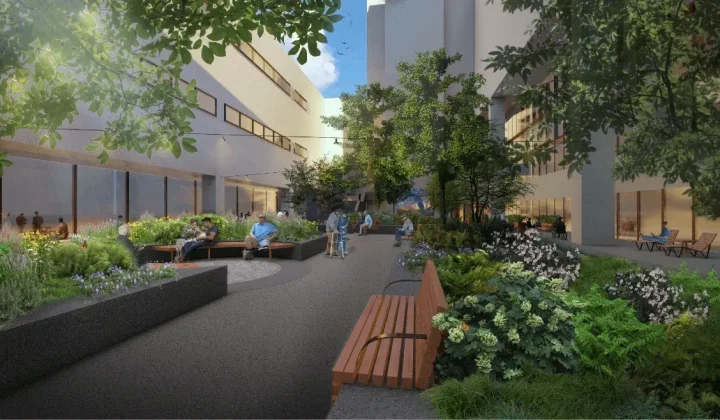
Nelson Byrd Woltz Begins Construction on Restorative Eagle Courtyard at Walter Reed Medical Center
Construction has started on a redesigned Eagle Courtyard at Walter Reed National Military Medical Center, led by Nelson Byrd Woltz Landscape Architects.…
Read more
London’s listening bar boom reflects a deeper shift in hospitality design and music culture
A wave of Japanese-inspired listening bars is reshaping London’s nightlife, but owners and critics are asking whether the concept can survive commercial…
Read more
Performing Colonial Toxicity Exhibition in Valencia Examines Architecture’s Role in Nuclear Colonialism
From 24 October to 1 November 2026, Aguas Internacionales in Valencia hosts Samia Henni’s exhibition on French nuclear testing in the Algerian…
Read moreRelated wiki

Adaptive Reuse in Architecture
Reference page for reuse, retrofit, conversion, embodied carbon and design constraints.
Read more