
Dezeen Awards 2026 names six Designers of the Year
Lina Ghotmeh, Keiji Ashizawa, Yinka Ilori and three emerging talents have been recognised at the Dezeen Awards 2026 ceremony in London.


Dezeen has announced the six recipients of its 2026 Designers of the Year awards, recognising established and emerging figures across architecture, interiors and design. The winners were announced at the Dezeen Awards ceremony in London on 16 November.
The awards distinguish work that the organisers say has made a notable contribution to the design industry. This year’s recipients include architect Lina Ghotmeh, interior designer Keiji Ashizawa and designer Yinka Ilori, alongside three emerging practices and designers.
Key facts
| Award | Recipient | Field |
|---|---|---|
| Architect of the Year | Lina Ghotmeh | Architecture |
| Emerging Architect of the Year | Shohei Kuma and Elsa Escobedo | Architecture |
| Interior Designer of the Year | Keiji Ashizawa | Interiors |
| Emerging Interior Designer of the Year | Yasmine Ghoniem | Interiors |
| Designer of the Year | Yinka Ilori | Design |
| Emerging Designer of the Year | Simon Skinner | Design |
Architecture awards
Lina Ghotmeh was named Architect of the Year. The Paris-based architect is the founder of Lina Ghotmeh Architecture and is known for projects that connect material choices, memory and landscape.
Her recognised work includes the Stone Garden apartment building in Beirut, which won Architecture Project of the Year at the Dezeen Awards in 2021. Ghotmeh also designed the 2023 Serpentine Pavilion and was recently appointed to renovate the British Museum’s Western Range galleries, according to Dezeen’s awards coverage.
The jury highlighted the historical and environmental sensitivity of her work, describing an approach that links local context with future-oriented design. Ghotmeh was also included in the Time100 Next list in 2025 and received the 2023 Great Arab Minds Award.
The Emerging Architect of the Year award went to Shohei Kuma and Elsa Escobedo. The pair founded Kuma&Elsa, a young practice working between France, Spain and Japan. Their work combines Japanese and European references with experiments in form and materials.
One example cited by the awards is Nakano House in Fukuoka prefecture, Japan. The apartment building draws on the traditional Japanese engawa, a transitional space between interior and exterior.
Interior design and restraint
Tokyo-based Keiji Ashizawa received the Interior Designer of the Year award. His interdisciplinary studio works across interiors, lighting, furniture and products, with a design philosophy centred on what the practice calls “honest design”.
The studio’s recent projects include a tea shop in Shanghai, a holiday home in Japan clad in charred cedar and a showroom for the Japanese furniture company Karimoku. The judges praised Ashizawa’s use of natural materials, detailed craftsmanship and restrained visual language.
Yasmine Ghoniem was named Emerging Interior Designer of the Year. The Australian designer founded the interior studio YSG in 2020, developing projects that combine spatial design with colour, texture and cultural references.
Her recent work includes a wellness hotel in Bali, a Sydney apartment renovation, a Sydney warehouse conversion inspired by the Mojave desert and a bar for gin producer Four Pillars. The award citation described Ghoniem’s interiors as expressive and characterful, with a focus on creating complete design experiences rather than applying a single stylistic formula.
Colour, community and material reuse
Yinka Ilori won Designer of the Year. Working across pavilions, installations, pop-ups, products and furniture, the London-based designer is known for vivid colour and references to his British-Nigerian heritage.
His projects include the Colour Palace in London and an events space for the Estrel Berlin hotel. Ilori has also designed a watch for Swiss brand MB&F, developed homeware and created a furniture, fabrics and homeware collection for Dunelm.
The judges framed his work as an example of how design can combine public engagement, cultural identity and visual optimism. For architecture and urbanism readers, Ilori’s projects are particularly relevant as examples of temporary and event-based spaces that use colour and storytelling to shape collective experience.
The Emerging Designer of the Year award went to Swedish designer Simon Skinner. His practice spans furniture, sculpture and installations, with an interest in rethinking or reusing materials. Dezeen described his work as part of a contemporary Scandinavian design language built around material awareness and understated expression.
Why the awards matter
The six awards reflect the broadening range of practices now recognised within design culture. Alongside completed buildings and interiors, the selection includes furniture, products, installations, temporary structures and public-facing experiences.
The winners also point to several recurring themes in current design: local and personal identity, material experimentation, craftsmanship, reuse and stronger connections between buildings and their surroundings. These themes appear across very different scales, from Ghotmeh’s architectural projects to Ilori’s colourful installations and Skinner’s work with materials.
The awards provide recognition rather than an independent assessment of every project by the winning designers. Dezeen’s descriptions and jury comments offer the main available context for the 2026 selection, while the broader significance of the winners will depend on how their practices develop and how their projects perform over time.
Source: Dezeen, “Discover this year’s Dezeen Awards Designers of the Year,” https://www.dezeen.com/2026/11/16/discover-this-years-dezeen-awards-designers-of-the-year/
Source
Dezeen Original publication: 2026-11-16T21:29:48+00:00
Related news
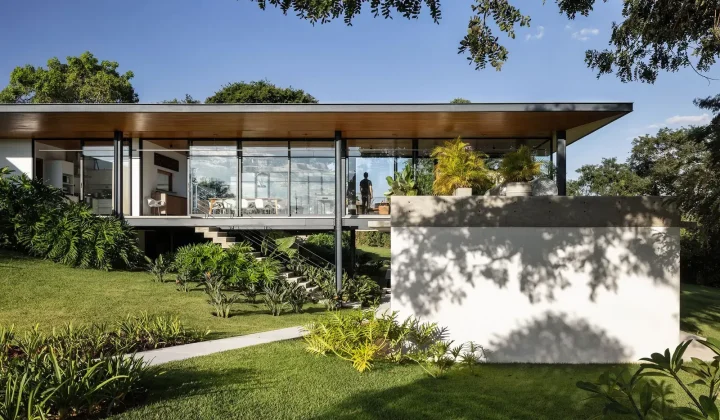
Canoa Arquitetura’s House Duas Marias I sits among mature trees in Jaguariúna
The residence occupies a roughly 6,000-square-metre plot in the countryside of São Paulo state, where mature trees were already a defining feature…
Read more
Estudio CR designs cliffside Barra Peñasco for Rosewood Mandarina
The open-air bar in Riviera Nayarit is arranged around its Pacific-facing cliffside setting, with a sequence of spaces for dining, drinks and…
Read more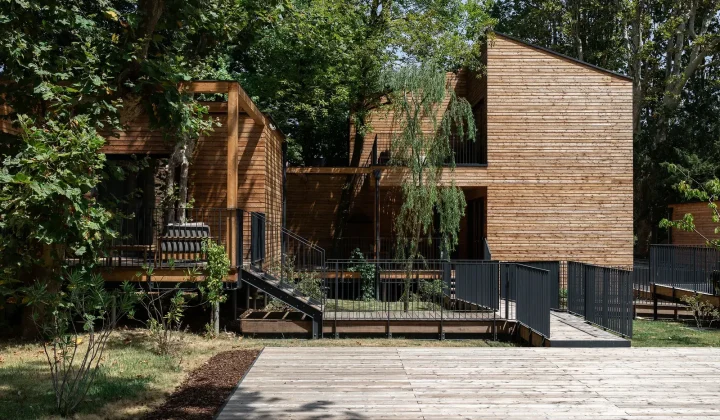
Studio Apostoli Completes Green Lodges at Terme Preistoriche Resort in Italy
Four timber structures at the Terme Preistoriche Resort in Montegrotto Terme accommodate seven suites, with elevated walkways and foundations designed to preserve…
Read more
DFA Awards 2026 highlight Asian architecture and design leadership
The Hong Kong Design Centre’s 2026 awards recognise architects and design leaders alongside 209 projects spanning six disciplines, with spatial design leading…
Read moreRelated wiki

Adaptive Reuse in Architecture
Reference page for reuse, retrofit, conversion, embodied carbon and design constraints.
Read more