
Ferrari Luce Electric Sports Car Unveiled, Designed by Jony Ive and Marc Newson’s LoveFrom
Ferrari's first all-electric vehicle, the Luce, features a distinctive aerodynamic glasshouse design by Jony Ive and Marc Newson's studio, LoveFrom, prioritizing efficiency and a seamless interior-exterior experience.
Ferrari Luce Electric Sports Car Unveiled, Designed by Jony Ive and Marc Newson’s LoveFrom
SLUG: ferrari-luce-electric-sports-car-unveiled-design-lovefrom
EXCERPT: Ferrari’s first all-electric vehicle, the Luce, features a distinctive aerodynamic glasshouse design by Jony Ive and Marc Newson’s studio, LoveFrom, prioritizing efficiency and a seamless interior-exterior experience.
CATEGORY: technology
TAGS: Ferrari, electric vehicles, automotive design, Jony Ive, Marc Newson, LoveFrom, aerodynamics, sustainable design, sports cars
SEO_TITLE: First Electric Ferrari Luce: Jony Ive & Marc Newson’s Aerodynamic Masterpiece
SEO_DESCRIPTION: Explore the Ferrari Luce, the marque’s debut electric sports car, featuring a revolutionary aerodynamic glasshouse design by LoveFrom and advanced EV technology developed with over 60 new patents.
MEDIA_QUERY: Ferrari Luce electric sports car, designed by LoveFrom, unveiled in Rome
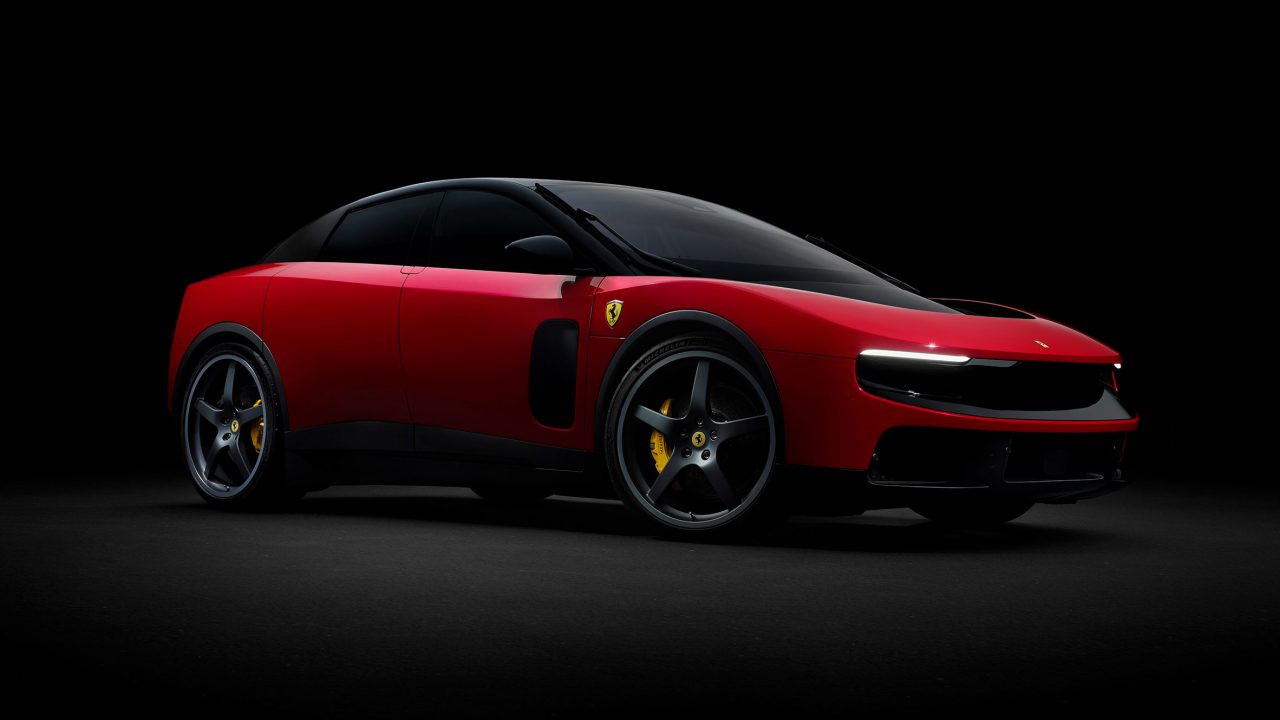
IMAGE_ALT: Side profile of the Ferrari Luce electric sports car, showcasing its sweeping glasshouse and aerodynamic aluminum body panels.
The iconic Italian marque Ferrari has officially launched its first all-electric vehicle, the Ferrari Luce, a striking sports car that marks a significant departure from its traditional combustion engine lineage. The Luce is the product of an extensive five-year collaboration between Ferrari’s in-house design and engineering teams and LoveFrom, the creative studio founded by renowned designers Jony Ive and Marc Newson. Unveiled in Rome, the electric Ferrari Luce emphasizes a revolutionary aerodynamic design, integrating advanced technology with a focus on driver experience and efficiency.
Aerodynamic Shell and Glasshouse
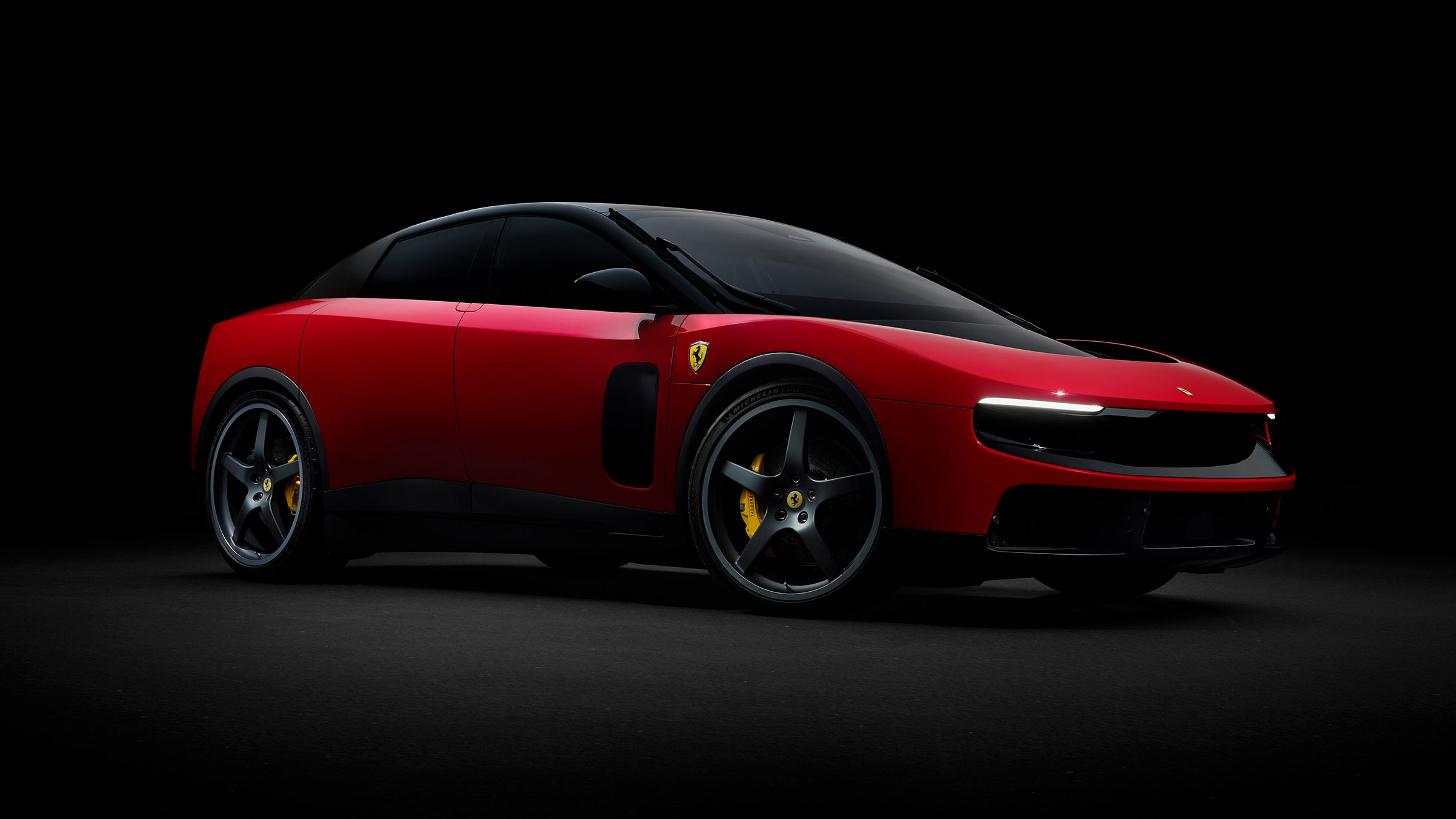
The most distinctive feature of the Ferrari Luce is its expansive, curvaceous glasshouse, which encompasses the windscreen, side windows, rear window, and panoramic glass roof, creating a unified visual element. This glasshouse is enveloped by sweeping aluminum body panels that transition into aerodynamic wings at the front and rear, forming an impression of a single, fluid teardrop shape.
“We intellectually separate the passenger cell, the glasshouse as you call it,” explained Australian industrial designer Marc Newson. “It’s surrounded by this aluminum shell, which is effectively the bodywork. This enables you to preserve this very pure internal form. The two don’t necessarily interrupt each other; they coexist. One exists around the other.”
This design approach is fundamentally driven by the need to minimize aerodynamic drag, a critical factor for maximizing the range of electric vehicles. The Luce is powered by a 122-kilowatt-hour, 800-volt battery.
Efficiency and Performance
The pursuit of aerodynamic efficiency is evident throughout the Luce’s exterior. At the front, the glasshouse extends below the beltline, with the windscreen seamlessly merging into a glossy black aluminum panel that slopes steeply to form a wedge-like nose, a design made possible by the absence of a traditional combustion engine.
Instead of a conventional bonnet, a large aerodynamic wing at the front houses the car’s daytime running lights. This element raises the front profile to a more traditional silhouette while efficiently directing airflow over the convex body of the glasshouse to a smaller wing at the rear. This, along with vents in the wheel arches and a flat underfloor, contributes to a drag coefficient of 0.254, the lowest in Ferrari’s history.
“Aero is everything when it comes to designing an EV,” Newson stated. “That became clear very, very early on in the process. Drag coefficient is really critically important.”
Ferrari claims the Luce can achieve a range of up to 530 kilometers on a single charge, a figure yet to be officially verified, and contingent on the fitment of aerodynamically optimized wheels milled from a single piece of aluminum designed to resemble turbines. A more traditional five-spoke wheel option will also be available, albeit with less aerodynamic efficiency. Both wheel options feature larger diameters at the rear (24 inches) than the front (23 inches), providing a slight forward rake. The active suspension can lower the front by 10 millimeters when cruising to further reduce drag.
Despite its focus on low drag, the Luce also achieves significant downforce, comparable to Ferrari’s Roma and Amalfi models, while generating approximately 25 percent less drag. The aerodynamic form influenced other design choices, such as the vertical positioning of the large windscreen wipers along the sides of the glasshouse to minimize airflow disruption.
“We wanted to create a continuous windscreen all the way that went to the front of the car, this really long continuous surface,” Newson commented. “You don’t really see that [on any other cars]. You may have seen it on some concept cars from the sixties, but it certainly doesn’t exist out there in the real world.”
Innovative Interior Design
Ferrari revealed details of the Luce’s interior in February, prior to the exterior unveiling, showcasing a design philosophy that eschews large touchscreens for tactile mechanical controls. Developed in conjunction with LoveFrom, the interior features buttons, dials, and switches crafted from materials such as glass and anodized aluminum.
The instrument cluster employs a digital display composed of two layered OLED panels with physical needles sandwiched between them, aiming for an intuitive blend of digital and physical interfaces. The central display’s clock function can transform into a stopwatch or compass, with the OLED display changing visuals while mechanical motors adjust the needle movements accordingly.
“What was really, really critical for us was that we created an absolutely coherent experience, both inside and out, so you didn’t have a sense that anything on the interior was shoehorned in, or was conceived by somebody else with different design aesthetics or different values or different objectives,” Newson emphasized. “We really wanted – and I think it was the entire point of the exercise – to do everything, to touch everything, to make sure that everything felt completely in sync, both inside and out, all the way through to the user interface.”
Technological Advancements and Patents
The development of the Ferrari Luce has resulted in the creation of over 60 new patents for Ferrari. While the battery cells are sourced from SK, a South Korean company, Ferrari has developed the battery modules in-house with a focus on future-proofing. This modular approach theoretically allows for the integration of different battery cell technologies, mitigating the risk of obsolescence as battery advancements continue. Ferrari has indicated a similar strategy has been applied to its hybrid models, the LaFerrari and F80, enabling compatibility between older and newer battery technologies.
Key facts
- Vehicle: Ferrari Luce (First Electric Ferrari)
- Design Studio: LoveFrom (Jony Ive & Marc Newson)
- Battery: 122 kWh, 800-volt
- Claimed Range: Up to 530 km (unverified)
- Top Speed: 310 km/h
- Drag Coefficient: 254
- New Patents: Over 60
The Ferrari Luce represents a significant moment for the automotive industry, particularly for a brand as storied as Ferrari. The Luce’s design, a fusion of Ive and Newson’s minimalist, user-centric approach with Ferrari’s performance heritage, signals a new direction for the company as it navigates the transition to electrification. For designers and engineers, the Luce offers a case study in integrated design, where aerodynamic efficiency, material choices, and user interface are conceived as a holistic system. The development of over 60 patents underscores Ferrari’s commitment to innovation in EV technology, potentially influencing future electric vehicle architectures.
Source: Dezeen – https://www.dezeen.com/2026/05/25/electric-ferrari-luce-jony-ive-marc-newson-lovefrom/
Source
Dezeen Original publication: 2026-05-25T20:10:20+00:00
Related news
Christopher Kane brings streamlined, heritage-driven vision to Mulberry in London Fashion Week debut
The Scottish designer presented his first collection for the British leather goods house at London Fashion Week, blending sharp tailoring, archival references…
Read more
When Film Directors Become Interior Designers: Guadagnino, Lynch, Anderson and Almodóvar Step Off Screen
From Luca Guadagnino’s Zara Home collection to David Lynch’s Paris club and Wes Anderson’s train carriage, a wave of collaborations is blurring…
Read more
Jesus Mari Lazkano Examines Changing Landscapes Through Painting and Animated Film at Basque Luxury Studio
The Basque artist’s exhibition ‘Azken Natura’ brings together six large-scale paintings and a 22-minute animated film that traces the melting of the…
Read more
Glenn Spiro opens intimate jewellery atelier in Mayfair with designer Valerie Name Bolaño
The London jewellery house’s new boutique at 26 Bruton Street blends antiques, bespoke furniture and a monochrome palette to create a residential…
Read moreRelated wiki

Adaptive Reuse in Architecture
Reference page for reuse, retrofit, conversion, embodied carbon and design constraints.
Read more