How to Read UIA 2026 for Real Projects: Climate, Materials, and Delivery
Without confirmed programme details, UIA 2026 is best read as a signal-setting event. Here is how to turn conference talk on climate, materials, and delivery into a practical test for real projects.
Summary
UIA 2026 can be useful to practitioners, but not as proof that the profession has already changed. With the currently available sources, the safest reading is to treat the event as a signal-setting forum and then ask a harder question: which ideas could realistically affect briefs, specifications, procurement, and delivery? That framing matters because cities sit at the center of resource use and environmental impact, making climate, materials, and implementation inseparable in the built environment.
Date-checked note: As checked for this draft, no official UIA 2026 organiser page, confirmed programme, venue detail, or speaker list is included in the available source set for citation here. This article therefore does not make claims about the event schedule, host details, or named sessions.
What this article can say with confidence
Climate, materials, and delivery belong in the same conversation
UNEP’s work on cities and resource efficiency supports the broad context for this article: urban development concentrates material use, infrastructure demand, and environmental pressure. That means climate response is not only about energy or carbon language; it also affects how teams think about materials, long-term resource demand, and the way projects are organized to deliver results.
Research and commentary in the current source set also support two related cautions. First, climate instability should be understood as a live design context rather than a distant abstraction. Second, project outcomes depend heavily on organization and collaboration, not only on design intent. Those points do not prove what UIA 2026 will contain, but they do provide a practical framework for reading any major architecture congress critically.
A practical way to read UIA 2026
Treat themes as signals, not outcomes
Conference themes often move faster than contracts, procurement systems, and building standards. So if UIA 2026 foregrounds climate, materials, or delivery, that alone would not show that those ideas are widely adopted in practice. It would show that they are prominent enough to frame discussion. For project teams, the useful next step is verification: does a theme translate into criteria, specifications, or delivery choices that can actually be documented?
Separate context from project evidence
Broad environmental context is not the same thing as project guidance. A conference can accurately reflect real pressures on cities and buildings while still offering few immediately usable decisions for a live commission. The strongest project signals are the ones that can be traced to measurable requirements, documented case studies, or formal standards rather than aspiration alone.
Where the real project implications sit
Climate: move from urgency to design criteria
Climate discussion becomes practical when it changes what a team is designing for. That can include resilience, exposure to more volatile conditions, infrastructure stress, and longer-term resource demand. The point is not simply to acknowledge climate risk, but to ask which assumptions in the brief or design basis need to change.
Useful questions include: what risks are being designed for, what operating conditions are assumed, and which design choices affect future resource use? If those questions are not answered, climate language may still be important, but it has not yet become project guidance.
Materials: move from narrative to specification
Materials conversations often sound advanced in public debate before they become routine in procurement and specification. UNEP’s framing is useful here because resource efficiency is also a materials question: extraction, use, reuse, maintenance, and waste all matter. In practice, that means a promising material story is only as useful as its ability to survive specification, coordination, and long-term operation.
For readers following UIA 2026, the key distinction is whether a materials idea is being presented as a concept, a prototype, or a deployable construction approach. The closer it gets to durability, maintenance, reuse, and lower resource intensity, the more relevant it becomes to a real project team.
Delivery: where ambitions succeed or stall
Delivery is the least glamorous part of the conversation and often the most decisive. The real-estate development research in the source set supports a broad point with clear architectural relevance: collaboration structures and project organization shape outcomes. That matters because climate and materials ambitions often depend on early alignment across clients, consultants, contractors, and supply chains.
A delivery lens also helps prevent over-reading conference rhetoric. An idea may be compelling in principle and still be difficult to implement if responsibilities are fragmented, decisions are made too late, or value is judged only by upfront cost. In that sense, delivery is not a separate topic from sustainability; it is one of the conditions that determines whether sustainability goals survive the project process.
What to look for when UIA 2026 is discussed
| Lens | Weak signal | Stronger project signal | Why it matters |
|---|---|---|---|
| Climate | General urgency or ambition | Clear design criteria, risk assumptions, or measurable targets | Helps teams connect discussion to actual decisions |
| Materials | Novelty-focused claims | Evidence of specification, durability, reuse, or resource efficiency | Distinguishes ideas that can be built from ideas that remain illustrative |
| Delivery | Broad calls for collaboration | Defined roles, early coordination, procurement implications, or implementation examples | Shows whether good intentions can survive real project structures |
A practical checklist for readers
If you want to extract value from UIA 2026 without overstating what it proves, use this filter:
- Verify any event-specific fact on an official organiser page before repeating it publicly.
- Separate broad environmental context from claims about what the event itself has established.
- Ask whether a climate theme changes project criteria, not just presentation language.
- Ask whether a materials idea can be specified, maintained, reused, or procured.
- Check whether delivery questions are addressed early enough to affect outcomes.
- Prefer built examples, documented standards, and formal requirements over rhetoric.
What readers should watch next
The strongest next step is not to treat UIA 2026 as a verdict on practice, but as a place to identify claims worth checking later against project evidence. Readers should watch for official programme publication, named themes, and any examples that connect climate, materials, and delivery to documented implementation rather than general positioning.
Sources
- UNEP: Cities and resource efficiency
- The Conversation: Wet winter, hot summer? What ‘climate whiplash’ means for the UK
- European Real Estate Society: Hybrid Organizing for Collaborative Delivery of Real Estate Development Projects in China
- ArchDaily — contextual architecture coverage only; not used here for specific UIA 2026 factual claims.
Related news
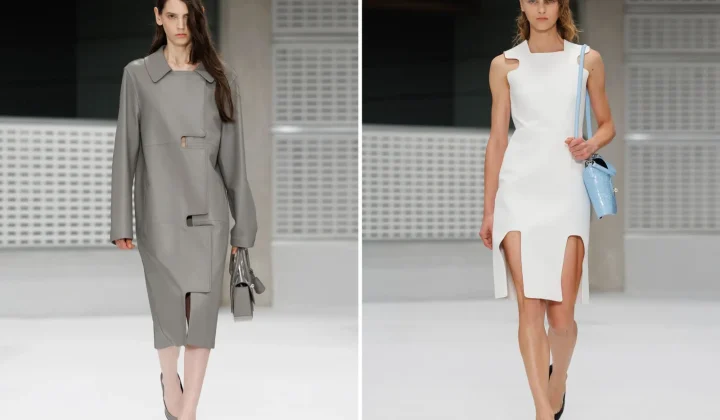
Christopher Kane brings streamlined, heritage-driven vision to Mulberry in London Fashion Week debut
The Scottish designer presented his first collection for the British leather goods house at London Fashion Week, blending sharp tailoring, archival references…
Read more
When Film Directors Become Interior Designers: Guadagnino, Lynch, Anderson and Almodóvar Step Off Screen
From Luca Guadagnino’s Zara Home collection to David Lynch’s Paris club and Wes Anderson’s train carriage, a wave of collaborations is blurring…
Read more
Jesus Mari Lazkano Examines Changing Landscapes Through Painting and Animated Film at Basque Luxury Studio
The Basque artist’s exhibition ‘Azken Natura’ brings together six large-scale paintings and a 22-minute animated film that traces the melting of the…
Read more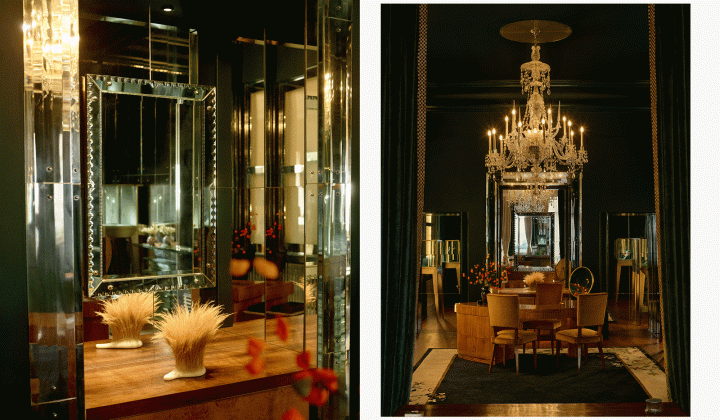
Glenn Spiro opens intimate jewellery atelier in Mayfair with designer Valerie Name Bolaño
The London jewellery house’s new boutique at 26 Bruton Street blends antiques, bespoke furniture and a monochrome palette to create a residential…
Read moreRelated wiki
Adaptive Reuse in Architecture
Reference page for reuse, retrofit, conversion, embodied carbon and design constraints.
Read more