How to Read Venice Architecture Biennale Coverage Without Getting Lost in the Spectacle
A practical guide to reading Venice Architecture Biennale coverage with more clarity: how to separate image-making from argument, compare like with like, and look for ideas that matter beyond the exhibition.

Short answer
Venice Architecture Biennale coverage is often image-rich, argument-light, and shaped by the pace of openings, previews, and social sharing. The most useful way to read it is to separate what is being shown from what is being claimed, then ask whether the idea has meaning beyond the exhibition setting.
If you treat each article as a mix of description, interpretation, and evidence, the event becomes easier to follow. That helps you distinguish installation drama from durable questions about architecture, cities, materials, representation, and environmental relevance.
Summary box
Read Venice coverage in three passes: first for the official framing, second for the critic's interpretation, and third for the real-world relevance. Spectacle is not the problem by itself; the problem starts when visual impact is mistaken for proof of impact.
Context
The Venice Architecture Biennale sits at the intersection of exhibition design, national representation, curatorial argument, and architectural culture. That mix makes it especially easy for coverage to flatten very different things into the same format: a pavilion, an installation, a political argument, a material experiment, and a broader claim about the future of practice can all end up presented as if they were directly comparable.
That matters because architecture exhibitions do not function in the same way as buildings, policies, or urban interventions. Some works are valuable because they frame a question well; others matter because they document a live condition; others are mainly spatial or symbolic acts. Reading coverage carefully means understanding which of those registers you are actually looking at.
For built-environment readers, the strongest Biennale coverage usually does more than celebrate atmosphere. It shows how an exhibition connects to questions of resources, cities, environmental pressure, or professional practice, rather than assuming that visibility alone equals significance. UNEP's work on cities and resource efficiency is a useful reminder that urban and environmental questions ultimately have to be assessed against material and systemic realities, not only rhetorical force.
Step-by-step guide
1) Identify the level of claim
Start by asking what kind of statement the article is making. Is it simply describing the spatial experience? Is it summarising a curatorial argument? Or is it suggesting that an exhibition has implications for policy, climate, housing, or design practice? Those are different levels of claim and they should not be read with the same degree of confidence.
A visually striking installation can be memorable without proving anything beyond its own formal or narrative effectiveness. Likewise, a thoughtful essay about a pavilion may be persuasive as criticism while still remaining interpretive rather than evidentiary.
2) Check the source quality behind the piece
Not all Biennale coverage is doing the same job. A specialist architecture publication may offer project context, named participants, and a clearer distinction between description and analysis. A scholarly or essay-driven source may situate a pavilion within a larger historical or political debate. Both can be useful, but they serve different reading needs.
If a piece depends mainly on mood, superlatives, or a rapid slideshow logic, read it as a first impression rather than a settled account. The faster and more visual the format, the more you should look for a second source before accepting broader claims.
3) Ask what remains once the installation effect fades
One of the simplest tests is to imagine the project without its opening-week aura. Would the idea still matter if you encountered it as a report, drawing set, research finding, or policy argument? If the answer is yes, the coverage may be pointing to something durable. If the answer is no, the work may still be worthwhile, but mainly as exhibition form.
This is especially important when articles borrow the language of urgency. Claims about environmental or urban significance should lead back to material systems, resource questions, or social conditions that exist outside the exhibition itself.
4) Compare like with like
A national pavilion, a speculative installation, an archival research display, and an augmented-reality intervention should not be judged by one blunt standard. They have different aims, different evidentiary limits, and different kinds of public address. The safest way to read Biennale roundups is to sort entries by type before deciding what seems genuinely important.
This approach helps prevent a common mistake in event coverage: rewarding works simply for being photogenic or easy to summarise, while under-reading slower, research-led contributions that may have greater long-term value.
5) Translate coverage into practical relevance
For architects, urbanists, designers, and informed general readers, the key question is not only whether a project is compelling in Venice. It is whether the coverage reveals a usable method, a historical correction, a political framing, or a material lesson that can travel elsewhere.
That translation step is where spectacle becomes productive rather than distracting. A strong article helps readers move from installation imagery to a clearer understanding of what the work contributes to debates about cities, environmental responsibility, or cultural representation.
A quick comparison table for reading Biennale coverage
| Coverage type | What it usually emphasises | What to check | Best way to use it |
|---|---|---|---|
| Visual roundup | Atmosphere, standout rooms, photogenic moments | Whether the article explains the argument, not just the look | Useful for orientation, weak for big conclusions |
| Critical review | Curatorial framing, interpretation, judgment | Whether the writer distinguishes evidence from opinion | Useful for reading significance, not for basic facts alone |
| Project or pavilion profile | Participants, concept, exhibition details | Whether details are attributed and the project type is clear | Useful for understanding one contribution in context |
| Scholarly or essay-driven piece | Historical, political, or theoretical context | Whether the case study is specific or overgeneralised | Useful for depth and context beyond opening-week buzz |
Checklist: how not to get lost in the spectacle
- Read one basic overview for orientation, but do not stop there.
- Identify whether the piece is reporting, criticism, or promotion.
- Separate the image of the work from the argument attached to it.
- Ask whether the project is being treated as an exhibition, a research claim, or a real-world design proposition.
- Look for a second source when the article makes large claims about climate, cities, or social impact.
- Compare pavilions and installations within the right category instead of ranking everything together.
- Keep the most attention for ideas that still matter once the opening-week spectacle has passed.
What readers should watch next
- Which projects continue to generate serious discussion after the first image-led wave of coverage.
- Which articles tie exhibitions back to urban systems, material use, or environmental constraints.
- Which curatorial claims are supported by documentation, research, or named participants rather than impression alone.
- Which works remain meaningful when discussed without their installation photography.
FAQ
Is spectacle always a problem in Biennale coverage?
No. Exhibition culture often depends on staging, image-making, and spatial intensity. The issue is not spectacle itself, but the habit of treating spectacle as sufficient evidence that a project has wider architectural importance.
What is the safest way to read opening-week reactions?
Treat them as provisional. Early coverage is useful for mapping what is being shown, but it is rarely the last word on what will matter most once critics, scholars, and practitioners have had more time to assess the work.
What kind of Biennale article is most useful?
The strongest pieces explain what is on display, identify the level of claim being made, and connect the exhibition to larger built-environment questions without overstating certainty.
Sources
- UNEP: Cities and resource efficiency
- ArchDaily
- The Conversation: Venice architecture biennale: how pioneering Ghanaian architects reckoned with tropical modernism
- The Conversation: South West Bank: Venice Biennale exhibition explores how Palestinians have become ‘foreigners everywhere’
- Springer Nature Switzerland: Site Venice Site Biennale: The Manifest.AR Augmented Reality Intervention into the 2011 Venice Biennale
Related news
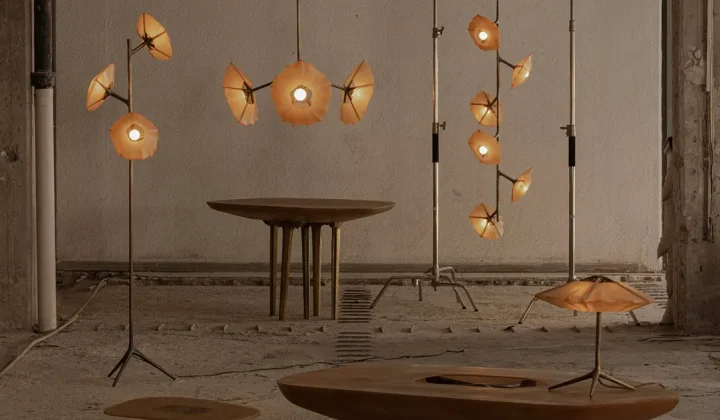
Fiberglass shells and bronze skeletons define Salina light and furniture collection by Federico Stefanovich
Designer Federico Stefanovich combines hand-laid fiberglass and cast bronze to create a lighting and furniture series that echoes the morphology of marine…
Read more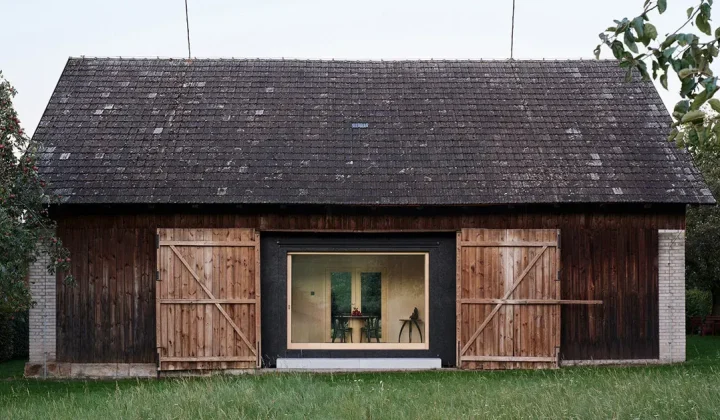
Facha architekti inserts black asphalt retreat into a Czech agricultural barn
Facha architekti has completed a compact seasonal dwelling inside a historic agricultural barn in Brtev, Czech Republic, using a lightweight timber frame…
Read more
Studiofont Completes Casa Diez Pies on a Steep Cliff in Mazunte, Oaxaca
The Mexican architecture studio uses a single repeated module and ten concrete feet to lift a four-level house above a 40-degree rocky…
Read more
PollenNav app redraws city routes around what you can breathe, not just where you can walk
A navigation app designed by Yani Shi treats pollen exposure as a routing variable, offering allergy sufferers block-level air-quality information instead of…
Read moreRelated wiki
Adaptive Reuse in Architecture
Reference page for reuse, retrofit, conversion, embodied carbon and design constraints.
Read more