Meadow Is a Three-Inch Phone Designed for Leaving Your Smartphone at Home
The compact device runs Android with a fixed set of essential apps, a rear camera that syncs photos later, and its own cellular plan, offering a deliberate alternative to full-featured smartphones.
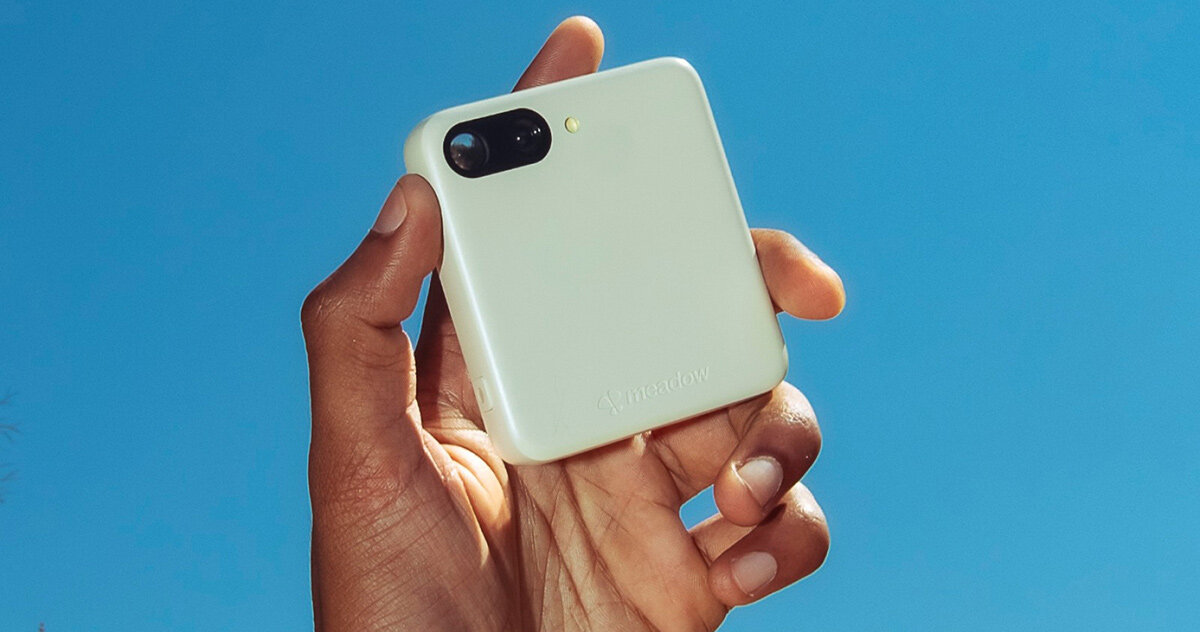
A new device called Meadow is entering the growing category of minimalist phones, but its approach is unusually literal: it takes a handful of essential smartphone functions and packs them into a three-inch square body. The device, which began reaching preorder customers in its first larger batch, is designed to work independently from a user’s primary smartphone, offering its own cellular connection and a deliberately short menu of apps.
Meadow runs on Android but does not provide access to an open app store. Instead, the software comes with a fixed set of services chosen around navigation, communication, and entertainment. The available apps include calls, text messaging, maps, Uber, Spotify, and Apple Music. The device can also display digital tickets for concerts or events, making it a tool for getting somewhere, meeting someone, listening to something, and then heading home.
The screen occupies most of the phone’s front face, giving it proportions that are notably different from the long rectangular slabs common in modern smartphones. The chunky shape is a deliberate design choice, signaling that this is not a device meant for endless scrolling or social media feeds.
A camera with a delayed review
The camera system on Meadow introduces a workflow that breaks the usual cycle of immediate review. There is a rear lens, and a tiny mirror sits beside it to help users frame self-portraits. The front-facing camera found on most smartphones is absent. Photos and videos taken with Meadow are sent to sync later, rather than appearing instantly on the screen for review, deletion, or retaking.
This design choice changes a familiar habit. The user takes a picture and puts the phone away. There is no immediate zooming in, sharing, or passing the screen around for approval. The photograph is still captured and stored, but the act of taking it is separated from the act of looking at it, a distinction that aligns with the device’s broader philosophy of reducing screen engagement.
Independent operation and cellular plan
Meadow works as a standalone device, not as a companion that relies on a primary smartphone. It has its own phone number and uses T-Mobile’s network in the United States. Service plans start at $15 per month. This setup makes the device more involved than simply switching a full-featured iPhone into a stripped-back mode, but the physical separation is central to the concept. The distracting smartphone remains somewhere else, while Meadow handles only the essential tasks.
The device was created by founder Shreyas Narlanka. The first larger production batch has begun reaching customers who placed preorders, marking a step from limited availability toward wider distribution.
Key facts
| Feature | Detail |
| — | — |
| Screen size | Three inches square |
| Operating system | Android (no open app store) |
| Available apps | Calls, texts, maps, Uber, Spotify, Apple Music, tickets |
| Camera | Rear lens with selfie mirror; photos synced for later viewing |
| Cellular network | T-Mobile (US); plans from $15/month |
| Founder | Shreyas Narlanka |
A category growing around doing less
Meadow enters a market that has seen increasing interest in phones designed to do fewer things. Devices such as the Light Phone and Punkt have also pursued the idea of a simpler, more intentional mobile experience. Meadow’s design is especially focused on urban movement: carrying the phone through a city, navigating, communicating, and listening to music, while leaving the rest of the digital world behind.
For readers interested in technology, digital wellness, and the design of intentional tools, Meadow represents a practical experiment in reducing screen time without giving up connectivity entirely. The device does not claim to replace a smartphone, but rather to offer a separate object for moments when the full-featured phone is better left at home.
Source: Designboom – https://www.designboom.com/technology/meadow-shrinks-smartphone-essential-apps/
Datos clave
| Punto | Detalle |
|---|---|
| Fuente | Designboom |
| Fecha | 2026-09-27T20:35:04+00:00 |
| Tema | forget doomscrolling: meadow shrinks the smartphone down to only the most essential apps |
Source
Designboom Original publication: 2026-09-27T20:35:04+00:00
Related news
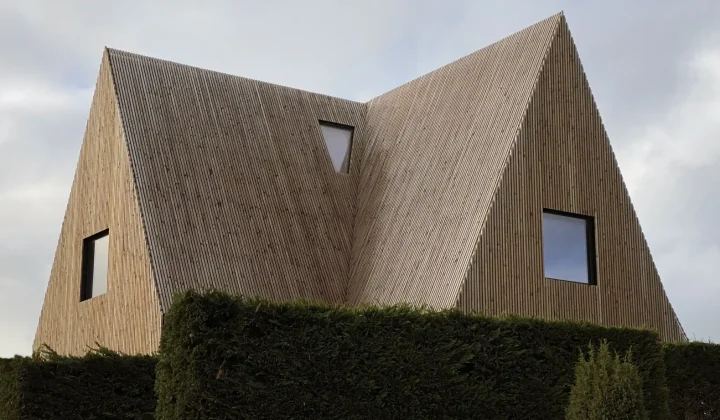
Vantieghem Talebi’s ‘House of Cards’ Brings Timber Geometry to Belgian Family Home
A new family house in Belgium by US- and Swiss-based practice Vantieghem Talebi uses a steeply pitched, card-house-inspired form clad in Douglas-fir…
Read more
3D-printed concrete sculptures by Matyáš Chochola reinterpret Baroque allegories at Frieze Sculpture 2026
Czech artist Matyáš Chochola presents three large-scale 3D-printed concrete works at Frieze Sculpture 2026 in London, blending classical architectural fragments with Brutalism,…
Read more
Carsten Höller Deploys World’s Largest Polaroid Camera for a Series of Artistic Games Across Europe
The artist’s 20-minute documentary, released by the Polaroid Foundation, follows the Polaroid 20×24 camera through Europe as friends and collaborators submit to…
Read more
CF Møller transforms historic psychiatric hospital into Mind Museum on Funen
Danish studio CF Møller has completed the Mind Museum in Middelfart, Denmark, converting a former psychiatric hospital building from 1888 into a…
Read moreRelated wiki
Adaptive Reuse in Architecture
Reference page for reuse, retrofit, conversion, embodied carbon and design constraints.
Read more