Portable Power Stations for Sump Pumps: What the Storm Season Tests Reveal
As extreme weather raises the stakes for basement flooding, a new technical analysis examines whether portable power stations can reliably run sump pumps during blackouts, focusing on motor surge, inverter output, and real-world testing.


A portable power station can keep a sump pump running during a blackout, but only if the station’s continuous output, surge capacity, and stored energy match the pump’s real-world demands. A new analysis published by Amazing Architecture breaks down the technical requirements, using a documented Zoeller M53 sump pump and current EcoFlow models as reference points. The findings matter for architects, builders, and homeowners who are designing or retrofitting homes for more frequent severe storms.
The article makes clear that horsepower alone is not a reliable guide. The pump’s nameplate voltage and running amperage, combined with the motor’s starting surge, determine whether a portable station can handle the load. For the Zoeller M53 — a 115‑volt, 9.7‑amp, 3/10‑horsepower model — the running demand is roughly 1,115 volt‑amps. However, because AC motors have power‑factor and efficiency effects, actual wattage can differ, and the starting surge is not published. Using an assumed multiplier would be unsafe, so the analysis stresses that measured testing is essential.
Por que importa
Key facts
| Pump reference | Station candidate | Key constraint |
|---|---|---|
| Zoeller M53, 115V, 9.7A, 3/10 HP, grounded three-wire plug | EcoFlow DELTA 3 Classic (1,024Wh, 1,800W continuous, 3,600W surge) | Surge and continuous output must be verified with the actual pump before relying on the station |
| Same pump | EcoFlow DELTA 2 Max (2,048Wh, 2,400W continuous, 4,800W surge) | Greater capacity and output reserve improve the chance of reliable operation |
| Runtime example: 800W pump running 15 minutes/hour | 200Wh/hour → ideal 5.1 hours from 1,024Wh (before inverter losses) | Real runtime will be lower due to startup events, inverter draw, and battery degradation |
Motor Surge and Output Requirements
The first hurdle is the motor’s starting surge. A portable power station may store plenty of energy yet shut down when a motor tries to start. The station must have enough surge capability — typically 2–3 times its continuous rating — to handle the inrush current. The analysis uses EcoFlow models to illustrate the range: a small station like the RIVER 3 Plus (286Wh, 600W continuous, 1,200W surge) is likely too small for a pump like the M53, while the DELTA 3 Classic (1,024Wh, 1,800W/3,600W) is a candidate for a controlled compatibility test. The DELTA 2 Max (2,048Wh, 2,400W/4,800W) offers more margin.
Importantly, the article warns against relying on voltage‑reduction “enhanced load” features for motor loads. Sump pumps are inductive; a clean start, normal sound, and stable discharge are the real indicators of a successful match.
Contexto
Capacity Planning Under Realistic Conditions
Once the station passes the surge test, capacity determines how long the pump can keep cycling. The duty cycle — how many minutes per hour the pump actually runs — is the critical variable. A pump that runs five minutes per hour uses far less energy than the same pump running almost continuously during heavy inflow.
The analysis provides a simple calculation: multiply measured running watts by minutes of operation per hour, then divide by 60. For example, a pump drawing 800W that runs 15 minutes per hour consumes 200Wh per hour. A fully charged 1,024Wh station would theoretically provide about 5.1 hours of such cycling, but real-world factors — inverter efficiency, battery temperature, startup spikes, and worsening inflow — reduce that margin. The article recommends measuring several complete cycles under realistic water conditions, not just one.
Testing Protocol and Safety
The analysis emphasizes that a single successful start is not proof of storm readiness. The pump must restart after resting, repeat under load, and continue as the station’s charge drops. The article outlines a safe testing procedure: keep the station dry and above potential floodwater, follow both the pump and station manuals, avoid extension cords, and test only when utility power and another drainage option remain available. If any trip, overheating, odor, or abnormal sound occurs, the test should stop.
For unattended protection, the article notes that a portable power station typically requires manual intervention unless both the pump and station explicitly support automatic operation. A dedicated battery‑backup sump pump may remain a valuable second layer.
Why This Matters for the Field
For architects and building professionals, the analysis underscores that backup power for sump pumps cannot be treated as a simple capacity question. The interaction between motor surge, inverter output, and real‑world cycling must be verified with the exact equipment installed. As storm frequency increases, designing resilient basements and mechanical spaces requires integrating tested backup strategies — not just specifying a larger power station.
Source: Amazing Architecture, https://amazingarchitecture.com/articles/can-a-portable-power-station-run-a-sump-pump-during-a-storm
Source
Amazing Architecture Original publication: 2026-07-24T16:11:34+00:00
Related news

R & Company Opens Its Brooklyn Archive to the Public, Revealing 10 Rare Design Finds
The celebrated design gallery R & Company has opened its 16,000 sq ft storage facility, Building 86, in the Brooklyn Navy Yard…
Read more
SIITUA III to Gather International Researchers on Territory, Urbanism, and Architecture in Lima
The third edition of the International Seminar on Research in Territory, Urbanism, and Architecture (SIITUA III) will take place in Lima, organized…
Read more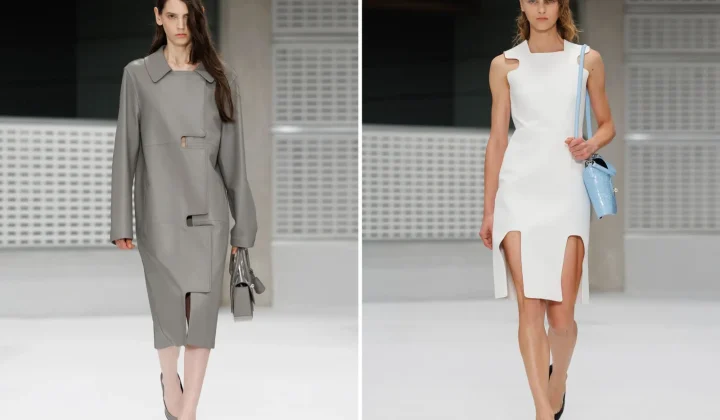
Christopher Kane brings streamlined, heritage-driven vision to Mulberry in London Fashion Week debut
The Scottish designer presented his first collection for the British leather goods house at London Fashion Week, blending sharp tailoring, archival references…
Read more
When Film Directors Become Interior Designers: Guadagnino, Lynch, Anderson and Almodóvar Step Off Screen
From Luca Guadagnino’s Zara Home collection to David Lynch’s Paris club and Wes Anderson’s train carriage, a wave of collaborations is blurring…
Read moreRelated wiki

Adaptive Reuse in Architecture
Reference page for reuse, retrofit, conversion, embodied carbon and design constraints.
Read more