
A Private San Francisco Flat Becomes a Living Archive of Queer Visual Culture
For 45 years, Ron Zuckerman built a collection of queer photography and art on a fundraiser’s salary. His Castro district flat, an 1889 building, now holds an intimate chronicle of two centuries of queer life — displayed without a designer’s hand.
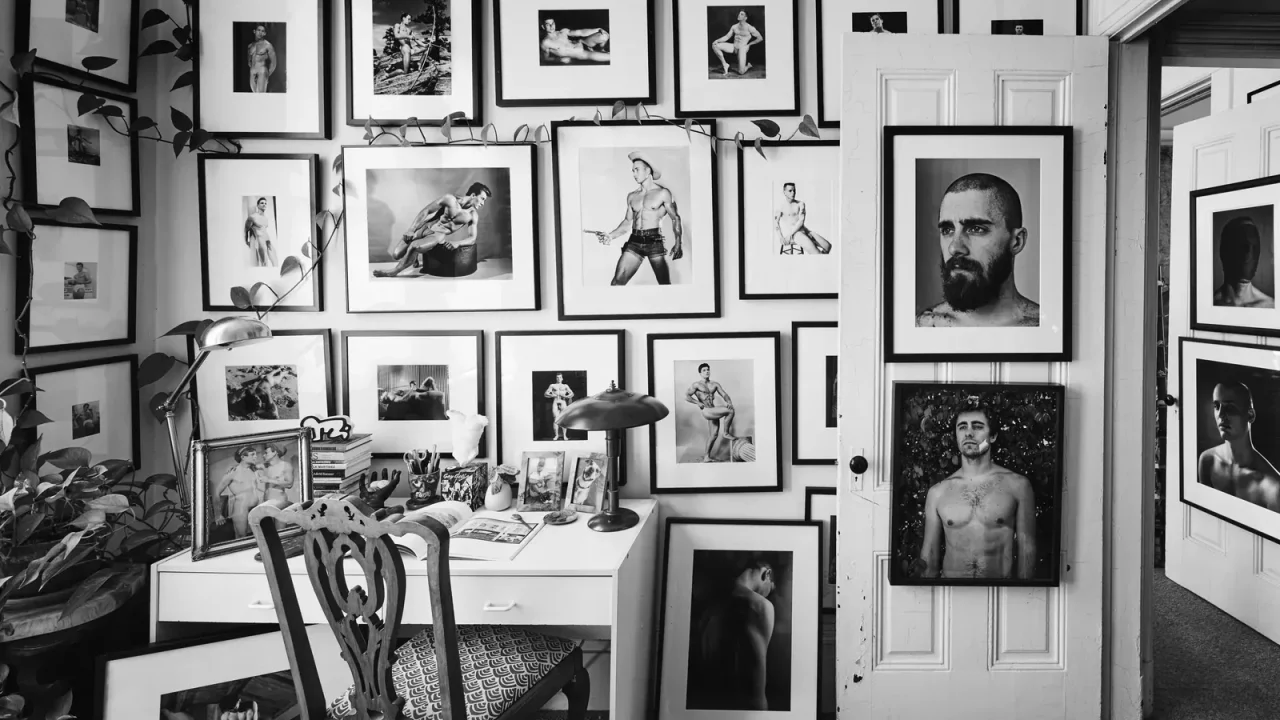
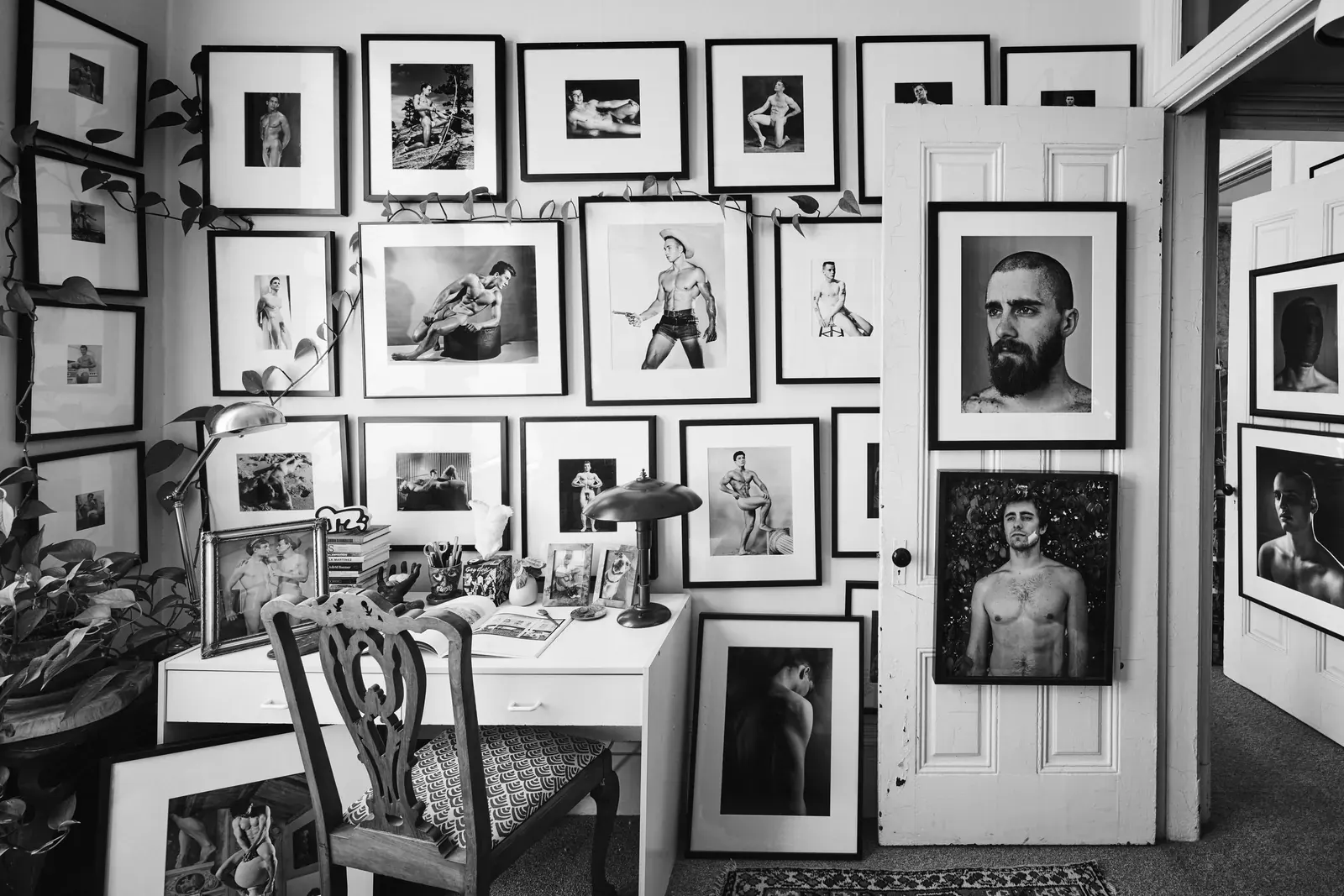
Ron Zuckerman’s flat in San Francisco’s Castro district looks like a museum of queer visual culture — but it is also a home. Built in 1889, the Victorian apartment has high ceilings, long corridors, and small rooms that have become walls for a collection amassed over 45 years on a fundraiser’s salary. From the entrance stairwell to the bathroom shower curtain, nearly every surface holds a photograph, a print, a quilt, or an object that traces queer life across the 20th and early 21st centuries.
Zuckerman never bought art to match a sofa or hired a designer to decide where a piece should hang. His method was simple and consistent: he stood in front of a photograph, felt a connection, and bought it — often one at a time. The first purchase was a Marsha Burns image of an androgynous young man, bought for $200 in 1980 at a local Seattle gallery. That instinct has guided every acquisition since, regardless of market value or curatorial fashion.
Por que importa
The flat feels more like an archive than a curated interior. The collection is not organised by chronology, artist, or theme, but by the logic of lived space. The guest room is lined with works by Danny Fitzgerald (also known as Les Demi Dieux), the artist most represented in Zuckerman’s holdings. The bathroom shower curtain bears an image by Wilhelm von Gloeden, and a door holds a Benjamin Fredrickson Wedgies plate, a Mark Morrisroe photogravure, and a photograph by Russian émigré Alexander Kargaltsev. In the living room, a Nan Goldin photograph of her nephew — acquired at a Gay Men’s Health Crisis benefit for $500 — sits alongside works by Robert Mapplethorpe, Peter Hujar, and Bruce Weber.
Many of these works were illegal in midcentury America. Physique photographs, erotic prints, and images of male nudity were created, printed, and distributed privately, surviving only because tenacious collectors preserved them. Zuckerman’s flat therefore doubles as a repository of fugitive cultural history. Objects that would have been destroyed or kept hidden now hang openly in a home that is also a public-facing archive.
Contexto
The collection includes works by both well-known and obscure artists. Female artists such as Lissa Rivera and Nan Goldin are represented, alongside the more famous male figures of the downtown New York post-Stonewall scene. Zuckerman’s late partner Nick contributed icons; Patrick Merriman made a quilt that lies on the guest bed. The diversity of makers and eras underscores that this is not a survey but an assembled history — personal, queer-specific, and unapologetically idiosyncratic.
| Key facts | |
|---|---|
| Collector | Ron Zuckerman, fundraiser, San Francisco |
| Location | Castro district flat, built 1889 |
| Collection span | 45 years, early 1980s to present |
| First purchase | Marsha Burns photograph, $200, 1980 |
| Notable artists | Danny Fitzgerald, Peter Hujar, Nan Goldin, Robert Mapplethorpe, Bruce Bellas, Mark Morrisroe |
For designers and architects, Zuckerman’s flat offers a counterpoint to the logic of calculated interior design. It demonstrates that a domestic space can achieve coherence not through matching finishes or professional curation, but through the accumulation of personally significant objects. The flat challenges the idea that a home must be designed as a single visual statement. Instead, it becomes a layered document of identity, desire, and survival.
Que sigue
While the collection is a singular example, it also speaks to broader questions: How do private spaces preserve community histories that mainstream institutions overlook? What does it mean for a home to function as an archive? Zuckerman’s approach — buying what moves him, displaying it where it fits — suggests that every interior can be a form of autobiography.
The Wallpaper article, which provides the primary account, includes photographs by Annie Schlechter that show the density of the display. The article does not specify a total number of works or a complete list of artists, and some details — such as the precise dimensions of the flat or its full acquisition history — remain unverified outside this single source. Readers interested in a deeper survey of the collection may need to consult additional reporting or visit the flat if opened for events.
Source: Wallpaper, “This private art collection offers a chronicle of queer life across two centuries” – https://www.wallpaper.com/design-interiors/ron-zuckerman-private-art-collection-san-francisco-nudes
Source
Wallpaper Original publication: 2026-07-26T13:00:00+00:00
Related news

Handwoven Teak and Cord Outdoor Seating Debuts from Masaya and Abril Zepeda
Nicaraguan furniture brand Masaya has introduced two new handcrafted outdoor chairs — a rocking chair and a lounge chair — designed by…
Read more
Place in Mind: Hendricks Churchill Launches Hospitality Group to Revive Historic Properties
The architecture and interior design studio Hendricks Churchill has launched Place in Mind, a new hospitality group focused on acquiring, restoring, and…
Read more
Adalberto Dias Architects Complete Restoration of Lisbon’s Patriarchal Cathedral and Archaeological Center
The restoration of the Sé de Lisboa by Adalberto Dias Arquitecto integrates a new archaeological center, preserved cloisters, and seven centuries of…
Read more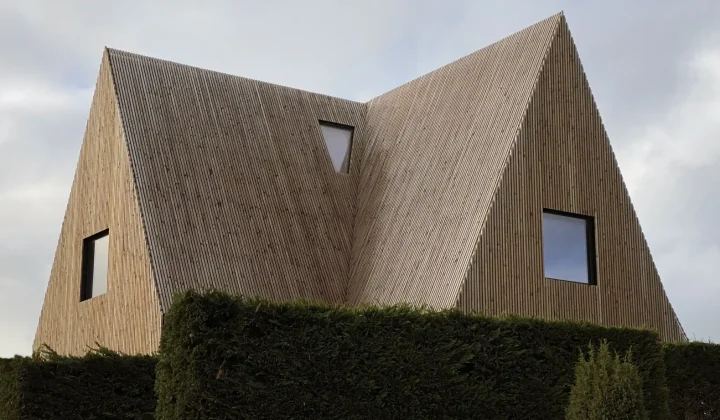
Vantieghem Talebi’s ‘House of Cards’ Brings Timber Geometry to Belgian Family Home
A new family house in Belgium by US- and Swiss-based practice Vantieghem Talebi uses a steeply pitched, card-house-inspired form clad in Douglas-fir…
Read moreRelated wiki
Adaptive Reuse in Architecture
Reference page for reuse, retrofit, conversion, embodied carbon and design constraints.
Read more