
Range Rover’s Matched Pair Puts Bespoke Restoration in the Design Spotlight
Range Rover has paired a restored 1993 Classic with a new SV Ultra to show how colour, trim and material decisions can bridge heritage restoration and contemporary luxury design.


Range Rover has created a “Classic Matched Pair” that brings together a restored 1993 Range Rover County Edition and a contemporary Range Rover SV Ultra, using coordinated colour, trim and interior details to demonstrate how bespoke restoration is moving closer to the language of collectible design.
According to Wallpaper, the pair will be shown at the 2026 Monterey Car Week before being offered through RM Sotheby’s The Monterey Auction in August 2026. The project is not simply a vehicle launch: it is a case study in how heritage objects are being rebuilt, re-trimmed and positioned for collectors who expect continuity between past and present products.
For Paionia7 readers, the relevance sits in the design process rather than the automotive market alone. The project touches on familiar questions in architecture, interiors and product culture: how to adapt an older object without erasing its identity, how material palettes travel across generations, and how restoration becomes a form of contemporary luxury.
A paired commission across three decades
The older vehicle in the pair is a 1993 Range Rover Classic County Edition originally built for the American market. Wallpaper reports that it has undergone a 2,000-hour restoration through Range Rover Classic, the company’s Coventry-based operation dedicated to earlier models.
It is matched with a current Range Rover SV Ultra. Both vehicles are finished in Titan Silver and use a coordinated interior palette described as SV Ultra duo-tone Orchid White and Cinder Grey. The point of the exercise is visual and material continuity: a historic model and a new flagship are made to read as one commission.
Range Rover’s Classic division has also rebuilt and uprated the older car’s mechanical systems, including the 3.9-litre V8, transmission, suspension, steering and brakes, according to the report. That makes the project more than a surface-level styling exercise, although the public presentation is clearly focused on the craft and bespoke design message.
Key facts
| Item | Detail |
|---|---|
| Project | Range Rover Classic Matched Pair |
| Vehicles | Restored 1993 Range Rover Classic County Edition and contemporary Range Rover SV Ultra |
| Reported restoration time | 2,000 hours for the Classic model |
| Public presentation | Planned for 2026 Monterey Car Week, ahead of RM Sotheby’s The Monterey Auction in August 2026 |
Material choices and interior continuity
One of the most notable design details is the use of Ultrafabrics, described by Wallpaper as an animal-free supplier used by Range Rover. The report says this is the first time the material has appeared in the Range Rover Classic programme.
Both cars use matching interior treatments, including laser-crafted seat patterns, mosaic perforations, duo-tone steering wheel finishes, bespoke door trims, brushed aluminium handles and colour-matched speaker covers. These are small-scale decisions, but they are the details that make the pair useful to read as a design object: the restoration is being framed through touch points, surfaces and finishes.
The wheel treatment also shows the balancing act between heritage and current luxury cues. The Classic receives Satin Platinum Atlas 16-inch wheels with diamond-turned contrast rims, while the contemporary SV Ultra sits on 23-inch wheels. Rather than making the older vehicle mimic the new one entirely, the project appears to preserve differences in proportion and stance while aligning the broader palette.
Why this matters beyond car collecting
The Matched Pair arrives in a wider design context where restoration is increasingly treated as a premium creative service. Architecture and interiors have seen a similar shift: clients often want historic character retained while finishes, systems and comfort are upgraded to contemporary expectations.
In that sense, the Range Rover project is part of a broader market for “continuity design” — work that does not start from a blank sheet, but from an existing object with cultural and visual value. The design challenge is to intervene enough to meet current expectations without flattening the age, proportions or memory that made the original desirable.
Wallpaper also places the project against a competitive field of restored and reworked early Range Rovers, including third-party conversions and reinterpretations. That context matters because official manufacturer restoration programmes are not only preserving older models; they are also competing with independent studios that have turned classic vehicles into bespoke design platforms.
A cautious reading of the auction angle
The planned RM Sotheby’s appearance gives the Matched Pair a collectible frame, but the available source material does not provide an estimate, final auction timing beyond August 2026, or confirmation of buyer interest. Those details should not be assumed.
What can be said is that the Monterey setting places the project in front of a global audience for collectible cars and luxury design. For brands with heritage products, these events are also stages for demonstrating craft capability, not just sales channels.
Wallpaper quotes Dominic Elms, Director of Land Rover Classic, as saying the project shows how an individualised Range Rover can be created through custom colour, interior trim and personalised details. That statement aligns with the project’s public message: bespoke service is being presented as a bridge between archive, restoration and current flagship design.
What remains to watch
The strongest available details come from Wallpaper’s report, so further confirmation from Range Rover, Land Rover Classic or RM Sotheby’s would be needed for auction estimates, final catalogue details and any additional technical specifications. The project is best read for now as a design-led restoration showcase rather than a fully documented market event.
For architects, interior designers and product design observers, the useful takeaway is the method: a limited palette, repeated material cues, controlled contrast between old and new forms, and an emphasis on tactile finishes. Whether applied to a vehicle, a residence or a collectible object, the same question remains central: how much should a restoration update, and how much should it leave visibly rooted in its own time?
Source: Wallpaper, https://www.wallpaper.com/transportation/a-perfect-pair-of-range-rovers-old-and-new-showcases-a-commitment-to-bespoke-design
Source
Wallpaper Original publication: 2026-07-19T23:01:00+00:00
Related news
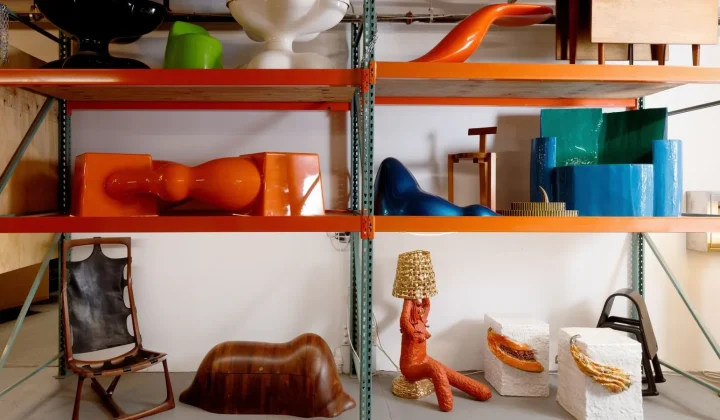
R & Company Opens Its Brooklyn Archive to the Public, Revealing 10 Rare Design Finds
The celebrated design gallery R & Company has opened its 16,000 sq ft storage facility, Building 86, in the Brooklyn Navy Yard…
Read more
SIITUA III to Gather International Researchers on Territory, Urbanism, and Architecture in Lima
The third edition of the International Seminar on Research in Territory, Urbanism, and Architecture (SIITUA III) will take place in Lima, organized…
Read more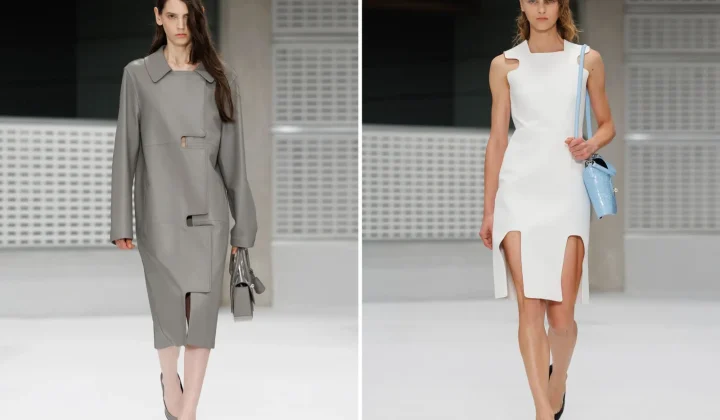
Christopher Kane brings streamlined, heritage-driven vision to Mulberry in London Fashion Week debut
The Scottish designer presented his first collection for the British leather goods house at London Fashion Week, blending sharp tailoring, archival references…
Read more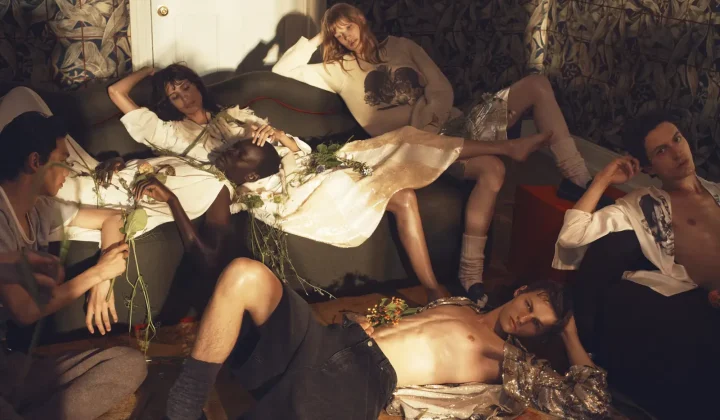
When Film Directors Become Interior Designers: Guadagnino, Lynch, Anderson and Almodóvar Step Off Screen
From Luca Guadagnino’s Zara Home collection to David Lynch’s Paris club and Wes Anderson’s train carriage, a wave of collaborations is blurring…
Read moreRelated wiki

Adaptive Reuse in Architecture
Reference page for reuse, retrofit, conversion, embodied carbon and design constraints.
Read more