How to Read Architecture and Urban Design Projects
A practical framework for assessing architecture and urban design beyond the image: site context, sustainability claims, costs, stewardship, and public impact.
The short answer
Architecture and urban design projects are often easiest to encounter through images, summaries, and design statements. A more careful reading asks what the project changes in context: the site, the street, resource use, long-term care, and the public life around it.
Read a project in layers. Start with context, then test sustainability claims, examine cost and stewardship, and finally ask who benefits, who may be burdened, and how the project is likely to work in everyday use.
Start with context, not the object
Site and surroundings
Before judging the building, plaza, landscape, or masterplan as an isolated object, look at what was already there. Useful questions include: what routes cross the site, which communities and uses surround it, what climate and water conditions shape it, and whether the proposal strengthens or interrupts existing public life.
For urban projects, resource use is part of context. UNEP frames cities within resource efficiency, which makes energy, land, materials, water, waste, and infrastructure relevant to how a project should be read.
Design narrative and public meaning
A design statement can explain intent, but it should not be treated as proof of outcome. For highly visible or formally expressive work, ask how the form relates to shared memory, identity, and use of public space. Research on parametric architecture, aesthetics, and collective memory points to formal innovation as something that can be assessed through public meaning as well as appearance.
What to verify first
Begin with the project’s own documentation if it is available, then compare it with independent reporting, official policy context, and direct observation. Architecture publications such as ArchDaily can be useful starting points for discovering project descriptions and design teams, but they should not be treated as evidence of measured performance unless they provide verifiable data or link to primary records.
For landscape and public-realm work, check whether sustainability is treated as an operational system, not just a visual theme. Scholarly work on sustainable stormwater management in urban public landscape design highlights water handling as part of public-space design rather than only a hidden engineering issue.
A decision matrix for reading a project
| Lens | What to ask | Evidence to look for | Common warning sign |
|---|---|---|---|
| Context | What was already on and around the site? | Site plans, planning documents, local history, street conditions, nearby uses | The project is presented as if the site were empty or context-free |
| Sustainability | Which environmental systems are actually addressed? | Energy strategy, material choices, water management approach, maintenance responsibilities | Broad “green” language without operational detail |
| Cost and stewardship | Who pays to build, operate, repair, and adapt it? | Budget information, funding structure, maintenance responsibilities, ownership or management arrangements | Strong launch narrative but little discussion of long-term care |
| Public impact | Who can use it, reach it, and feel welcome there? | Access routes, public-space rules, seating, shade, programming, community feedback where available | Public benefit is claimed, but public use is constrained or unclear |
| Cultural meaning | How does the project relate to memory, identity, and place? | Design statements, heritage context, local response, patterns of use | Iconic form appears disconnected from everyday usability |
Key caveats when judging claims
Images are not performance evidence
Renderings, photographs, and awards can show composition, atmosphere, and ambition. They do not, by themselves, establish environmental performance, public accessibility, maintenance quality, or long-term value.
Sustainability should be read across systems
A single visible feature, such as planting or a dramatic roof form, is not enough to verify a sustainability claim. At the urban scale, resource efficiency connects to energy, land, materials, water, waste, and infrastructure; in public landscapes, stormwater management can be one part of that broader environmental reading.
Publicity is not the same as public impact
A project may be widely published and still require careful assessment of who can use it, how it affects surrounding streets, whether it supports everyday public life, and whether its design language connects with collective memory or local identity.
Cost claims need primary records
Without verified budgets, operating costs, funding agreements, or maintenance records, it is safer to ask cost questions than to make firm claims about value for money. Treat published cost figures cautiously unless their source, date, scope, and exclusions are clear.
Practical checklist
- Separate description from evidence. Note what the project claims to do, then identify which claims are backed by documents, measured outcomes, or observable conditions.
- Read the site before the object. Look at access, climate, surrounding buildings, public routes, water movement, existing communities, and the project’s relationship to local memory.
- Test sustainability claims by system. Ask about energy, materials, water, landscape performance, maintenance, and resource use rather than relying on labels or visual greenness.
- Ask who carries the cost. Consider construction, operation, repair, security, adaptation, and the public or private responsibilities attached to each.
- Observe public life where possible. Study whether people can enter, linger, meet, rest, and move through the space comfortably.
- Look for exclusions. Check whether design, rules, pricing, access, surveillance, or location limit the public benefit being claimed.
How to write about a project without overclaiming
When evidence is limited, use provisional language. It is fair to say that a project “appears to prioritize” a certain experience or “raises questions about” long-term maintenance. It is not fair to state that it saves resources, improves equity, or benefits a community unless reliable project-specific evidence supports that conclusion.
The strongest reading combines visual attention with verification. Good criticism can describe proportion, material, atmosphere, and urban presence while also asking whether environmental and public claims can be traced to credible sources.
Sources and date-checked note
Date checked: 19 June 2026. This guide is a general reading framework, not a substitute for project-specific planning files, sustainability assessments, accessibility reviews, budgets, contracts, or maintenance records.
- UNEP: cities and resource efficiency
- ArchDaily
- Urban Public Landscape Design Under the Guidance of Sustainable Stormwater Management
- Parametric architecture in the context of aesthetics and collective memory of public space
Sources
- UNEP: cities and resource efficiency – UNEP.
- ArchDaily – ArchDaily.
- Urban Public Landscape Design Under the Guidance of Sustainable Stormwater Management – Springer International Publishing.
- Parametric architecture in the context of aesthetics and collective memory of public space – Kyiv National University of Construction and Architecture.
Related news
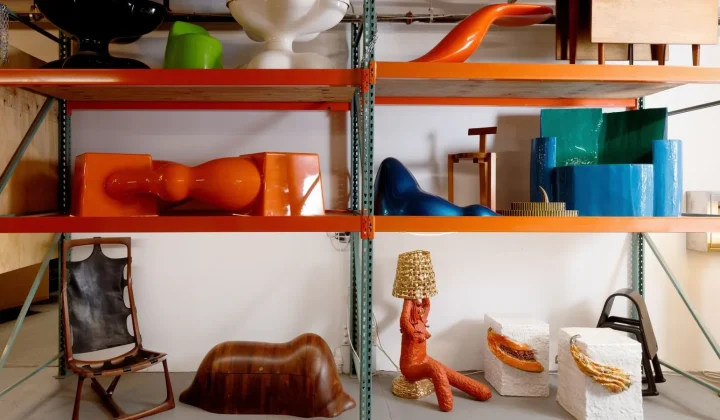
R & Company Opens Its Brooklyn Archive to the Public, Revealing 10 Rare Design Finds
The celebrated design gallery R & Company has opened its 16,000 sq ft storage facility, Building 86, in the Brooklyn Navy Yard…
Read more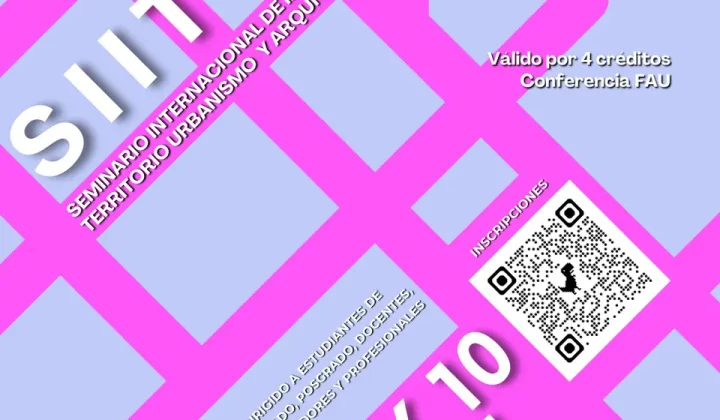
SIITUA III to Gather International Researchers on Territory, Urbanism, and Architecture in Lima
The third edition of the International Seminar on Research in Territory, Urbanism, and Architecture (SIITUA III) will take place in Lima, organized…
Read more
Christopher Kane brings streamlined, heritage-driven vision to Mulberry in London Fashion Week debut
The Scottish designer presented his first collection for the British leather goods house at London Fashion Week, blending sharp tailoring, archival references…
Read more
When Film Directors Become Interior Designers: Guadagnino, Lynch, Anderson and Almodóvar Step Off Screen
From Luca Guadagnino’s Zara Home collection to David Lynch’s Paris club and Wes Anderson’s train carriage, a wave of collaborations is blurring…
Read moreRelated wiki
Adaptive Reuse in Architecture
Reference page for reuse, retrofit, conversion, embodied carbon and design constraints.
Read more