
RIBA International Prize 2026 Shortlist Announced: Four Projects Vie for World’s Best Building
The Royal Institute of British Architects has revealed four projects competing for the 2026 International Prize, marking the award’s tenth anniversary with a shortlist spanning Belgium, Bangladesh, and the UK.


The Royal Institute of British Architects (RIBA) has unveiled the four-project shortlist for its 2026 International Prize, a cycle that also marks the award’s tenth anniversary. The winner, selected from projects in Belgium and Bangladesh, will be announced on 15 October 2026 at a ceremony in London alongside the recipient of the RIBA International Emerging Architect award.
The shortlist was chosen by a jury chaired by Neil Gillespie, who noted that each building demonstrates “an exceptional understanding of its context” and shows how architecture can “enrich everyday life while responding with imagination and purpose to the complex challenges shaping our built environment.” The common thread across all four entries, according to RIBA representatives, is that design improves daily life while responding to a changing climate.
Por que importa
| Key facts | |
|---|---|
| Award | RIBA International Prize 2026 |
| Shortlisted projects | 4 buildings (Belgium: 2, Bangladesh: 2) |
| Winner announcement | 15 October 2026 |
| Anniversary | 10th edition of the RIBA International Prize |
BRAC University, Dhaka, Bangladesh – Designed by an unnamed firm (not specified in source), this project transforms a former landfill site into a vertical 13-storey campus serving 20,000 students. The scheme incorporates passive cooling strategies, natural cross-ventilation, and extensive landscaping, turning neglected urban space into a functioning educational and public hub. The university’s adaptive reuse of contaminated land is a notable example of urban regeneration in one of the world’s densest cities.
Green Field Factory of Karupannya Rangpur Limited, Rangpur, Bangladesh – Designed by Nakshabid Architects, this seven-storey textile factory treats industrial architecture as a workplace, wellbeing hub, and community space. The design draws on Bangladesh’s vernacular architecture and rural Bengali homesteads, surrounding the building with greenery. The project challenges conventional factory typologies by prioritising worker comfort and environmental integration over purely industrial efficiency.
Contexto
Royale Belge, Brussels, Belgium – Caruso St John Architects and Bovenbouw Architectuur with DDS+ have transformed a 1960s modernist landmark originally designed by Belgian architect René Stapels and Pierre Dufau as an insurance company headquarters. The project sensitively reuses, protects, and adapts the original structure, demonstrating how 20th-century heritage can remain relevant in contemporary life. Located in south-east Belgian forests, the building now serves a new purpose while retaining its architectural character.
Z33, Hasselt, Belgium – Designed by Torzo, this new building sits at the heart of Hasselt’s historic Beguinage, a walled garden enclave of brick buildings that once served as an almshouse. The project creates a dedicated space for contemporary art, design, and public gathering. Local materials and traditional craftsmanship feature prominently, with adaptive reuse executed at a high level. The building becomes a new focal point for the cultural quarter.
Que sigue
Why this matters for architecture professionals
The shortlist offers a concentrated view of current architectural priorities: adaptive reuse, climate-responsive design, and the transformation of existing urban fabric. For practitioners and students following the RIBA awards cycle, these projects provide case studies in how to reconcile heritage protection with contemporary programmatic needs, and how industrial buildings can be reimagined as community assets. The inclusion of two Bangladeshi projects also signals a growing recognition of architecture from the Global South in major international awards.
The 2026 cycle coincides with the 30th anniversary of the RIBA Stirling Prize, first awarded in 1996, which will also be announced at the same October ceremony. The overlap underscores a broader moment of reflection for the institute’s awards programme.
Judges will visit each shortlisted project before the final decision, examining how the buildings perform in use and how they meet their stated design intentions. The winner will be selected from this group of four, with no further shortlist reduction planned.
Source: Wallpaper – “RIBA International Prize 2026 shortlist – which will be the world’s best building?” https://www.wallpaper.com/architecture/riba-international-prize-2026-shortlist
Source
Wallpaper Original publication: 2026-09-16T23:01:00+00:00
Related news

Veronica Mishaan revamps Bogotá penthouse with bold patterns and curated art collection
Colombian designer Veronica Mishaan has completed the renovation of a 580-square-metre penthouse in Bogotá, balancing family living with entertaining space while preserving…
Read more
IE University students present horse-mounted seed dispersal system and flood-adaptive interiors
A portable structure that disperses native seeds from horseback, a hospital interior informed by greenhouse design, and a flood-adaptive interior layer for…
Read more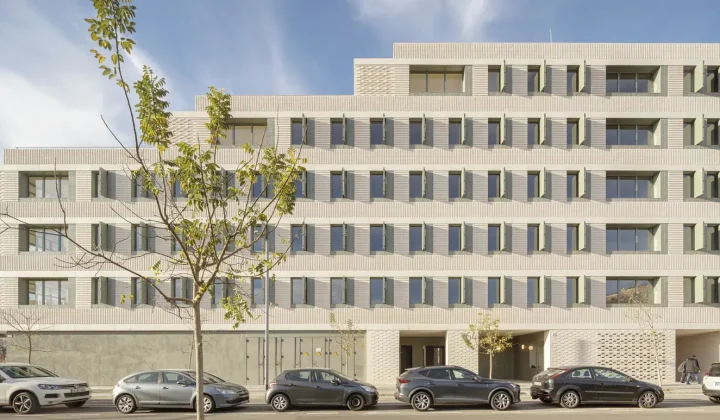
b720 Fermín Vázquez Completes 37 Build-to-Rent Homes in L’Hospitalet de Llobregat
Barcelona-based firm b720 Fermín Vázquez Arquitectos has completed a 37-unit build-to-rent residential project in L’Hospitalet de Llobregat, designed for a peripheral area…
Read more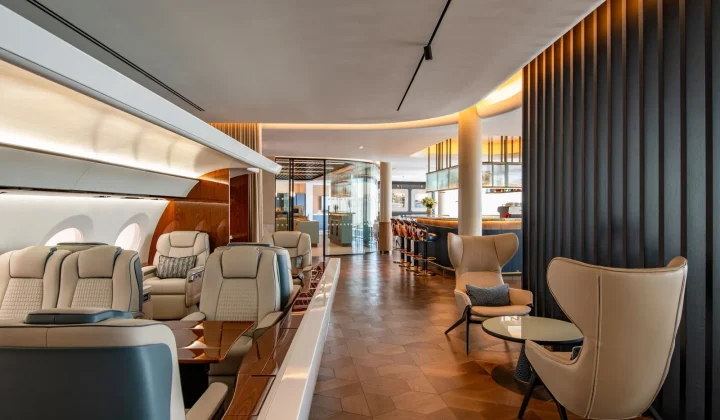
Flexjet’s new Farnborough terminal brings hospitality-driven design to private aviation
The private aviation provider’s first dedicated European hub at Farnborough Airport combines a lounge, training academy and event space with interiors by…
Read moreRelated wiki

Adaptive Reuse in Architecture
Reference page for reuse, retrofit, conversion, embodied carbon and design constraints.
Read more