Wutopia Lab Unveils Whimsical Whale-Shaped Entrance for Chinese Residential Development
A striking, biomimetic entrance designed by Wutopia Lab transforms a residential gateway into a mythical whale, symbolizing transition and wonder for residents of Jindao, Shangqiu, China.
Wutopia Lab has designed a captivating entrance for the Jindao Residential development in Shangqiu, Henan, China, that eschews traditional forms for a whimsical, whale-inspired structure. Developed by the Jinsha Group, this unique gateway aims to create a distinct transition between urban life and the domestic sanctuary for residents.
Situated within a meticulously planned landscape of water and trees, the “Whale Door” presents itself as a blue, biomorphic form emerging from the garden. This design choice directly responds to the client’s desire for a memorable and symbolic entry point, moving away from conventional residential entrances.
The master plan for Jindao Residential is organized as an archipelago-like composition, with buildings interspersed across a water and greenery-filled landscape. Architect Yu Ting drew inspiration from this setting, referencing classical Chinese narratives of mythical, isolated islands that exist beyond ordinary reality. The Whale Door translates this concept into an architectural threshold, marking the passage into the residential community.
Symbolism of the Whale
At the core of the design is an abstract representation of a whale. In maritime myths and legends, whales often act as intermediaries between the known and the unknown. Wutopia Lab reinterprets this symbolism, transforming the act of returning home into a journey through the “eye” of the whale. Rather than a literal depiction, the design uses recognizable formal gestures to evoke the creature.
A vertical golden opening pierces the blue volume, forming the main entrance. Above this, a perforated white aluminum panel generates a misting water effect, also serving as a canopy. The project prioritizes symbolic expression as a design strategy, integrating form and narrative as integral architectural components, rather than relying solely on technical solutions.
A resident-exclusive observation deck is positioned atop the Whale Door, accessible via golden stairs. From this vantage point, residents can survey the surrounding water features, trees, and buildings, reinforcing the entrance’s role as a transitional device between the public urban environment and the private residential sphere.
Structural Complexity and Fabrication
Structurally, the Whale Door is a complex assembly of six layers of components, including a primary steel frame, connecting rods, an aluminum substructure, a waterproofing layer, hyperbolic aluminum honeycomb composite panels, and fin profiles. The entire structure weighs approximately 60 tons and comprises nearly 4,000 individual parts.
The intricate geometry necessitated extensive customization throughout the manufacturing and construction phases. Due to varying curvature and torsion conditions, all steel and aluminum elements were custom-fabricated. A single steel column, for instance, was divided into seven to fifteen sections, with almost 10,000 three-dimensional coordinate points used to guide assembly and ensure millimeter precision.
To achieve the hyperbolic form, Wutopia Lab selected an aluminum honeycomb composite panel system, chosen for its lightweight properties, structural stability, and manufacturing flexibility. A total of 1,170 uniquely shaped aluminum panels were produced, allowing the whale-like volume to maintain a continuous surface despite its highly customized geometry.
Narrative and Experience
The relationship between architecture and narrative extends beyond the physical structure. During the opening ceremony, a red firework launched from the center of the door, adding a dynamic element to the nighttime scene and echoing the project’s themes of arrival, transformation, and family identity.
The Whale Door functions not only as a landmark but as a symbolic threshold integrated within the residential development. By merging narrative imagery, engineered geometry, and landscape integration, the project explores how architecture can shape everyday experiences through references to myth, memory, and place.
Key facts
| Feature | Detail |
|—|—|
| Project Name | Whale Door |
| Architect | Wutopia Lab |
| Location | Henan, China |
| Area | 242 m2 |
| Client | Jinsha Group |
| Structural Weight | Approximately 60 tons |
This design offers a unique approach to residential entrances, demonstrating how symbolic and narrative elements can enhance the resident experience and create a distinct sense of place. The project highlights the potential for imaginative architectural interventions to transform ordinary spaces into memorable landmarks.
Source: estudioarquitectos.cl – Paneles de aluminio azul dan forma a una puerta con forma de ballena, diseñada por el laboratorio wutopia – https://estudioarquitectos.cl/2026/06/10/paneles-de-aluminio-azul-dan-forma-a-una-puerta-con-forma-de-ballena-disenada-por-el-laboratorio-wutopia/
Datos clave
| Punto | Detalle |
|---|---|
| Fuente | estudioarquitectos.cl |
| Fecha | 2026-06-10T23:40:15+00:00 |
| Tema | Paneles de aluminio azul dan forma a una puerta con forma de ballena, diseñada por el laboratorio wutopia |
Source
estudioarquitectos.cl Original publication: 2026-06-10T23:40:15+00:00
Related news
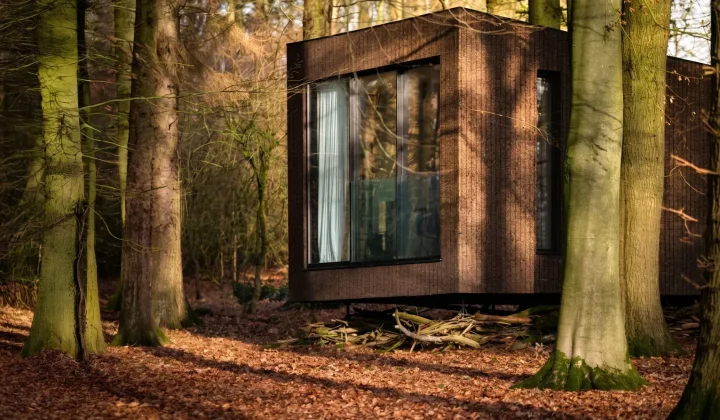
Koto launches Haku, a mobile prefab hotel suite built on a wheeled chassis to bypass UK planning restrictions
UK architecture studio Koto has unveiled Haku, a fully mobile prefabricated suite that legally qualifies as a caravan, allowing landowners and hotel…
Read more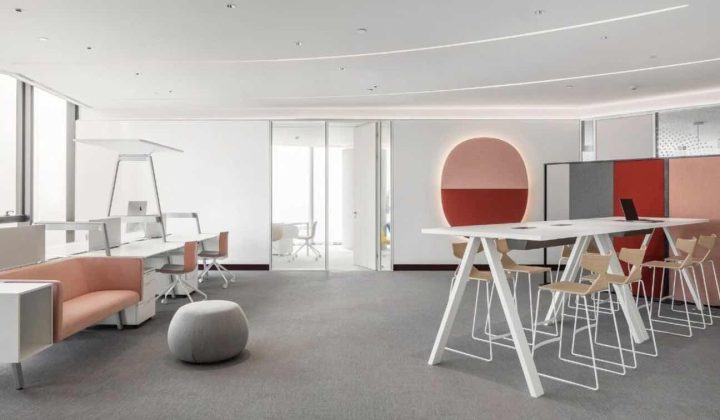
HONG Designworks Completes Private Office in Xi’an That Balances Memory, Materiality, and Long-Term Use
The Xi’an office by HONG Designworks integrates a folded steel staircase, retained furniture from a previous workspace, and a restrained purple-gray palette…
Read more
Handwoven Teak and Cord Outdoor Seating Debuts from Masaya and Abril Zepeda
Nicaraguan furniture brand Masaya has introduced two new handcrafted outdoor chairs — a rocking chair and a lounge chair — designed by…
Read more
Place in Mind: Hendricks Churchill Launches Hospitality Group to Revive Historic Properties
The architecture and interior design studio Hendricks Churchill has launched Place in Mind, a new hospitality group focused on acquiring, restoring, and…
Read moreRelated wiki
Adaptive Reuse in Architecture
Reference page for reuse, retrofit, conversion, embodied carbon and design constraints.
Read more