Checksy Choi Transforms a Seoul Cold War Bunker into a Porous Vessel of Memory
Artist Checksy Choi has converted a former anti-tank bunker in Seoul into a site-specific architectural installation examining displacement and heritage through welded steel and traditional hanji paper.
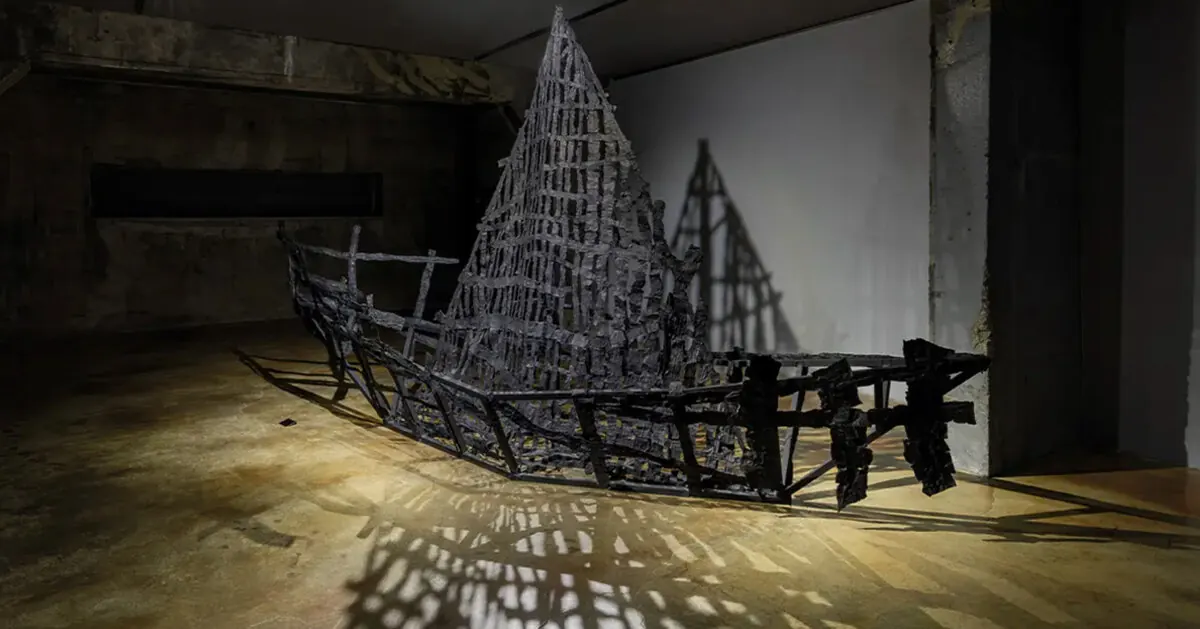
Architectural transformation meets personal history in a new Seoul exhibition that repurposes a fortified Cold War structure into a meditative space for public interaction. Artist Checksy Choi has completed Eotieum: The Ply of Longing, a site-specific installation housed inside the Peace Culture Bunker, a former anti-tank military installation in South Korea. The project utilizes the bunker’s two primary chambers and connecting corridor to explore themes of displacement, familial memory, and the enduring architecture of separation.
Rather than treating the brutalist concrete enclosure as a neutral gallery backdrop, the intervention engages directly with the bunker’s heavy structural characteristics. Originally built to withstand military impact, the heavy concrete environment provides an enclosed, atmospheric framework for the multi-part exhibition. The project originates from a deeply personal narrative, taking inspiration from the fishing boat that the artist’s grandmother boarded while fleeing North Korea during the Korean War. Through this lens, the installation examines how historical rifts shape contemporary spatial experiences.
Por que importa
Key facts
Exhibition Title | Eotieum: The Ply of Longing
Location | Peace Culture Bunker, Seoul
Featured Materials | Welded steel, traditional hanji paper, acrylic, jute rope
Artist | Checksy Choi
At the center of the first chamber stands the Eotieum Vessel, measuring 4.3 meters in length. The sculpture is constructed from a welded steel framework enveloped in thousands of hand-torn fragments of hanji, traditional Korean paper. These fragments are organized into Gyeokja, a lattice-based visual language adapted from traditional Korean timber screen structures. The surface remains intentionally porous, allowing natural light, humidity, and air to circulate while casting shifting shadow patterns across the bunker’s concrete walls and floor.
The exhibition layout deliberately encourages physical and sensory engagement as visitors move through the site. In the connecting corridor, a participatory work titled You May Pull the Vessel invites attendees to pull a small hanji boat along a guide, echoing a physical gesture performed by the artist before the opening. In the second chamber, a work named Net Hug uses a steel grid and suspended hanji footprints to create a semi-permeable barrier. The structure allows visitors on opposite sides to reach toward one another without fully crossing the divide, while foot traffic gradually creases and wears the paper over time.
Beyond the three-dimensional installations, the exhibition incorporates two-dimensional canvas works positioned in the space. Pieces titled Longing Extends North and Still feature hanji boats dragged across acrylic-painted linen surfaces, layering raw materials against static paint. These works maintain an unsealed texture, preserving the contrast between the breathable paper elements and the rigid canvas foundations beneath them.
For architects, spatial designers, and cultural practitioners, the project offers a compelling case study in adaptive reuse and memorial architecture. By embedding temporary, tactile interventions within a hostile military structure, the installation demonstrates how neglected infrastructural artifacts can be repurposed for cultural reflection. The deliberate use of breathable, biodegradable materials like hanji juxtaposed against reinforced concrete provides a model for low-impact spatial activation in challenging heritage contexts.
Source: Designboom, https://www.designboom.com/art/steel-hanji-weave-into-porous-vessel-memory-cold-war-bunker-seoul-checksy-choi-eotieum-the-ply-of-longing/
Datos clave
| Punto | Detalle |
|---|---|
| Fuente | Designboom |
| Fecha | 2026-07-31T23:55:22+00:00 |
| Tema | steel and hanji weave into porous vessel of memory inside cold war bunker in seoul |
Source
Designboom Original publication: 2026-07-31T23:55:22+00:00
Related news
Handwoven Teak and Cord Outdoor Seating Debuts from Masaya and Abril Zepeda
Nicaraguan furniture brand Masaya has introduced two new handcrafted outdoor chairs — a rocking chair and a lounge chair — designed by…
Read more
Place in Mind: Hendricks Churchill Launches Hospitality Group to Revive Historic Properties
The architecture and interior design studio Hendricks Churchill has launched Place in Mind, a new hospitality group focused on acquiring, restoring, and…
Read more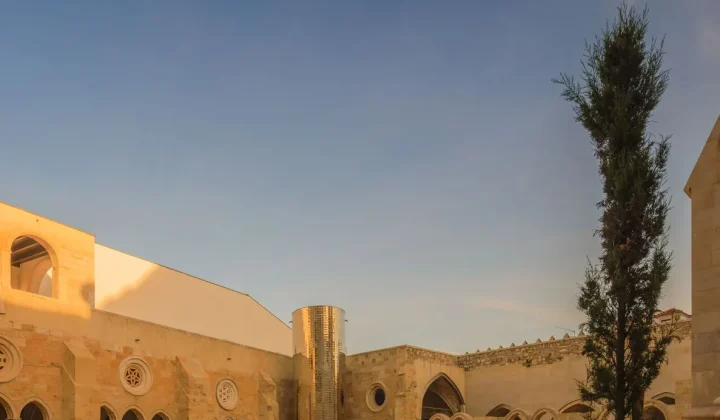
Adalberto Dias Architects Complete Restoration of Lisbon’s Patriarchal Cathedral and Archaeological Center
The restoration of the Sé de Lisboa by Adalberto Dias Arquitecto integrates a new archaeological center, preserved cloisters, and seven centuries of…
Read more
Vantieghem Talebi’s ‘House of Cards’ Brings Timber Geometry to Belgian Family Home
A new family house in Belgium by US- and Swiss-based practice Vantieghem Talebi uses a steeply pitched, card-house-inspired form clad in Douglas-fir…
Read moreRelated wiki
Adaptive Reuse in Architecture
Reference page for reuse, retrofit, conversion, embodied carbon and design constraints.
Read more