
27 Storeys Documentary Revisits Vienna’s Alterlaa and the Utopian Promise of Collective Living
Director Bianca Gleissinger returns to her childhood home in the Alterlaa housing complex to explore how a 1970s social housing project achieved a self-contained city-within-a-city, complete with rooftop pools, social clubs, and a resident-owned corporation.
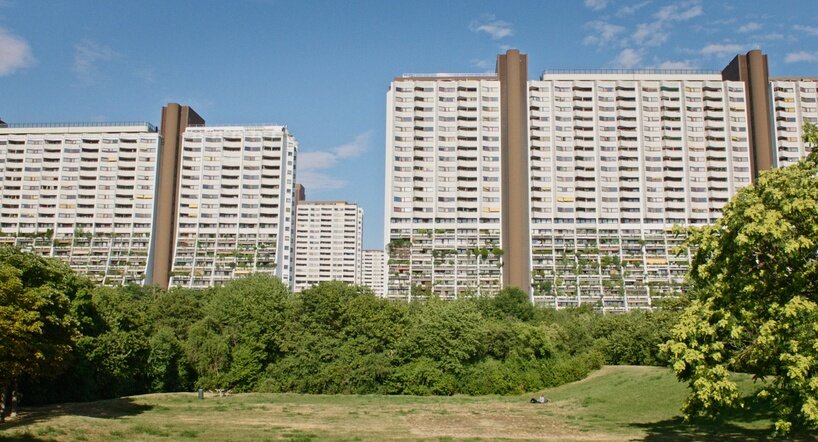
A new documentary titled 27 Storeys revisits Vienna’s Alterlaa public housing complex, one of the most ambitious social housing projects of the 20th century. Directed by Bianca Gleissinger, who grew up in the complex, the film examines how architect Harry Glück’s 1970s vision of a self-contained urban community has held up over five decades.
Built on the outskirts of Vienna, Alterlaa comprises more than 3,000 apartments arranged in gently sloping pyramid-like towers. The complex was designed as a city within a city, offering residents not only homes but also swimming pools, shopping centres, schools, medical facilities, green spaces, and underground parking. The guiding principle was the utilitarian ideal of “the greatest happiness for the greatest number of people.”
Gleissinger’s documentary blends archival home footage with contemporary interviews and slow, observational shots of the building’s corridors, elevators, and common areas. The film premiered on January 24, 2023, and was produced by Mischief Films & Co KG, with cinematography by Klemens Koscher and editing by Kai Eiermann and Antje Lass.
Key facts
| Aspect | Details |
|——–|———|
| Complex name | Alterlaa, Vienna |
| Architect | Harry Glück |
| Units | Over 3,000 apartments |
| Documentary | 27 Storeys (2023), directed by Bianca Gleissinger |
A self-contained social infrastructure
The documentary reveals how Alterlaa functions as more than a housing block. Residents have access to a tenant advisory board, and the complex operates as a charitable corporation where residents hold shares, giving them the power to veto changes to the community. Board meetings and newsletters keep the social structure running.
Gleissinger interviews long-term residents, including a man named Peter who has lived in the building since it opened in the 1970s. His apartment remains a time capsule of that decade, with dark laminate wood breakfast nooks and patterned wall coverings. Speaking about his attachment to the home, he says, “I will only really leave when I’m dead. Not voluntarily.”
The film also documents the social clubs that have flourished within the complex: model making, card games, photography, stamp collecting, shooting range, and pottery. One of the more unusual spaces is a museum dedicated to the musical artist Freddy Quinn, maintained by the parents of Gleissinger’s childhood friend.
Generational tensions and aging population
One of the more revealing aspects of 27 Storeys is the generational divide it captures. The older residents, who have lived in Alterlaa for decades, maintain an active club culture. Younger residents interviewed at the rooftop pools describe these clubs as being “mostly for old people.” The older generation, in turn, criticises younger residents for being too attached to technology and isolating themselves.
Gleissinger’s documentary does not shy away from the critique that Alterlaa has become one of Austria’s most successful retirement homes. Rather than dismissing this observation, she frames it as one facet of a complex social structure. The film suggests that the comfort and community Alterlaa provides can also lead to a certain complacency.
Slow cinema as a documentary method
What distinguishes 27 Storeys from a conventional architecture documentary is its pacing. Gleissinger uses long, sustained shots of banal spaces: an elevator lobby, wallpaper patterns, a woman waiting at a pickup stop in the underground parking lot. These scenes are intended to make the viewer feel as if they have been living in the building for decades, mirroring the experience of long-term residents.
The approach avoids the typical celebratory tone of architecture films. Instead, it offers a lived-in perspective on how infrastructure shapes daily life, for better and for worse. Gleissinger reflects that not everything in Alterlaa is perfect—sometimes life does not turn out as beautifully as the promises of the future—but she suggests that may not be the fault of the architecture itself.
Why this matters for housing discourse
Alterlaa remains a reference point for debates about public housing, social infrastructure, and the role of design in fostering community. At a time when many cities face affordability crises and social fragmentation, the model of a resident-owned, mixed-use complex with extensive amenities offers lessons—and limitations. The documentary provides a nuanced portrait that avoids both utopian hype and cynical dismissal, making it valuable for architects, urban planners, and housing advocates.
Source: Designboom – “27 storeys revisits vienna’s alterlaa and its utopian promise of collective living” (https://www.designboom.com/architecture/27-storeys-alterlaa-forever-documents-vienna-utopic-social-housing-project/)
Datos clave
| Punto | Detalle |
|---|---|
| Fuente | Designboom |
| Fecha | 2026-08-22T20:35:47+00:00 |
| Tema | 27 storeys revisits vienna’s alterlaa and its utopian promise of collective living |
Source
Designboom Original publication: 2026-08-22T20:35:47+00:00
Related news
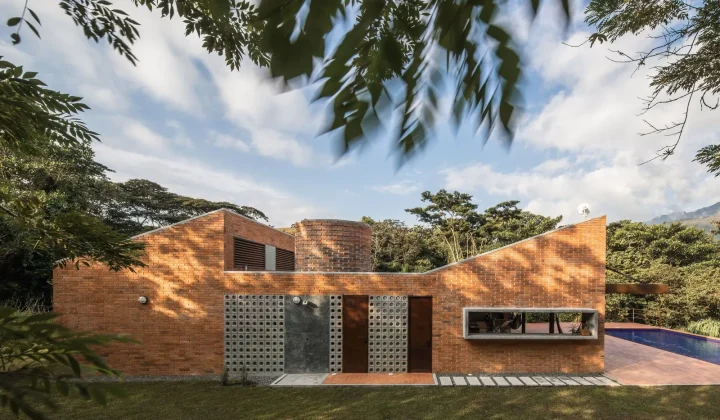
12 Colombian Houses Showcase the Enduring Appeal of Exposed Brick
ArchDaily highlights a dozen Colombian homes that use exposed brick as a structural and aesthetic statement, reflecting the material's deep roots in…
Read more
Behin Ha completes trio of townhouse ADUs on a single Jersey City lot behind a preserved 150-year-old house
The New York-based studio placed three two-bedroom townhouses at the rear of a restored single-family house in Jersey City’s Heights neighborhood, using…
Read more
When the Ground Stops Behaving Like Ground: Six Amphibious Homes That Rise and Float With the Water
From the Netherlands to Vietnam and Ecuador, a growing body of residential architecture begins from a different premise: that stable ground is…
Read more
Merit Beauty Debuts at The Ritz-Carlton with In-Room Kits and Beauty Carts Across Seven North American Hotels
The clean beauty brand has launched its first hospitality collaboration, placing skincare and makeup essentials inside Ritz-Carlton properties in Toronto, Santa Barbara,…
Read moreRelated wiki

Adaptive Reuse in Architecture
Reference page for reuse, retrofit, conversion, embodied carbon and design constraints.
Read more