When Research Demands a Book: What Architects Should Know About Publishing a Monograph
A practical look at what goes into producing a scholarly monograph during a doctoral programme — and why architecture researchers increasingly turn to professional writing support.
Sponsored content. This article was prepared as advertising content. The editorial layer keeps the placement transparent and does not treat it as independent news verification.
For architecture researchers pursuing a doctoral degree, the monograph remains one of the most demanding — and most respected — forms of scholarly output. Unlike a journal article, which might explore a single case study or methodology, a monograph requires the author to develop a sustained, book-length argument that demonstrates original thinking and rigorous command of their field.
Yet the path from research notes to a polished manuscript is rarely straightforward. Between teaching commitments, design studio obligations and the sheer volume of fieldwork or archival study, many PhD candidates find themselves searching for ways to maintain momentum. This has led a growing number of architecture researchers to explore professional writing services that specialise in academic manuscripts. The decision to buy a monograph is not about outsourcing intellectual responsibility; it is about ensuring that the final text meets the structural and editorial standards expected by reviewers and publishers.
This article is sponsored content.
What Defines a Monograph in Architecture?
A monograph is not simply a long essay. In the academic world, it is understood as a comprehensive, single-subject work that presents an original thesis through a combination of theoretical framing, critical analysis and empirical evidence. For architecture and urban design researchers, this often means integrating drawings, photographs, site analyses and policy documents into a coherent narrative.
Key characteristics include:
- Original contribution — the work must advance knowledge, not merely summarise existing literature.
- Single author voice — unlike edited volumes, a monograph reflects one researcher’s sustained thinking.
- Peer-review readiness — most academic publishers expect the manuscript to pass external review before acceptance.
- Formal structure — chapters build on each other logically, with a clear introduction, literature review, methodology, findings and conclusion.
Understanding these expectations early can save months of rewriting later.
The Hidden Workload of Writing a Monograph
Architecture PhD candidates often underestimate the time required to move from a dissertation draft to a publishable monograph. The differences are significant:
| Aspect | PhD Dissertation | Academic Monograph |
|---|---|---|
| Audience | Examination committee | Broader scholarly community |
| Length | Typically 80,000–100,000 words | Often 60,000–90,000 words after revision |
| Tone | Defensive, method-focused | Confident, argument-driven |
| Editing | Minimal after submission | Multiple rounds of structural editing |
| Illustrations | Included as evidence | Curated for publication quality |
Researchers who have already defended their dissertation may still face six to twelve months of rewriting, reordering chapters, sharpening the central thesis and formatting references according to a publisher’s style guide. This is where external editorial support can make the difference between a stalled manuscript and a completed submission.
Common Challenges for Architecture Researchers
Architecture as a discipline sits at the intersection of humanities, social sciences and technical fields. This interdisciplinary nature creates specific writing challenges:
- Visual integration — describing spatial qualities, materiality and urban configurations in text without losing nuance.
- Technical vocabulary — balancing specialist terminology with readability for an academic audience that may include historians, planners and engineers.
- Theoretical framing — situating design work within broader debates about sustainability, heritage, housing policy or digital fabrication.
Many researchers find that working with a professional editor who understands academic conventions — but is not necessarily an architect — helps clarify the argument for readers outside the immediate discipline. The goal is not to change the author’s voice but to ensure the manuscript communicates effectively to its intended audience.
When Professional Writing Support Makes Sense
There is no single moment when a researcher should seek help. However, several scenarios commonly arise:
- After a successful dissertation defence, when the candidate needs to transform the thesis into a monograph for a publisher’s deadline.
- During the writing process itself, when a candidate realises that certain chapters require more structured argumentation or better alignment with the central thesis.
- Before submission to a publisher, when a manuscript needs a fresh editorial review to catch inconsistencies in tone, structure or referencing.
In these cases, services that offer monograph writing support operate on a collaborative model. The researcher retains full intellectual ownership; the service provides structural editing, literature organisation, formatting and quality assurance against academic standards. Payment is typically staged to match milestones — a structure that protects both parties and allows the researcher to maintain control over the content.
What to Look for in a Writing Partner
If you are considering professional support for your monograph, here is a compact checklist to evaluate potential partners:
- Transparent pricing — the cost should be broken down by service type, not hidden behind vague estimates.
- Portfolio or sample work — ask to see examples of completed monographs in architecture or related fields.
- Contract and guarantees — a formal agreement should outline deadlines, revision policies and confidentiality.
- Academic integrity — the service should emphasise original writing, not pre-written templates or AI-generated content.
- Communication — you should be able to speak directly with the editor assigned to your project, not just a sales team.
Moving Forward with Your Manuscript
Writing a monograph is a marathon, not a sprint. The researchers who finish successfully are those who plan for the long haul, seek feedback early and use every available resource to maintain quality. Whether you choose to work alone or to buy a monograph writing service, the most important step is to keep moving forward — one chapter, one revision, one reference check at a time.
Before committing to any service, verify current pricing, terms and reviewer qualifications on the provider’s page. Academic publishing is a competitive field, and the quality of your manuscript will ultimately depend on your own expertise and the rigour of the editorial support you choose.
Related news
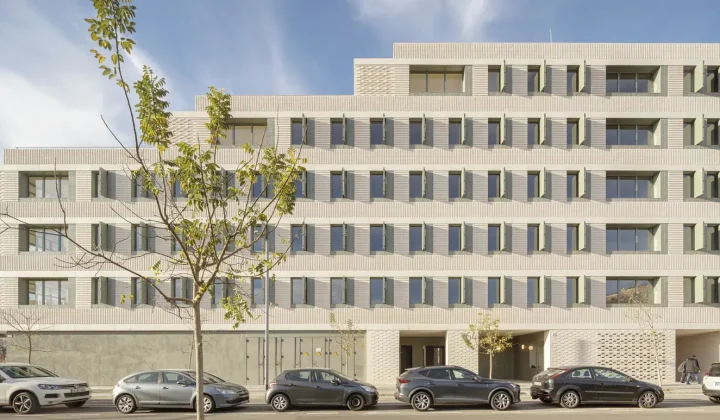
b720 Fermín Vázquez Completes 37 Build-to-Rent Homes in L’Hospitalet de Llobregat
Barcelona-based firm b720 Fermín Vázquez Arquitectos has completed a 37-unit build-to-rent residential project in L’Hospitalet de Llobregat, designed for a peripheral area…
Read more
Flexjet’s new Farnborough terminal brings hospitality-driven design to private aviation
The private aviation provider’s first dedicated European hub at Farnborough Airport combines a lounge, training academy and event space with interiors by…
Read more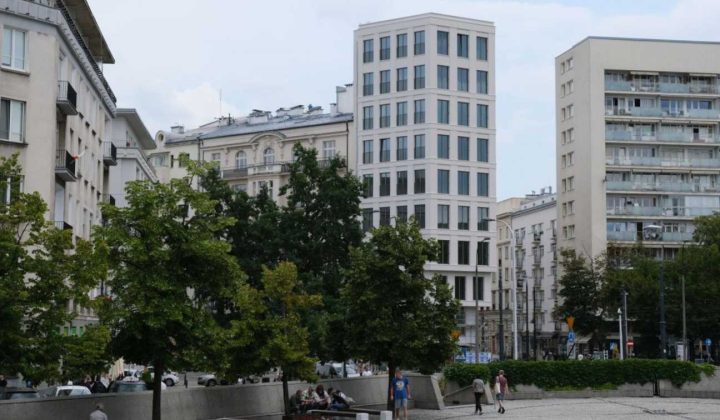
WXCA Completes Intimate Warsaw Apartment Block at Plac Politechniki, Showcasing Adaptive Reuse
Warsaw's Plac Politechniki has a new addition: a nine-unit apartment block by WXCA that reuses an existing structure, blending contemporary design with…
Read more
KUMO Mountain Residence Blends Architecture and Landscape on a Steep Forested Slope
Designed by Rabani Design, KUMO is a private mountain residence embedded into a steep forested mountainside. The project treats the terrain as…
Read moreRelated wiki
Adaptive Reuse in Architecture
Reference page for reuse, retrofit, conversion, embodied carbon and design constraints.
Read more