How to Assess Kate Diamond’s Most Influential Public Works Responsibly
A source-conscious guide to evaluating Kate Diamond’s public works when project-level documentation is incomplete, with clear checks on what is confirmed, what is interpretation, and what still needs verification.

Summary box
This article does not present a definitive ranking of Kate Diamond’s public works, because the verified source set available for this assignment does not include project-specific primary records tied to named buildings, dates, roles, clients, or awards. Instead, it offers a publication-safe framework for assessing influence in civic architecture, while marking clearly where further verification is still required. *Date checked: source set reviewed for this draft.*
<!– sources: 1,2,3 –>
What happened
The assignment calls for an in-depth analysis of Kate Diamond’s most influential public works. To do that credibly, an article would need project-level evidence: official project pages, client or institutional records, award documentation, and reliable confirmation of Diamond’s role on each building. The currently verified sources do not provide that material.
That gap matters because “most influential” is not a neutral label. It depends on clear criteria, such as public reach, institutional importance, urban effect, environmental relevance, and documented professional recognition. Without project-specific sources, naming individual works as Diamond’s most influential would overstate what the evidence supports.
Why the article uses a framework instead of a shortlist
The available sources support three narrower claims: cities are central to resource-efficiency debates; architecture criticism can help frame civic design discussions; and case-study methods can be useful when comparing built-environment significance. They do not support a verified list of Diamond projects. That makes a method-led article the safest publishable option at this stage.
Why it matters
Public works deserve careful analysis because they sit where architecture, governance, and everyday life meet. UNEP’s material on cities and resource efficiency supports the broader point that urban buildings and infrastructure matter to sustainability debates, not only to aesthetics or symbolism.
For readers interested in architecture and cities, that means influence should be read at more than one scale. A public building may matter for how it organizes access, expresses institutional identity, or fits into wider urban systems. But those judgments become stronger when they rest on documented evidence rather than reputation alone.
What “influential” should mean in a civic-architecture case study
In a source-backed analysis, influence is best treated as a claim to be demonstrated, not assumed. A project may be influential because it affected civic use, became widely discussed in architectural media, or contributed to debates around sustainability and public space. Even then, authorship and performance claims should be verified directly.
What is confirmed
From the current source set, three points are supportable. First, cities are a major arena for resource-efficiency and sustainability challenges. Second, architecture publications can provide critical context for discussing projects and design ideas. Third, a case-study approach is a valid way to compare factors that shape significance in the built environment.
What is not confirmed here are the facts needed for a true building-by-building article on Kate Diamond: which public works to include, when they were completed, who the clients were, what Diamond’s exact role was, and whether any project carried verified environmental credentials or measured outcomes.
Comparison table: what can be published now vs. what still needs proof
| Topic | What is supported now | What still needs verification | Best source type |
|---|---|---|---|
| Civic influence | Influence can be assessed through public role, urban context, and institutional use | Which specific Kate Diamond works best fit those criteria | Official project pages, client records, award pages |
| Sustainability context | Cities are central to resource-efficiency debates | Any performance or certification claim for a named project | Official project documentation or certification records |
| Design interpretation | Critical architecture coverage can help frame analysis | Project-specific readings tied to verified buildings | Project reviews plus primary project records |
| Authorship | Team-based attribution should be handled carefully | Diamond’s exact title or role on each project | Firm biography, project credits, institutional records |
| Case-study method | Comparative analysis is a valid editorial approach | Which comparison factors matter most for Diamond’s work | Project-level primary and secondary sources |
What may change
The project list could change substantially once better sourcing is added. A final shortlist might prioritize civic reach, critical attention, environmental relevance, or institutional significance differently, depending on the evidence available.
Attribution could also change. In public architecture, a building may be credited to a firm, a partner, a design lead, or a larger team. A publish-ready article should state Diamond’s role precisely rather than implying sole authorship without proof.
Any sustainability discussion may change as well. UNEP supports the broad importance of resource efficiency in cities, but it does not verify the performance of any one project. Until project-specific records are available, claims about certifications, resilience outcomes, or measured environmental results should be left out.
What readers should do next
If you are reviewing or commissioning a civic-architecture case study, these checks improve reliability:
- Verify authorship first. Confirm whether credit belongs to an individual, a firm, or a wider project team.
- Match every named project to a primary record. A project page, client archive, or award citation is stronger than a general article.
- Separate design intent from documented outcome. Terms like “public,” “open,” or “sustainable” need evidence behind them.
- Test influence with clear criteria. Look for civic role, critical reception, urban significance, or verified recognition.
- Use secondary criticism carefully. It can enrich interpretation, but it should not establish baseline facts by itself.
What to watch before publication
- Add project-specific primary sources before naming any Kate Diamond public works.
- Cross-check dates, clients, locations, and roles against official records.
- Avoid technical or awards claims unless they are documented directly.
- Replace generic cover imagery with a licensed image of a verified civic building or a neutral architecture image that does not imply an unverified project.
Sources
Primary and official
- UNEP, Cities and resource efficiency: https://www.unep.org/explore-topics/resource-efficiency/what-we-do/cities
Secondary and contextual
- ArchDaily: https://www.archdaily.com/
- *Using Deep Learning to Identify the Most Influential Factors in Successful Hybridization. Kurdistan's Built Heritage as a Case Study*: https://doi.org/10.64362/zjse.112
Related news

Handwoven Teak and Cord Outdoor Seating Debuts from Masaya and Abril Zepeda
Nicaraguan furniture brand Masaya has introduced two new handcrafted outdoor chairs — a rocking chair and a lounge chair — designed by…
Read more
Place in Mind: Hendricks Churchill Launches Hospitality Group to Revive Historic Properties
The architecture and interior design studio Hendricks Churchill has launched Place in Mind, a new hospitality group focused on acquiring, restoring, and…
Read more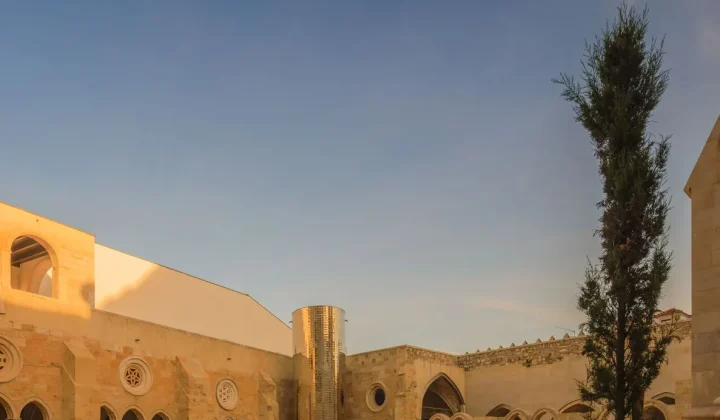
Adalberto Dias Architects Complete Restoration of Lisbon’s Patriarchal Cathedral and Archaeological Center
The restoration of the Sé de Lisboa by Adalberto Dias Arquitecto integrates a new archaeological center, preserved cloisters, and seven centuries of…
Read more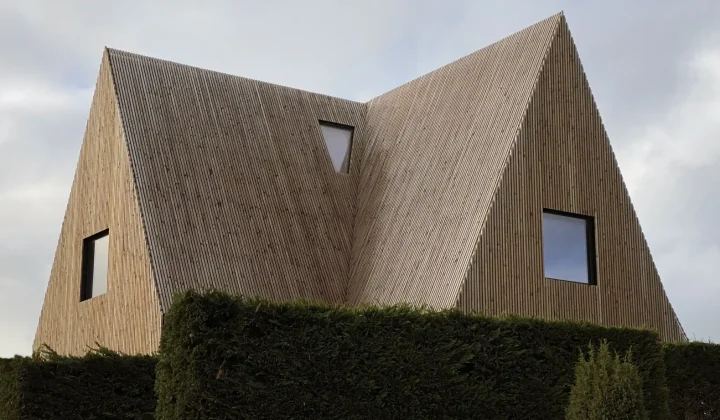
Vantieghem Talebi’s ‘House of Cards’ Brings Timber Geometry to Belgian Family Home
A new family house in Belgium by US- and Swiss-based practice Vantieghem Talebi uses a steeply pitched, card-house-inspired form clad in Douglas-fir…
Read moreRelated wiki

Adaptive Reuse in Architecture
Reference page for reuse, retrofit, conversion, embodied carbon and design constraints.
Read more