
Carsten Höller Deploys World’s Largest Polaroid Camera for a Series of Artistic Games Across Europe
The artist’s 20-minute documentary, released by the Polaroid Foundation, follows the Polaroid 20×24 camera through Europe as friends and collaborators submit to the experiments from his Book of Games.
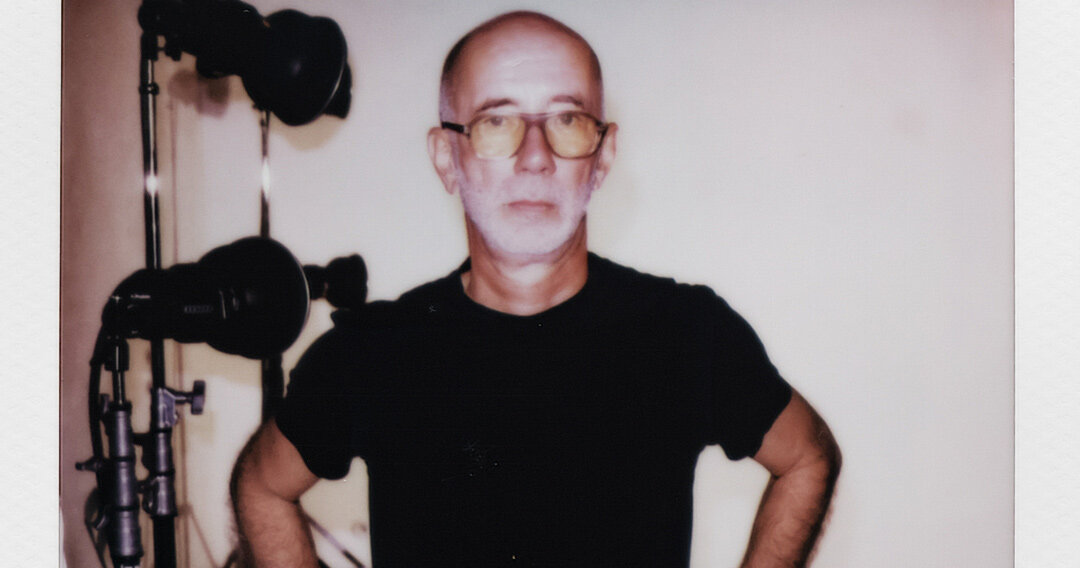
Carsten Höller, the artist known for large-scale installations and experiential works, has turned his long-standing interest in games into a 20-minute documentary. Released by the Polaroid Foundation, The Carsten Höller Episode of The 20×24 Project follows the artist and the Polaroid 20×24 camera, the world’s largest instant camera, across Europe. The film documents a series of encounters where friends and collaborators submit to the rules of games drawn from Höller’s Book of Games, creating portraits that are part experiment, part performance and part conversation.
The project spans a year and a half, with the camera traveling from Venice to London, Arles and the Fondation Beyeler near Basel. Participants include curator Hans Ulrich Obrist, photographer Jürgen Teller, philanthropist Maja Hoffmann, designer India Mahdavi, landscape architect Bas Smets and artist-musician Casey Spooner. Rather than conventional interviews, Höller uses games as a method to approach his subjects. The rules are often simple, but the results reveal something about the people playing.
Por que importa
A Giant Camera as a Central Character
At the heart of the documentary is the Polaroid 20×24, a camera that produces photographs roughly 20 by 24 inches. The camera turns the familiar immediacy of an instant photograph into a more deliberate event. Each exposure requires coordination and setup, making the act of taking a picture itself a kind of performance. The resulting portraits become evidence of the games that produced them, fixed at a scale that feels intentionally excessive for an instant image.
The camera appears at several notable art-world locations: Palazzo Diedo in Venice, the Institute of Contemporary Arts in London, the Rencontres d’Arles photography festival and the Fondation Beyeler in Riehen. At each stop, the game changes, and the participants adapt. Some games involve physical actions, like pulling hair or walking in a specific way, while others are more psychological. Höller’s interest lies in what happens once someone agrees to play, and the camera records those moments without interruption.
Contexto
The Book of Games as a Source of Rules
Höller’s Book of Games, published in 2024, collects decades of experiments into a set of instructions anyone can follow. Some games are social, some psychological and some intentionally absurd. The documentary uses these rules as a framework for interaction. In the film, Höller speaks about removing the middle ground between opposing states, particularly joy and fear, leaving players closer to one extreme or the other.
The games in the film are not separated from the portrait-making process. A photograph becomes proof that something happened, while the game creates the conditions for it to happen. The line between portrait, interview, experiment and joke blurs, and the footage accumulates into a layered portrait of the artist himself.
Key Facts
| Detail | Information |
|---|---|
| Film title | The Carsten Höller Episode of The 20×24 Project |
| Duration | 20 minutes |
| Released by | Polaroid Foundation |
| Camera | Polaroid 20×24, world’s largest instant camera |
| Participants | Hans Ulrich Obrist, Jürgen Teller, Maja Hoffmann, India Mahdavi, Bas Smets, Casey Spooner |
| Locations | Venice, London, Arles, Fondation Beyeler (Basel), Stockholm, Camargue |
A Personal Journey Beyond the Art Circuit
The documentary becomes more personal as it progresses. In Stockholm, Höller brings the crew to his home, where around seventy birds live in his aviary. The group also visits the roof of Moderna Museet and Brutalisten, the concept restaurant Höller founded where each dish is prepared from a single principal ingredient. Later, the group travels to the Camargue region in France for what the film describes as a “sad bird”-watching expedition.
These sequences move beyond the familiar art-world circuit and into Höller’s private interests. The birds, the restaurant and the landscape all become part of the game framework. The camera continues to document, and the collection of portraits grows. Despite Höller’s stated reluctance to appear in the film, the accumulating footage gradually becomes a portrait of him too: his friends, his recurring questions and the elaborate situations he invents to see what people might do next.
What This Means for Design Culture Readers
For readers following experimental art practice, the documentary offers a rare look at how an artist translates a conceptual framework into a social and photographic process. The Polaroid 20×24 itself is a piece of design history, a large-format camera that challenges the speed and convenience normally associated with instant photography. Höller’s use of games as a method for portraiture and conversation suggests a way of working that prioritizes interaction over explanation. The project is also a reminder that the Polaroid Foundation continues to support projects that push the boundaries of instant photography as a medium.
Source: Designboom — https://www.designboom.com/art/carsten-holler-surreal-games-polaroid-worlds-largest-instant-camera-documentary/
Source
Designboom Original publication: 2026-10-02T23:15:22+00:00
Related news
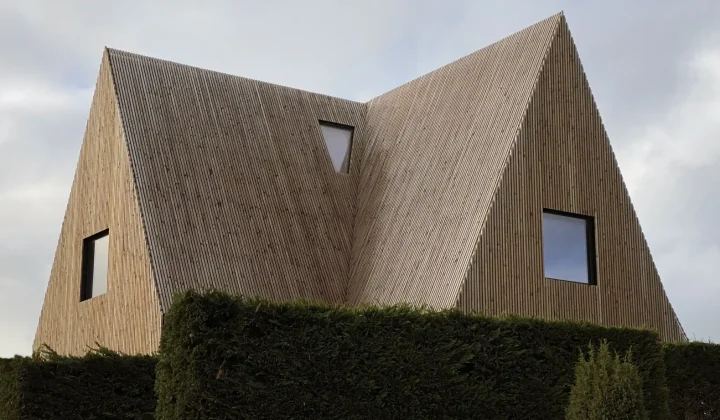
Vantieghem Talebi’s ‘House of Cards’ Brings Timber Geometry to Belgian Family Home
A new family house in Belgium by US- and Swiss-based practice Vantieghem Talebi uses a steeply pitched, card-house-inspired form clad in Douglas-fir…
Read more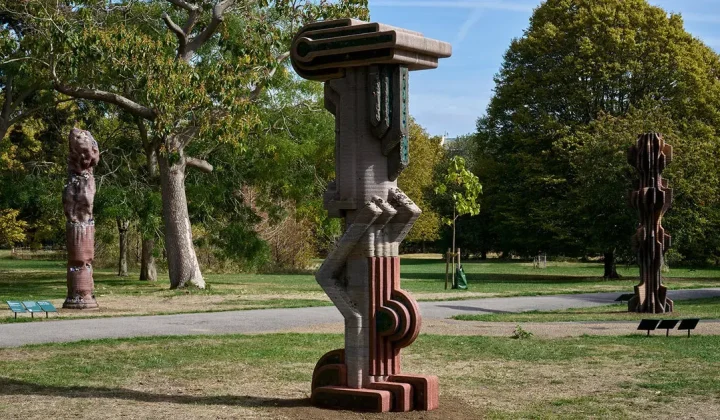
3D-printed concrete sculptures by Matyáš Chochola reinterpret Baroque allegories at Frieze Sculpture 2026
Czech artist Matyáš Chochola presents three large-scale 3D-printed concrete works at Frieze Sculpture 2026 in London, blending classical architectural fragments with Brutalism,…
Read more
CF Møller transforms historic psychiatric hospital into Mind Museum on Funen
Danish studio CF Møller has completed the Mind Museum in Middelfart, Denmark, converting a former psychiatric hospital building from 1888 into a…
Read more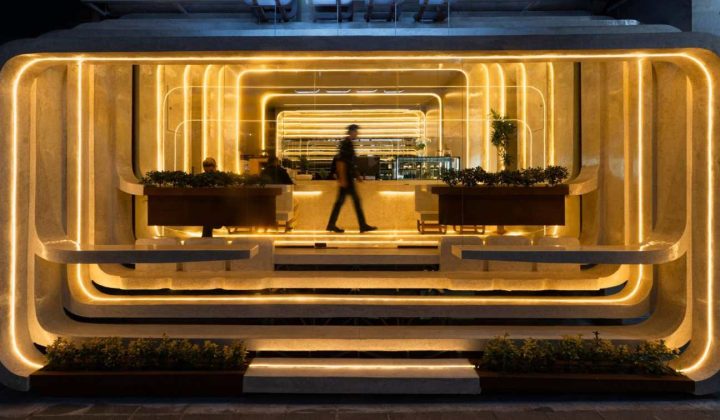
Maze Studio Uses Gradual Ring Compression to Turn a 25-Square-Meter Café’s Level Change into a Spatial Experience
In Mashhad, Iran, Maze Studio transformed a 25-square-meter café’s elevation difference from the sidewalk into a continuous spatial sequence of rings that…
Read moreRelated wiki
Adaptive Reuse in Architecture
Reference page for reuse, retrofit, conversion, embodied carbon and design constraints.
Read more