Fabio Cherstich on the Responsibility of the Spectator and the Blurred Boundaries of Art and Theater
The Italian director discusses his evolving practice, the live dynamic between performer and audience, and why theater remains essential in a digital age.
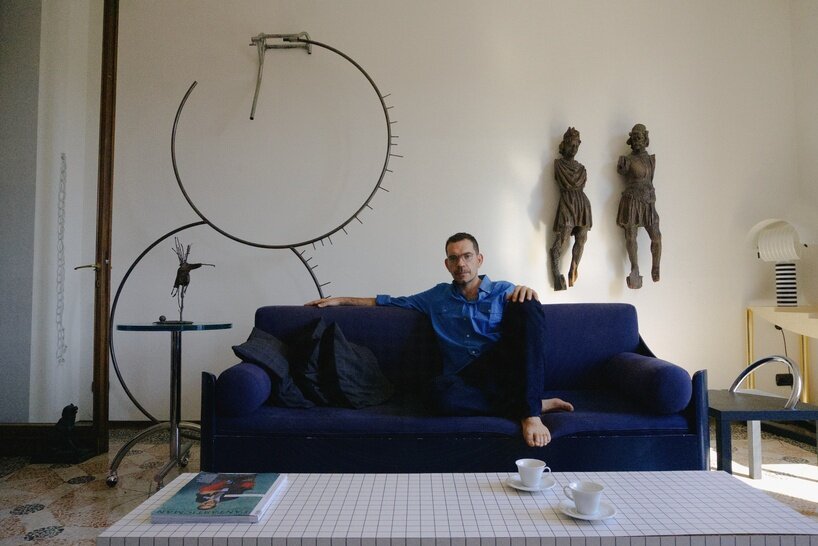
The Italian director Fabio Cherstich has spent the past decade creating performances that refuse to stay inside traditional theater walls. From staging operas on truck beds in Rome’s piazzas to orchestrating a Louis Vuitton classic car rally through the Dolomites, his work tests the line between spectator, performer, and the spaces they share. In a recent conversation at his home-studio in Milan, Cherstich spoke about the evolving nature of his practice, the responsibility of watching, and why live performance matters more than ever.
| Key facts | |
|---|---|
| Who | Fabio Cherstich, theater director, curator of The Estate of Larry Stanton, and creator of cross-disciplinary performances |
| What | A conversation about his approach to theater, audience responsibility, and the fluid boundaries between art forms |
| Where | Milan, Italy; his work has also been staged in Rome, Venice, Shanghai, and New York |
| When | Interview published September 2026; his projects span from 2016 (Operacamion) to 2026 (Louis Vuitton Dolomites Classic Run) |
A practice that resists definition
Cherstich’s website remains a work in progress — a single page with a sans-serif note that begins “a note instead of a website.” It lists opera, theater, contemporary art, film, and books, then adds “and other territories that are not always easy to name.” This difficulty in self-definition is central to his approach. “The problem for me is how I define myself,” he said. “I work as a director, but this is the definition of my job, it’s not the definition of myself.”
His Milan apartment, which looks onto a historic palazzo with a church bell tower, functions as a living archive of his collaborations. Objects on his kitchen counter — Aldo Rossi’s La Cupola moka pot for Alessi, a lamp by Formafantasma, a work by artist Jade Guanaro Kuriki-Olivo (Puppies Puppies) — are material traces of friendships, projects, and cross-disciplinary exchanges. “You see? Design! Alessi is always with us,” he said while making coffee.
Theater as live responsibility
For Cherstich, the live encounter between bodies in a room is what gives theater its urgency. “Everything is becoming more and more digital, flat, transformable,” he said. “So you need to assume responsibility, both if you are on stage and in the audience. On stage, you have a responsibility because what you are telling to people comes from a very vulnerable but also powerful place. But as a spectator, you also have a responsibility. You are in front of real bodies. You need to own your point of view. You need to invest time.”
This philosophy has shaped projects like Operacamion, a 2016 initiative for Teatro dell’Opera di Roma that brought opera to the streets, performed on a truck bed. The work has since become a Harvard case study and was cited by New York City Mayor Zohran Mamdani as an example of how opera can reach new audiences beyond traditional theaters.
Collaborations across disciplines
Cherstich’s work frequently draws on design and architecture. In 2025, he collaborated with Milan-based design studio Formafantasma on Staging Modernity, a scenography for Teatro Lirico Giorgio Gaber timed to Cassina’s 60th anniversary of producing pieces by Le Corbusier, Charlotte Perriand, and Pierre Jeanneret. Visitors could walk through the theater, onto the stage, and across the mezzanine — blurring the boundary between audience and performance.
“I learned something about theater through the point of view of Simone Farresin from Formafantasma, who comes from the world of design,” Cherstich said. “This is why I love doing collaborations, especially with people who didn’t study theater.”
His most recent project, the Louis Vuitton Dolomites Classic Run, took place in late summer 2026, sending vintage cars from Venice through the Italian Alps in a spectacle that merged performance, automotive heritage, and landscape.
Beyond the stage: archives, books, and queer history
Cherstich also curates The Estate of Larry Stanton, reflecting his long-standing interest in New York’s queer scene of the 1980s and 1990s, which he explores in his performance A Visual Diary. He has produced art books and films on painter Lucia di Luciano and Annina Nosei, Basquiat’s first gallerist — both close friends.
These projects resist easy categorization, much like the director himself. His difficulty in building a conventional portfolio may not stem from an inability to define himself, but from a refusal to be contained by any single medium, temporality, or context. For readers interested in the intersection of performance, design, and audience engagement, Cherstich’s work offers a case study in how live art can remain vital in an increasingly mediated world.
Source: Designboom — https://www.designboom.com/art/spectator-responsibility-fabio-cherstich-boundaries-art-theater/
Source
Designboom Original publication: 2026-09-29T21:47:42+00:00
Related news
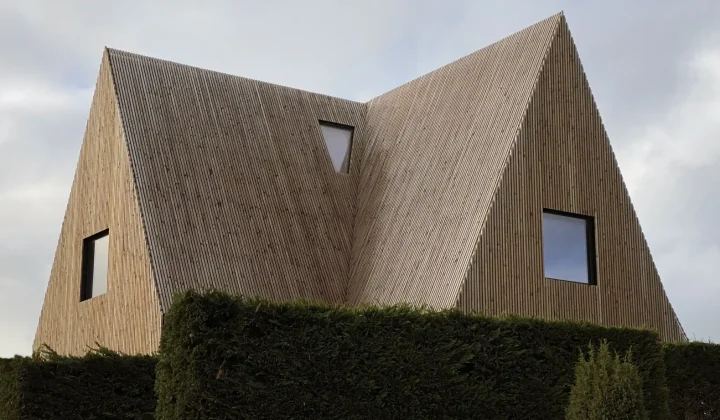
Vantieghem Talebi’s ‘House of Cards’ Brings Timber Geometry to Belgian Family Home
A new family house in Belgium by US- and Swiss-based practice Vantieghem Talebi uses a steeply pitched, card-house-inspired form clad in Douglas-fir…
Read more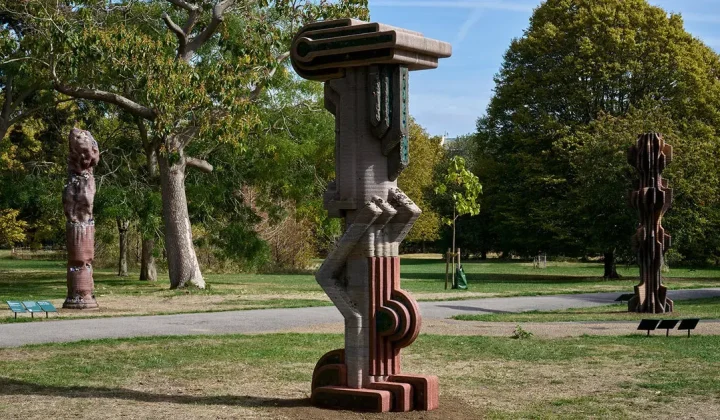
3D-printed concrete sculptures by Matyáš Chochola reinterpret Baroque allegories at Frieze Sculpture 2026
Czech artist Matyáš Chochola presents three large-scale 3D-printed concrete works at Frieze Sculpture 2026 in London, blending classical architectural fragments with Brutalism,…
Read more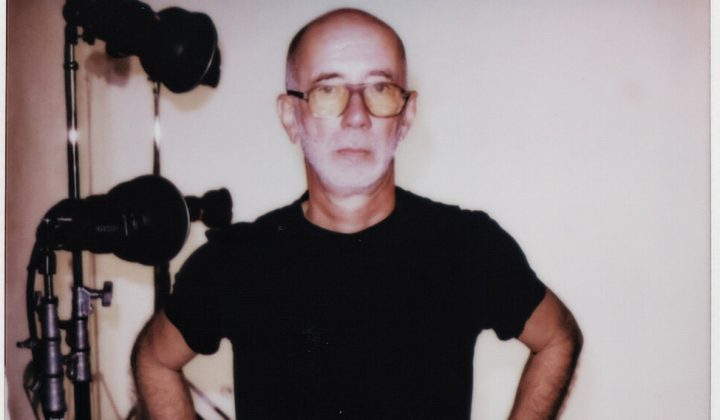
Carsten Höller Deploys World’s Largest Polaroid Camera for a Series of Artistic Games Across Europe
The artist’s 20-minute documentary, released by the Polaroid Foundation, follows the Polaroid 20×24 camera through Europe as friends and collaborators submit to…
Read more
CF Møller transforms historic psychiatric hospital into Mind Museum on Funen
Danish studio CF Møller has completed the Mind Museum in Middelfart, Denmark, converting a former psychiatric hospital building from 1888 into a…
Read moreRelated wiki
Adaptive Reuse in Architecture
Reference page for reuse, retrofit, conversion, embodied carbon and design constraints.
Read more