Reclaimed Erie Canal Oak Anchors Flexible Furniture for Medina Triennial Hub in New York
Serweta Peck’s adaptive reuse interior for the Medina Triennial Hub uses salvaged oak, cork, cardboard and student-built prototypes to support community programming along the Erie Canal.
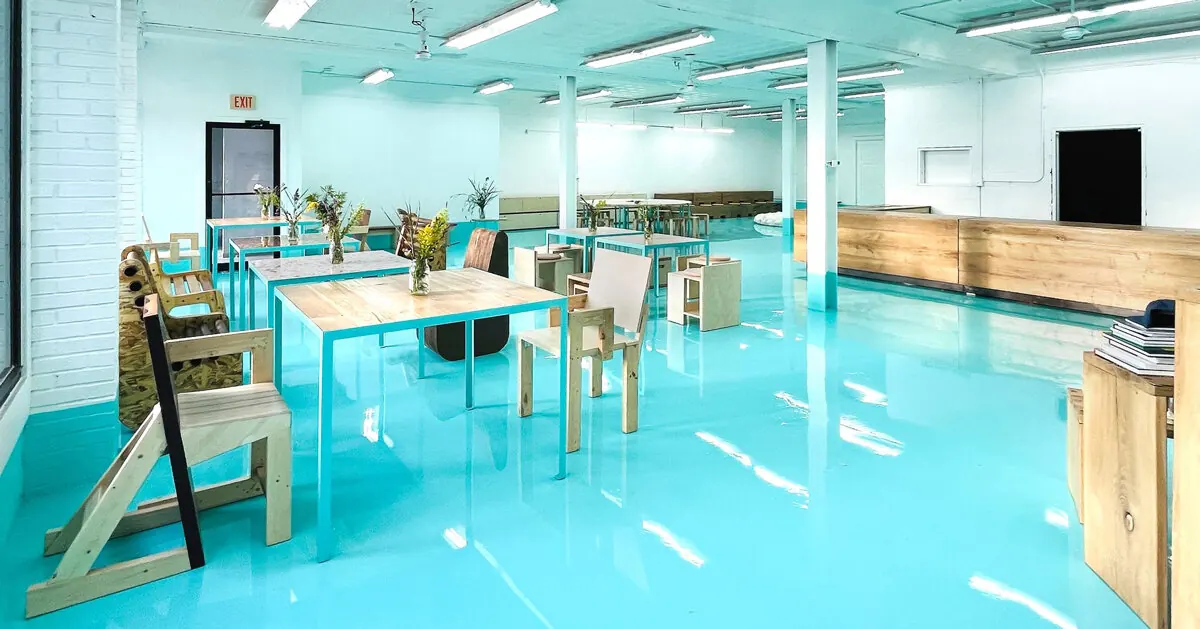
Serweta Peck has completed an adaptive reuse interior for the Medina Triennial Hub in western New York, pairing a stripped-back historic canal building with flexible furniture made from reclaimed oak, cork, cardboard and other reused materials, according to a project report published by Designboom.
The hub sits in the Village of Medina, between Buffalo and Rochester, and is intended to serve the inaugural Medina Triennial as a community-facing base for gatherings, workshops, talks, screenings, visitors, staff and artists-in-residence. The project was commissioned by Medina Triennial 2026, the New York Power Authority and the Canal Corporation, Designboom reported.
A canal building adapted for temporary cultural use
The project converts a landmark building along the Erie Canal into a headquarters for a new arts initiative focused on rust-belt communities connected by the canal. Rather than treating the venue as a neutral white-box interior, the design keeps the building’s material history visible.
Designboom’s account says the interior was reduced to its essential architectural components, revealing steel structure and masonry that had previously been covered, while retaining the original tin ceiling. A teal epoxy “water line” runs across floors, walls and columns, referencing the changing levels of the nearby canal lock system and giving the varied furniture pieces a common visual ground.
For architecture and design readers, the project is notable less as a conventional gallery fit-out than as a test of how cultural infrastructure can be assembled from existing buildings, local fabrication capacity and material reuse.
Student-built furniture from salvaged material streams
Serweta Peck worked with SUNY Buffalo architecture students to design and fabricate the hub’s furniture. The pieces, grouped under the name “Objects Of Affection,” were developed through research, prototyping and hands-on fabrication, according to the report.
The material list is intentionally uneven: recycled wine corks cast in hydrocal, polystyrene foam saved from architecture model scraps, wood-chip waste in bio-resin, empty plotter-paper tubes, laminated recycled cardboard, offcut lumber, a second-hand solid-core door, an upcycled terracotta facade panel and discarded Umbra Oh chair legs.
The most historically charged material is a set of seven scrap oak beams donated by the New York Power Authority. Designboom reports that each beam is approximately 17 feet long and weighs about 850 pounds, and that the pieces had been submerged as part of the Erie Canal lock system. The design team processed the salvaged lumber at the university’s fabrication facilities and used it, among other applications, to clad the hub’s welcome bar.
Key facts
| Item | Detail |
|---|---|
| Project | Medina Triennial Hub – Objects Of Affection |
| Location | Village of Medina, New York, along the Erie Canal |
| Design team | Serweta Peck with SUNY Buffalo architecture students |
| Public program dates | June 6 to September 7, 2026, according to Designboom’s project information |
Flexible objects for changing programs
The furniture is designed for a venue that has to shift between public, educational and operational uses. Designboom identifies stools, nesting tables, shelving, benches, storage units and performance-area seating among the pieces.
Several elements are described as modular or movable, allowing the hub to host community events, artist workshops, screenings and informal gathering without a fixed auditorium or gallery layout. “Twirl Shelving,” for example, pivots along a reclaimed PVC sewer pipe and holds the triennial’s art-book library, while benches and stools define reading and staff areas.
The design also draws on a lineage of low-cost, self-build furniture, with Designboom noting Enzo Mari’s Autoprogettazione as an influence. In this case, the reference is filtered through contemporary concerns about exhibition waste: what happens to built elements after a short cultural event ends, and whether temporary design can avoid the usual cycle of fabrication, display and disposal.
Why it matters for sustainable design
Temporary cultural events often require significant interior work, furniture, signage and staging, much of which can become waste after a season. The Medina project proposes a different model: use a historic structure, rely on local fabrication and treat discarded or awkward materials as design constraints rather than liabilities.
The approach is not just aesthetic. It also gives architecture students a direct role in material testing, prototyping and assembly, while producing furniture intended to be reused after the triennial. Designboom reports that the objects may be auctioned, sold, donated, rehomed, reused elsewhere or disassembled and recycled after the event.
That afterlife plan is important, though it remains a project intention as presented in the current source. Paionia7 has not independently verified the final reuse pathway for each object or the operational outcomes of the triennial program.
What remains to check
The strongest available material here is a project report based on a design publication’s coverage and submission details. Readers following the project professionally should still check primary updates from Medina Triennial 2026, the New York Power Authority, the Canal Corporation and Serweta Peck for visitor information, program changes, procurement details or post-event reuse documentation.
The reported public activation runs from June 6 through September 7, 2026. If the furniture is later dispersed, auctioned or reused in other civic or cultural settings, that next step will be the clearest test of whether the project’s circular-design ambitions extend beyond the exhibition period.
Source: Designboom, “reclaimed oak, cork, and cardboard build flexible furniture for cultural hub in NY,” https://www.designboom.com/architecture/reclaimed-oak-cork-cardboard-flexible-furniture-cultural-hub-ny-medina-triennial-hub-serweta-peck/
Source
Designboom Original publication: 2026-07-23T21:45:31+00:00
Related news
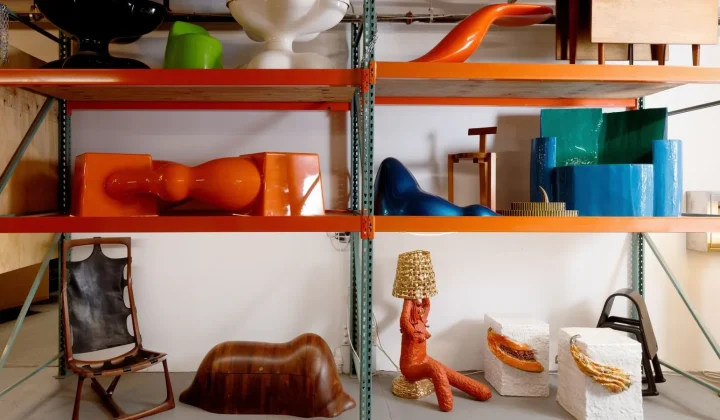
R & Company Opens Its Brooklyn Archive to the Public, Revealing 10 Rare Design Finds
The celebrated design gallery R & Company has opened its 16,000 sq ft storage facility, Building 86, in the Brooklyn Navy Yard…
Read more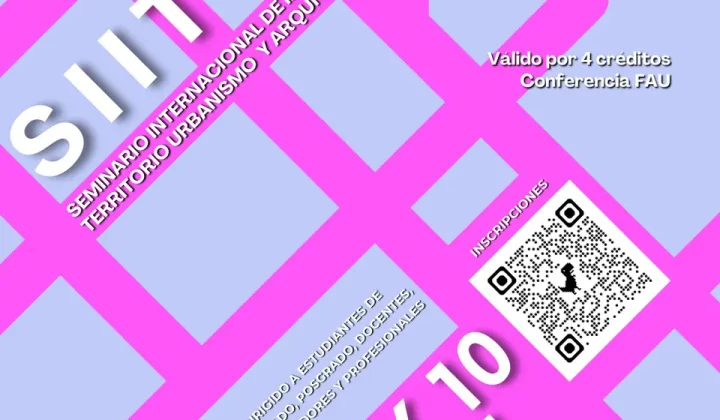
SIITUA III to Gather International Researchers on Territory, Urbanism, and Architecture in Lima
The third edition of the International Seminar on Research in Territory, Urbanism, and Architecture (SIITUA III) will take place in Lima, organized…
Read more
Christopher Kane brings streamlined, heritage-driven vision to Mulberry in London Fashion Week debut
The Scottish designer presented his first collection for the British leather goods house at London Fashion Week, blending sharp tailoring, archival references…
Read more
When Film Directors Become Interior Designers: Guadagnino, Lynch, Anderson and Almodóvar Step Off Screen
From Luca Guadagnino’s Zara Home collection to David Lynch’s Paris club and Wes Anderson’s train carriage, a wave of collaborations is blurring…
Read moreRelated wiki
Adaptive Reuse in Architecture
Reference page for reuse, retrofit, conversion, embodied carbon and design constraints.
Read more