Peixiaoyu Yu’s Awarded AI Design Work Highlights a Shift Toward Calmer Digital Interfaces
A new Amazing Architecture interview frames Peixiaoyu Yu’s iF, MUSE and Red Dot-recognized projects as evidence that award juries are rewarding AI products that make complexity easier to understand.
Berlin-based visual designer Peixiaoyu Yu is being positioned as a case study in how international design awards are responding to artificial intelligence: not by rewarding technology for its own sake, but by recognizing interfaces that make complex systems easier to use.
An article published by Amazing Architecture on July 23, 2026, focuses on Yu’s recent award recognition across iF, MUSE and Red Dot programs. The piece connects her work on AI-driven travel planning, caregiver-oriented tools and technical product communication to a wider design question now facing studios and product teams: how should visual systems help users understand technology that is powerful but often opaque?
Why the story fits design culture now
The article arrives as the 2026 design award season moves into its second half and as AI has become a routine part of product design briefs. For architecture and design readers, the relevance is not limited to app interfaces. The same tension is visible across spatial technology, smart buildings, mobility platforms, planning dashboards and digital services attached to urban life.
Amazing Architecture frames Yu’s work against discussions at the iF Design Trend Conference in Berlin, where the relationship between human creativity and artificial intelligence was part of the conversation. The key point is a practical one: design juries appear to be looking beyond whether a product includes AI and toward whether the user experience makes that intelligence legible, restrained and useful.
Yu’s quoted position in the article is that visual design should not be treated as a surface layer added after a product is built. She describes it instead as a way of organizing complexity before it reaches the user.
Key facts
| Item | Detail |
|---|---|
| Main figure | Peixiaoyu Yu, Berlin-based visual designer |
| Featured project | SnapTrip – AI-driven Travel Companion |
| Reported recognition | 2026 iF Design Award, 2026 MUSE Design Awards Gold, 2025 Red Dot recognition for TinyPrep |
| Source basis | Amazing Architecture article, with award descriptions cited in that report |
SnapTrip and the design of trust
The clearest example in the article is SnapTrip – AI-driven Travel Companion, developed with Cyan Studio Art and Design. According to the report, the project received a 2026 iF Design Award in the Apps / Websites field and was also named a 2026 MUSE Design Awards Gold Winner in Product Design – UX / UI / IxD, with Yu credited as visual designer.
The project is described as an AI-powered travel planning experience that shifts planning away from checklist-style search and toward conversation. That distinction matters because travel planning is already overloaded with blogs, booking platforms, short-form recommendations and social media itineraries. Adding AI without a clear interface can increase the sense of noise rather than reduce it.
Amazing Architecture quotes Yu as saying that users do not come to a product to “admire the model”; they arrive with a problem, question or uncertainty. In design terms, that places emphasis on hierarchy, pacing, personalization and moments of reassurance. For studios working on digital tools in architecture, urban mobility or cultural programming, the lesson is transferable: a system that generates answers still needs an interface that explains what matters and what the user can do next.
TinyPrep and design for overlooked needs
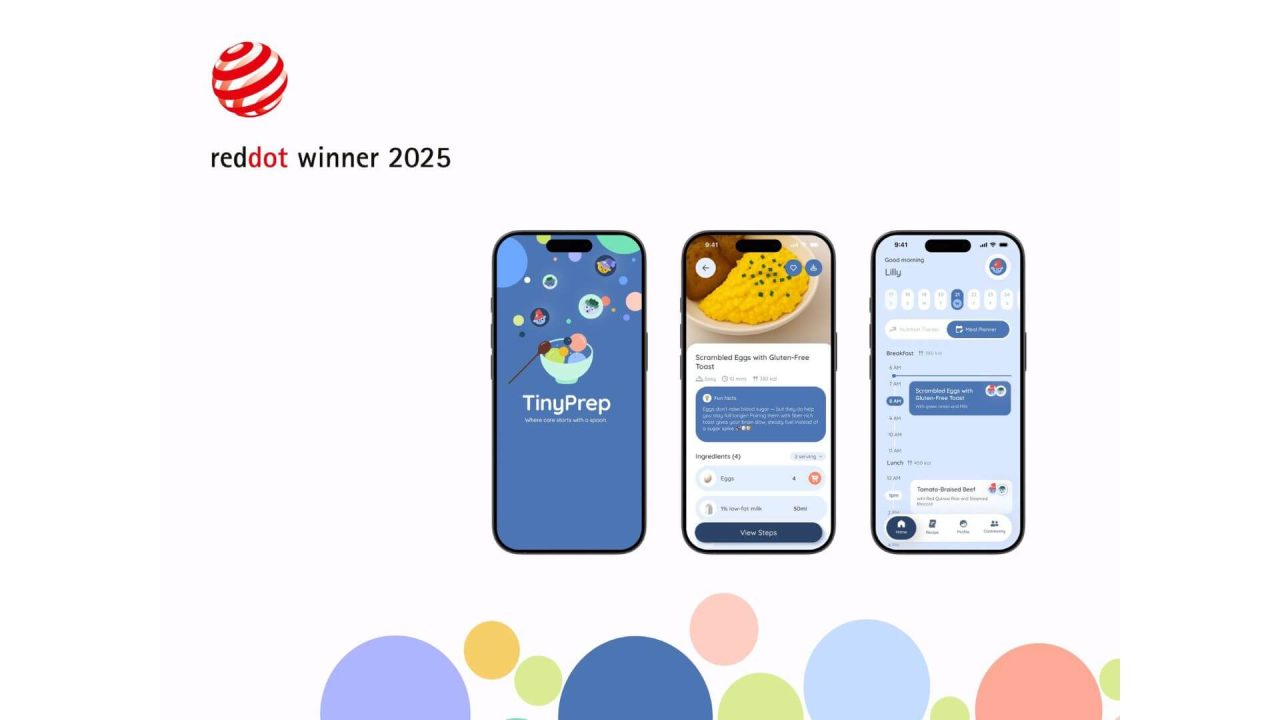
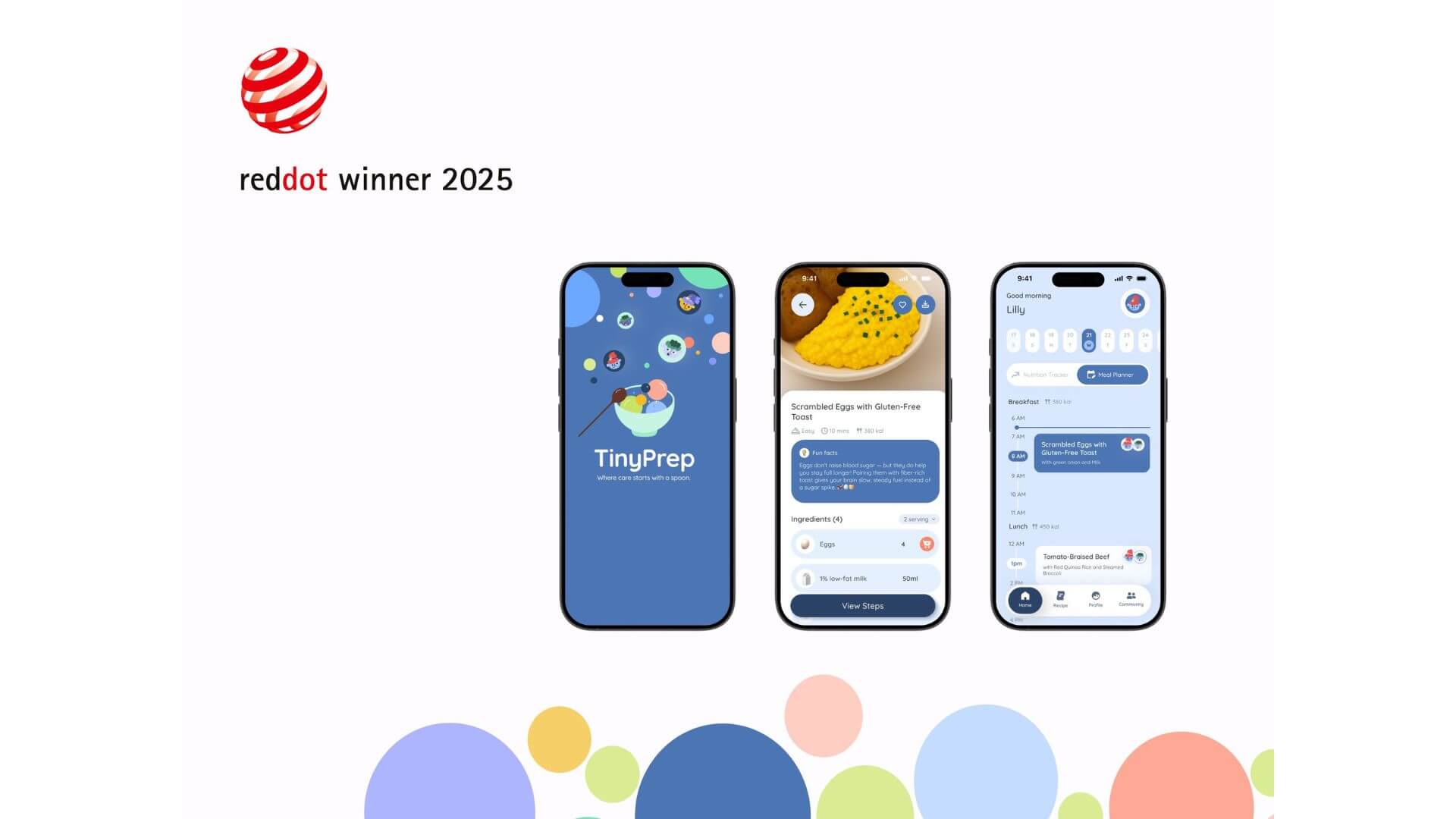
The article also discusses TinyPrep, a mobile user interface project recognized by Red Dot in 2025. The report connects the project to children’s nutrition, caregivers, food support and the everyday gaps families encounter when general assistance does not match individual circumstances.
That part of the profile broadens the story beyond AI. It presents Yu’s practice as concerned with specificity: dietary restrictions, time pressure, financial constraints, unfamiliar food systems and the stress of making repeated daily decisions. In the article’s framing, good interface design is not only a matter of polish or visual consistency. It is a way to make support more precise for people whose needs are often simplified by generic tools.
For Paionia7 readers, this is where the story intersects with broader design ethics. Whether the context is a housing service portal, a public health interface, a transport app or a community resource platform, visual decisions can either clarify a user’s path or bury it under more choices.
Awards as signals, not proof of impact
The reported awards give the work visibility, but they should be read carefully. iF, Red Dot and MUSE are influential design recognition platforms, and cross-program recognition can indicate that a project communicates well to international juries. It does not, by itself, prove long-term user outcomes, adoption levels or measurable social impact.
That distinction is important because awards coverage can easily become promotional. The strongest editorial takeaway from the Amazing Architecture piece is not simply that Yu has collected honors. It is that the honored work reflects a recurring industry priority: making advanced digital systems feel understandable without hiding their complexity.
The source article presents Yu’s projects through an interview and profile format rather than as an independent product performance review. Readers looking to evaluate the projects in depth should consult the official award listings, project documentation and any available product case studies.
What design teams can take from the profile
The practical lesson is narrow but useful. AI-era design is increasingly judged on clarity, not spectacle. A travel companion, nutrition support tool or technical product interface may use advanced systems behind the scenes, but the user still needs orientation: where they are, what is being suggested, why it matters and how to act.
That is relevant to architects and urban designers because digital interfaces now mediate many built-environment experiences, from wayfinding and resident services to planning consultation and environmental monitoring. If those systems become more automated, the burden on design increases rather than decreases.
The next checks are straightforward: compare the Amazing Architecture profile with the official iF, MUSE and Red Dot project pages, review the credited project teams, and look for any published evidence of how users responded to the interfaces beyond jury recognition.
Source: Amazing Architecture, https://amazingarchitecture.com/articles/beyond-the-trophy-peixiaoyu-yu-on-designing-for-clarity-in-the-age-of-ai
Source
Amazing Architecture Original publication: 2026-07-23T01:15:54+00:00
Related news

Handwoven Teak and Cord Outdoor Seating Debuts from Masaya and Abril Zepeda
Nicaraguan furniture brand Masaya has introduced two new handcrafted outdoor chairs — a rocking chair and a lounge chair — designed by…
Read more
Place in Mind: Hendricks Churchill Launches Hospitality Group to Revive Historic Properties
The architecture and interior design studio Hendricks Churchill has launched Place in Mind, a new hospitality group focused on acquiring, restoring, and…
Read more
Adalberto Dias Architects Complete Restoration of Lisbon’s Patriarchal Cathedral and Archaeological Center
The restoration of the Sé de Lisboa by Adalberto Dias Arquitecto integrates a new archaeological center, preserved cloisters, and seven centuries of…
Read more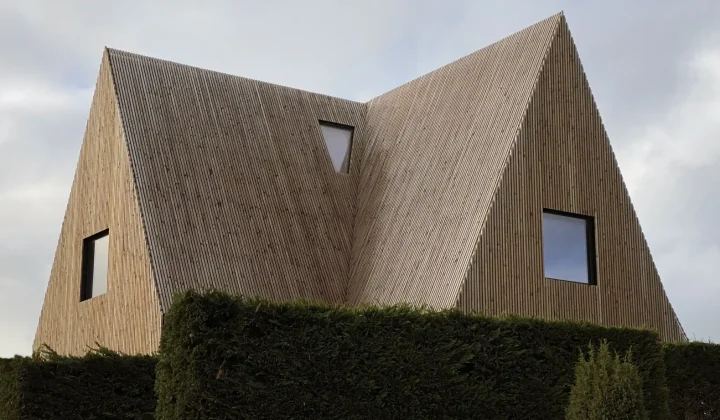
Vantieghem Talebi’s ‘House of Cards’ Brings Timber Geometry to Belgian Family Home
A new family house in Belgium by US- and Swiss-based practice Vantieghem Talebi uses a steeply pitched, card-house-inspired form clad in Douglas-fir…
Read moreRelated wiki

Adaptive Reuse in Architecture
Reference page for reuse, retrofit, conversion, embodied carbon and design constraints.
Read more