
The Paradox of Adaptive Reuse: Preserving Heritage While Embracing Modernity
This column explores the complex challenges and opportunities inherent in adaptive reuse projects, examining how historical structures can be recontextualized for contemporary needs without sacrificing their inherent cultural and architectural significance.
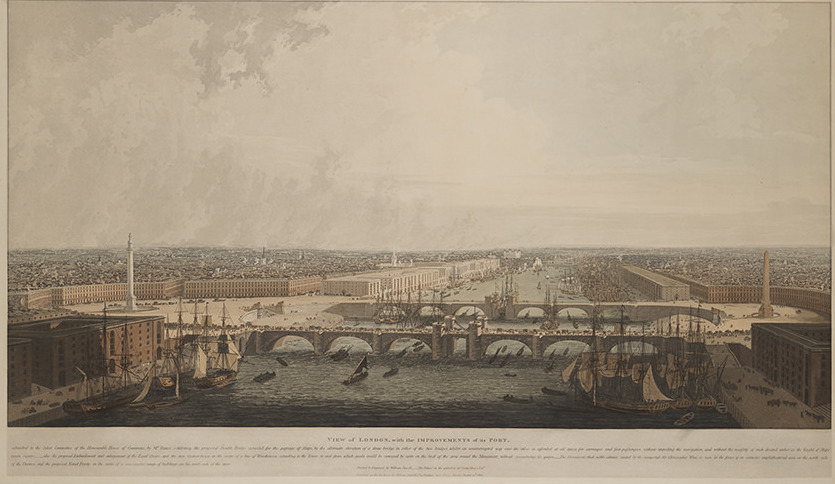
The drive to repurpose existing structures, known as adaptive reuse, has become a cornerstone of sustainable development and urban revitalization. It offers a compelling alternative to demolition and new construction, promising to retain the embodied energy of old buildings and preserve cultural heritage. However, this practice is not without its inherent tensions. The very act of adapting a historic building for contemporary use necessitates a dialogue—often a negotiation—between the past and the present, the architecturally significant and the programmatically necessary, the materially authentic and the functionally updated. This column delves into this complex interplay, arguing that successful adaptive reuse lies not in a simple overlay of new onto old, but in a sensitive and critical integration that respects the original fabric while fulfilling modern demands.
The appeal of adaptive reuse is multifaceted. For developers and city planners, it can unlock the potential of underutilized or derelict sites, breathing new life into urban cores and often proving more cost-effective than new builds. For architects, it presents a unique design challenge: to understand and interpret the existing structure’s history, materiality, and spatial qualities, and then to conceive of a future for it that is both respectful and innovative. For the public, these projects can offer a tangible connection to their city’s past, transforming familiar landmarks into vibrant new community assets. The inherent sustainability argument is also powerful; by avoiding the carbon-intensive processes of demolition and new material production, adaptive reuse aligns with global environmental goals.
Why adaptive reuse matters in contemporary practice is rooted in a growing awareness of the built environment’s environmental impact and a desire to maintain urban character. As cities densify and resources become scarcer, the pragmatic and ethical imperative to reuse what already exists grows stronger. Adaptive reuse projects can serve as powerful statements about a society’s values, demonstrating a commitment to its heritage and a forward-thinking approach to development. They challenge the notion of obsolescence, suggesting that buildings, like communities, can evolve and adapt over time.
Rethinking the Past: Successful Adaptive Reuse Examples
What sources show is a spectrum of outcomes, from celebrated successes to cautionary tales. Projects like the Tate Modern in London, a former power station transformed into a world-class art museum, exemplify how industrial heritage can be reimagined for cultural purposes, with Herzog & de Meuron’s intervention respecting the building’s monumental scale while introducing new volumes and circulation. Similarly, the revitalisation of the High Line in New York, an elevated railway line converted into a linear park, demonstrates how disused infrastructure can become a vital public amenity, conceived by Diller Scofidio + Renfro and James Corner Field Operations. These projects often involve significant structural interventions and careful consideration of material palettes, blending robust original elements with contemporary insertions. Conversely, less successful examples might involve interventions that overwhelm the original character, or projects that fail to adequately address the functional needs of the new occupants, leading to underutilization or a disconnect with the surrounding urban fabric. The documentation of these projects, often found on studio websites, in architectural journals, and through official city planning records, reveals the critical role of detailed site analysis and a clear design vision.
Navigating Design Trade-offs in Adaptive Reuse
The design trade-offs in adaptive reuse are numerous. One of the most significant is the inherent tension between preserving original fabric and meeting contemporary building codes and user expectations. Historic structures may lack the thermal performance, accessibility, or structural capacity required today. Architects must decide where to intervene minimally, respecting original finishes and spatial configurations, and where more substantial alterations are necessary. This often involves a careful material palette selection: can original brickwork be exposed, or does it require new insulation and cladding? How are new services, like HVAC and electrical systems, integrated without visually disrupting historic interiors? Client briefs, too, can present challenges. A developer seeking maximum leasable space might clash with heritage conservationists advocating for the preservation of original room layouts. Balancing these competing demands requires a nuanced understanding of both architectural history and contemporary functionality, often leading to compromises that satisfy multiple stakeholders.
The Long-Term Impact of Adaptive Reuse
What remains unclear in many adaptive reuse narratives is the long-term impact on the building’s original integrity and the lived experience of its new users. While initial reviews might celebrate a project’s aesthetic success, the ongoing maintenance of heritage materials, the adaptability of the new spaces to future programmatic shifts, and the genuine user satisfaction over time are often less documented. Furthermore, the economic viability of adaptive reuse for a wider range of building typologies and scales, beyond high-profile cultural or commercial projects, warrants further investigation. The true measure of success is not just the initial transformation but the sustained relevance and viability of the repurposed building.
Verifying Success: What Readers Can Observe
What readers can verify are the physical transformations of these buildings and their impact on the surrounding urban context. Visiting these sites, engaging with their new uses, and reading critical analyses from reputable architectural publications can offer valuable insights. Examining official planning documents for approved interventions can reveal the extent of changes permitted. Understanding the materials used in both the original structure and the new insertions allows for a deeper appreciation of the design decisions made.
Challenges and Considerations in Adaptive Reuse Projects
- Heritage Preservation: Retaining original architectural features, materials, and historical significance. | Meeting modern codes (fire, seismic, accessibility), potential damage to original fabric during intervention.
- Functional Modernization: Integrating contemporary building systems (HVAC, electrical, plumbing) and spatial requirements. | Visual disruption of historic interiors, retrofitting for energy efficiency.
- Materiality: Respecting original materials; selecting compatible new materials. | Durability and maintenance of historic vs. new materials, potential for unforeseen material degradation.
- Economic Viability: Cost-effectiveness compared to new construction, market appeal of repurposed spaces. | Higher upfront costs for deconstruction and specialized work, potential for unexpected structural issues.
- User Experience: Ensuring comfort, accessibility, and usability for contemporary occupants. | Compromises in spatial layout or amenity provision due to historic constraints.
The Future of Adaptive Reuse in Urban Development
The continued evolution of adaptive reuse practices points towards a future where sustainability, cultural preservation, and innovative design converge. As urban populations grow and the imperative to reduce our environmental footprint intensifies, the role of repurposing existing structures will only become more critical. Future adaptive reuse projects will likely push the boundaries of technology and material science, finding even more seamless ways to integrate modern needs with historical contexts. This ongoing dialogue between old and new ensures that our built environment remains dynamic, resilient, and deeply connected to its past while looking towards an innovative future.
Related news
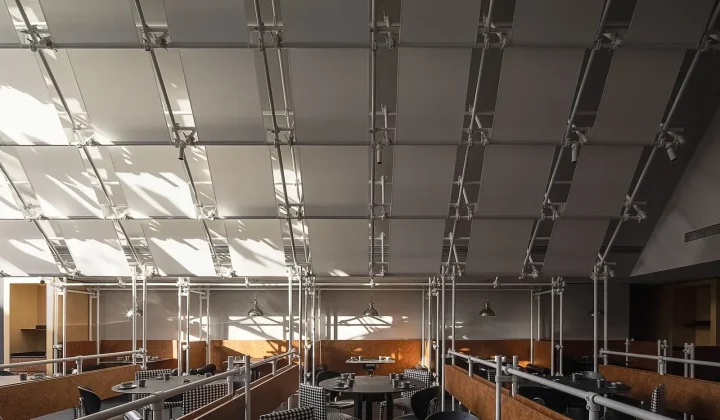
Scaffolding as Interior Architecture: Adaptable Systems Challenge the Divide Between Temporary and Permanent
A new article by Jonathan Yeung examines how modular scaffolding systems, from steel frames to Dieter Rams’ shelving, demonstrate that longevity in…
Read more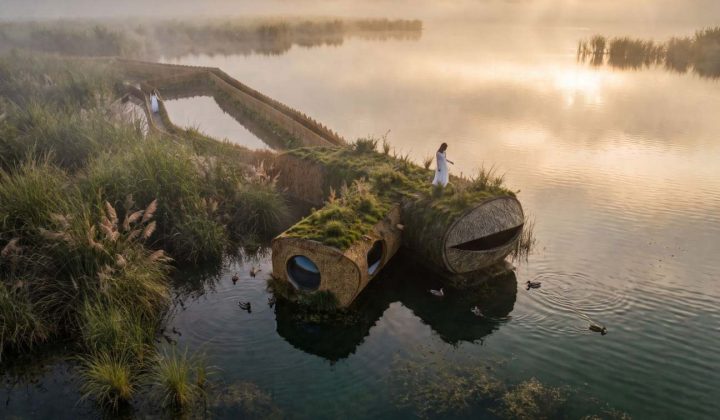
MIV Architects Proposes Wetland Pavilion That Prioritizes Non-Human Habitats Over Human Comfort
The Spanish firm’s “Nidos de Agua” concept for the Albufera natural park in Valencia aims to rebalance the relationship between building and…
Read more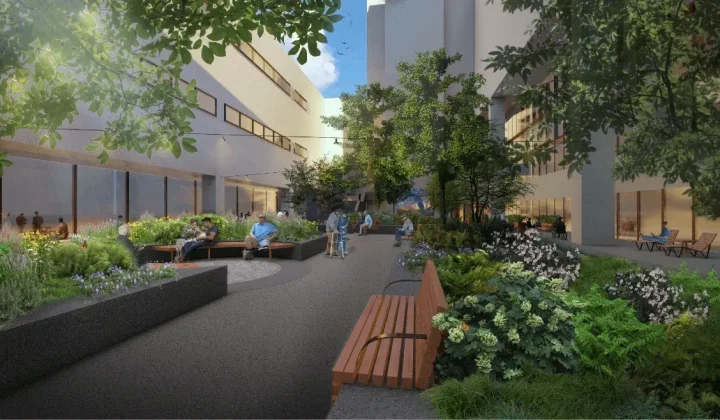
Nelson Byrd Woltz Begins Construction on Restorative Eagle Courtyard at Walter Reed Medical Center
Construction has started on a redesigned Eagle Courtyard at Walter Reed National Military Medical Center, led by Nelson Byrd Woltz Landscape Architects.…
Read more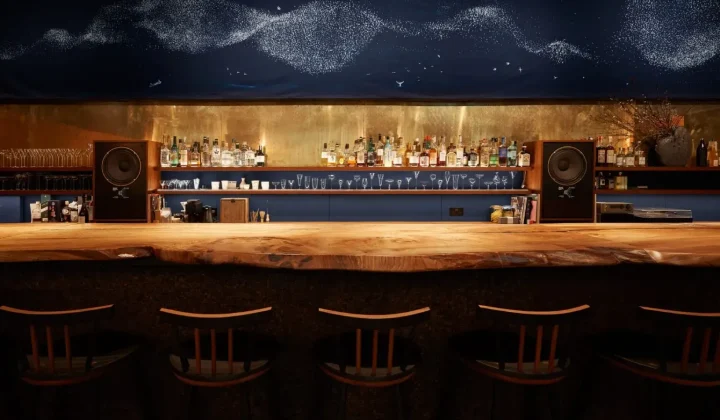
London’s listening bar boom reflects a deeper shift in hospitality design and music culture
A wave of Japanese-inspired listening bars is reshaping London’s nightlife, but owners and critics are asking whether the concept can survive commercial…
Read moreRelated wiki

Adaptive Reuse in Architecture
Reference page for reuse, retrofit, conversion, embodied carbon and design constraints.
Read more