
Beyond Recycling: Innovative Sustainable Building Materials for Circular Urban Development
Circular building materials are not just products with recycled content. They require evidence, careful detailing, and systems that support reuse, repair, recovery, and lower waste.
Summary
Circular building materials are best understood as part of a wider resource-efficiency approach: they may involve reuse, recycled content, renewable inputs, recoverable assemblies, or design choices that reduce waste across a building’s life. The practical test is not whether a material sounds sustainable, but whether its claims can be verified for the specific project, assembly, and local context.
Best takeaway: treat circularity as a design-and-evidence question, not a label. Before specifying, approving, or promoting a material, ask what is being claimed, what proof supports it, and what happens when the building is altered, repaired, or dismantled.
What Happened: Circular Materials Are Moving Beyond Recycling
Sustainable material discussions in architecture and urban development are increasingly framed around circular economy ideas rather than recycled content alone. That shift matters because resource efficiency, waste management, and recycling are connected parts of a broader system, especially in cities where construction, renovation, infrastructure, and demolition all shape material demand.
Recycling remains important, but it is only one route. A circular approach can also include reusing existing components, choosing assemblies that can be taken apart, designing for repair, reducing unnecessary material use, and documenting materials so they can be recovered later.
Recycling Is Only One Part of Circular Construction
A product made with recycled content may still be difficult to repair, separate, reuse, or recycle again if it is bonded into a complex assembly. Conversely, a reused component may offer circular value because it keeps an existing material in service, but it still needs project-specific checks for safety, performance, traceability, and suitability.
Why Urban Development Changes the Material Question
Cities concentrate buildings, infrastructure, renovation cycles, and waste streams, so material decisions affect more than individual projects. UNEP treats cities as a resource-efficiency priority, which supports looking at construction materials through an urban systems lens rather than as isolated product choices.
Why It Matters
Circular material choices can help designers and clients ask better questions about extraction, manufacturing, transport, installation, maintenance, demolition, and recovery. They do not automatically guarantee lower impact, because outcomes depend on evidence, design details, local supply, and end-of-life planning.
For readers interested in architecture and design, the useful distinction is between a material claim and a material system. A material claim might say a product is recycled or innovative; a material system explains how it is sourced, installed, maintained, removed, documented, and recovered.
What Circular Building Materials Actually Mean
Circular building materials can include reused products, recycled-content products, recoverable assemblies, and materials selected to reduce waste or support resource efficiency. The category is broad, so each claim needs to be checked against the specific evidence available for that product, supplier, project, and place.
Common Strategies to Compare
| Circular material strategy | What it can support | Useful applications | Evidence to request | Main caution |
|---|---|---|---|---|
| Reused components | Keeps existing materials in service | Interiors, structure where approved, fixtures, facade elements | Traceability, condition records, technical assessment | Supply and compliance can vary by project |
| Recycled-content products | Uses recovered material as feedstock | Panels, tiles, finishes, aggregates, selected components | Recycled-content documentation and product data | Recycled content does not prove future recyclability |
| Design-for-disassembly assemblies | Makes later removal and recovery more feasible | Modular interiors, dry construction, reversible fixings | Assembly details, maintenance plan, recovery pathway | Adhesives and coatings can limit recovery |
| Resource-efficient specification | Reduces unnecessary material demand | Retrofit, adaptive reuse, leaner assemblies | Design rationale and performance documentation | Less material must still meet project needs |
| Documented material systems | Improves future identification and recovery | Larger buildings, portfolios, public projects | Material schedules, product records, handover data | Documentation must remain accessible over time |
This comparison is a screening tool, not a performance ranking. The strongest material choice is usually the one that fits the building brief, meets technical requirements, and has credible evidence for the circular benefit being claimed.
What Is Confirmed
Circular construction is confirmed as a systems issue rather than a single-product issue. The verified sources support a cautious connection between cities, resource efficiency, waste management, recycling, and circular economy thinking, but they do not support universal claims that any one material type is always sustainable.
It is also confirmed that architecture and design audiences encounter these issues through the built-environment media ecosystem, including specialist architecture publications. That makes careful sourcing important: trend coverage can introduce materials, but specification-level claims still need primary or technical evidence.
Confirmed: Evidence Matters More Than Labels
Terms such as circular, recycled, sustainable, low-waste, and innovative are not enough on their own. For publication, procurement, or specification, the important question is what evidence supports the claim and whether that evidence applies to the actual use case.
Confirmed: Some Claims Need Extra Caution
Claims about structural performance, fire safety, toxicity, durability, carbon impact, or code compliance should not be generalized from broad sustainability language. Those claims need product-specific or project-specific documentation before they are treated as reliable.
Practical Checklist Before Specifying or Endorsing a Circular Material
- Define the claim clearly: is the circular benefit reuse, recycled content, waste reduction, recoverability, repairability, or another resource-efficiency measure?
- Ask for evidence: request product data, technical documentation, and project-specific verification where performance or compliance is being claimed.
- Check the assembly, not only the product: fixings, coatings, adhesives, finishes, and maintenance needs can affect reuse or recovery.
- Test the local context: availability, transport, skills, regulation, and recovery infrastructure can change whether a circular strategy is practical.
- Plan the end of life early: specify how materials should be maintained, removed, identified, reused, recycled, or responsibly managed.
- Avoid absolute language: claims such as fully circular, zero waste, or universally sustainable need strong evidence and careful boundaries.
What May Change Next
The next phase of circular material practice is likely to depend on better documentation, stronger verification, clearer procurement requirements, and more mature reuse infrastructure. Those areas can influence whether circular materials move from promising examples to repeatable urban development practice.
Better data may also change how materials are discussed in architecture media and design guidance. As readers, clients, and project teams ask more precise questions, vague sustainability language becomes less useful than transparent evidence about sourcing, performance, waste, and recovery.
Image and Visual Direction
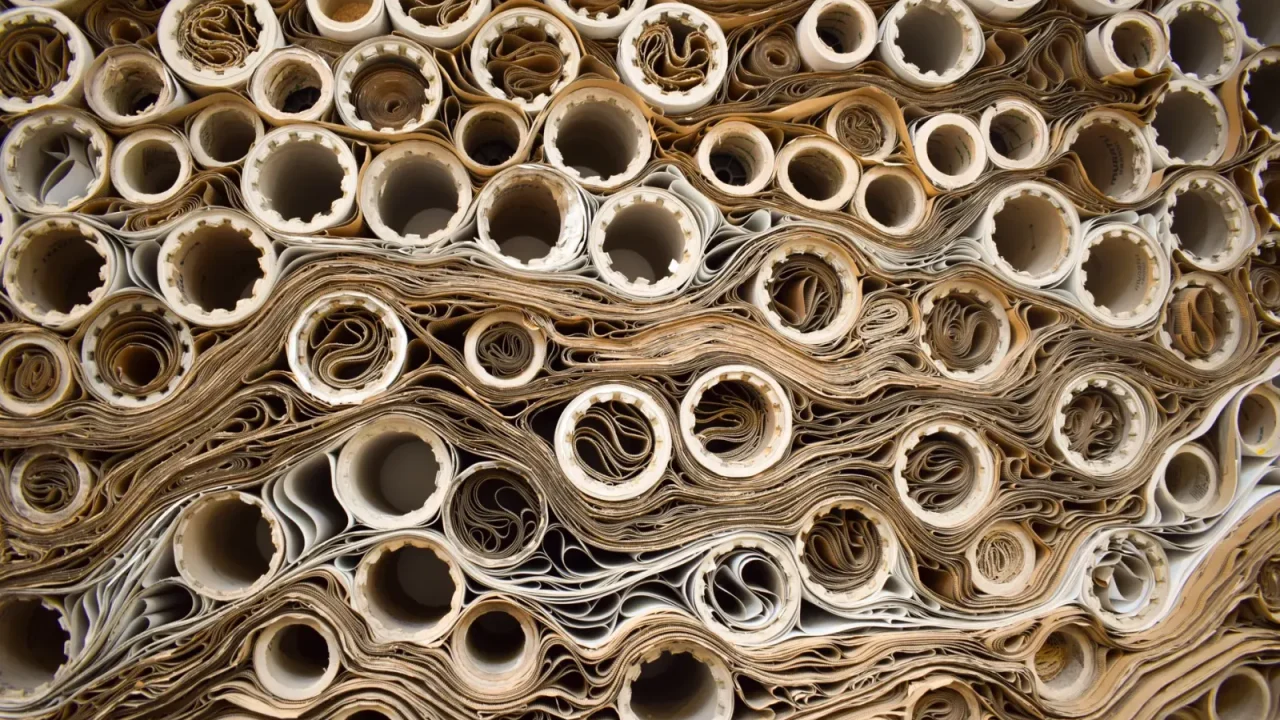
Use a factual image of material reuse, reclaimed building components, a documented circular construction process, or a built environment material store. Avoid generic green-city imagery unless the caption makes clear that it is illustrative and does not imply verified environmental performance.
Suggested alt text: “Reclaimed building materials arranged for reuse in a construction or design setting.”
Suggested caption: “Circular material strategies depend on documentation, practical reuse pathways, and project-specific evidence.”
Sources
Related news

Handwoven Teak and Cord Outdoor Seating Debuts from Masaya and Abril Zepeda
Nicaraguan furniture brand Masaya has introduced two new handcrafted outdoor chairs — a rocking chair and a lounge chair — designed by…
Read more
Place in Mind: Hendricks Churchill Launches Hospitality Group to Revive Historic Properties
The architecture and interior design studio Hendricks Churchill has launched Place in Mind, a new hospitality group focused on acquiring, restoring, and…
Read more
Adalberto Dias Architects Complete Restoration of Lisbon’s Patriarchal Cathedral and Archaeological Center
The restoration of the Sé de Lisboa by Adalberto Dias Arquitecto integrates a new archaeological center, preserved cloisters, and seven centuries of…
Read more
Vantieghem Talebi’s ‘House of Cards’ Brings Timber Geometry to Belgian Family Home
A new family house in Belgium by US- and Swiss-based practice Vantieghem Talebi uses a steeply pitched, card-house-inspired form clad in Douglas-fir…
Read moreRelated wiki

Adaptive Reuse in Architecture
Reference page for reuse, retrofit, conversion, embodied carbon and design constraints.
Read more