
Emmanuel Boos Finds Beauty in Porcelain’s Resistance
At his New York exhibition "Noir C'est Noir," French ceramicist Emmanuel Boos reveals how he embraces the unpredictable nature of porcelain, turning material 'failures' into unique functional art.
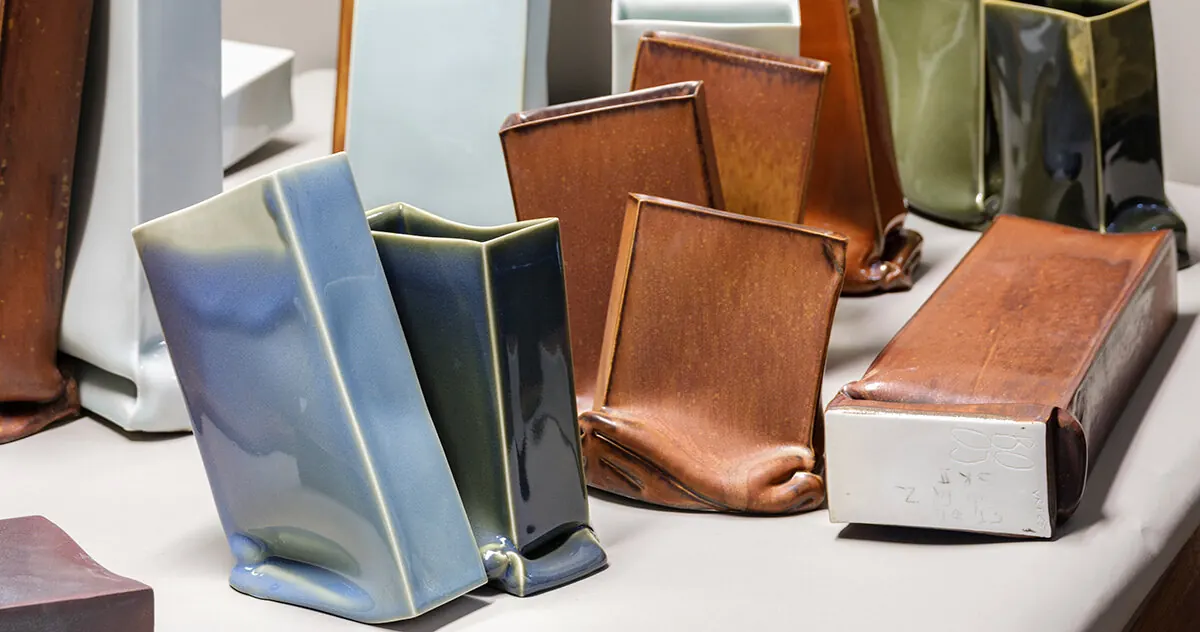
Emmanuel Boos, a French ceramicist, is redefining the pursuit of perfection in his debut solo exhibition in the United States, “Noir C’est Noir,” currently on display at Raisonné in New York. The exhibition presents a compelling collection of tables, stools, vases, and modular architectural elements, all crafted from porcelain. Boos intentionally embraces and celebrates what might be considered material “errors” or imperfections, transforming them into integral design features.
Embracing the Unpredictable Nature of Porcelain
Boos views porcelain not as a malleable substance to be entirely controlled, but as a material with its own inherent will and memory. He describes it as “stubborn,” prone to warping, developing pools of excess glaze, and slumping in ways that require pieces to lean on each other for stability. Rather than striving to correct these emergent qualities, Boos integrates them into the final forms. He believes that the true aesthetic value lies in the visible evidence of the creative process and the material’s natural behavior. This philosophy marks a departure from his early education in modernism, which championed the idea of an artist or designer dominating nature.
A Global Journey in Ceramics
Boos’s fascination with ceramics began during an exchange program in the United States, at a time when the medium held a less prominent status in France. “At that time, it wasn’t very popular in France. We’re very cerebral, we don’t do a lot of things with our hands,” he recalled in an interview with Designboom. His artistic path subsequently led him through China and South Korea, followed by apprenticeships in Paris and Burgundy. His doctoral research at the Royal College of Art delved deeply into the complexities of glazes, a subject that remains a cornerstone of his artistic practice.
Challenging Conventional Notions of Perfection
Boos contrasts his approach with the more traditional methods he observed during a residency at Sèvres, a renowned French porcelain manufactory. There, he witnessed a painstaking process of correcting porcelain after firing through extensive polishing, straightening, and repainting. Boos views this meticulous refinement as creating a “facade,” obscuring the inherent character of the material. In contrast, his work magnifies the traces of the making process, embracing the subtle imperfections that reveal the material’s journey.
The Beauty in Imperfection
Boos’s philosophy extends to the surface treatments of his work. He describes how faint compression lines, a byproduct of the slab-rolling process, remain visible on some tables. Despite attempts to erase them through polishing and sanding, the lines persisted, leading Boos to appreciate their resemblance to “the way water moves on sand.” Similarly, he cherishes small marks left by the glaze gun, seeing them as a “memory of the process, and then a game.”
Geometric Forms and Material Dialogue
Boos employs geometric forms and simple volumes not to impose order, but to make the material’s deviations more apparent. “Why do I choose geometric forms?” he muses, observing the uneven edges of a table. “Because you see the intent was to make something geometrical, but then you see that it didn’t happen. And I think exactly in that difference lives the material.” This interplay between intention and material response is central to his artistic dialogue.
Functionality with a Twist
The pieces in “Noir C’est Noir” are designed to be functional, yet they incorporate elements that subtly question that very functionality. Tables can hold a drink, but their uneven surfaces and occasional gaps invite a more conscious interaction. Vases might lean or fold, requiring a closer look at how they hold their contents. This deliberate awkwardness, Boos suggests, moves use from an automatic act to a more engaging relationship between object and user.
Mastery Through Understanding, Not Control
Boos emphasizes that his embrace of imperfection is not a surrender to chance but a result of deep technical knowledge. He understands how glazes will behave, where they will thin, how slight variations in height affect color, and how firing atmospheres alter tonal qualities. “Only the maker can make such a decision, because it’s informed by process, by practice, and not by the idea of design,” he states. He is even hesitant to fully embrace the title of “designer,” preferring to identify as a maker of porcelain and glaze, suggesting that design often precedes the intimate understanding gained through hands-on practice.
Source: Designboom, https://www.designboom.com/design/emmanuel-boos-porcelain-failure-beauty-losing-control-ceramic-raisonne-new-york/
Datos clave
| Punto | Detalle |
|---|---|
| Fuente | Designboom |
| Fecha | 2026-07-02T01:30:53+00:00 |
| Tema | ‘I can’t dominate it’: emmanuel boos on porcelain, failure, and the beauty of losing control |
Source
Designboom Original publication: 2026-07-02T01:30:53+00:00
Related news

Handwoven Teak and Cord Outdoor Seating Debuts from Masaya and Abril Zepeda
Nicaraguan furniture brand Masaya has introduced two new handcrafted outdoor chairs — a rocking chair and a lounge chair — designed by…
Read more
Place in Mind: Hendricks Churchill Launches Hospitality Group to Revive Historic Properties
The architecture and interior design studio Hendricks Churchill has launched Place in Mind, a new hospitality group focused on acquiring, restoring, and…
Read more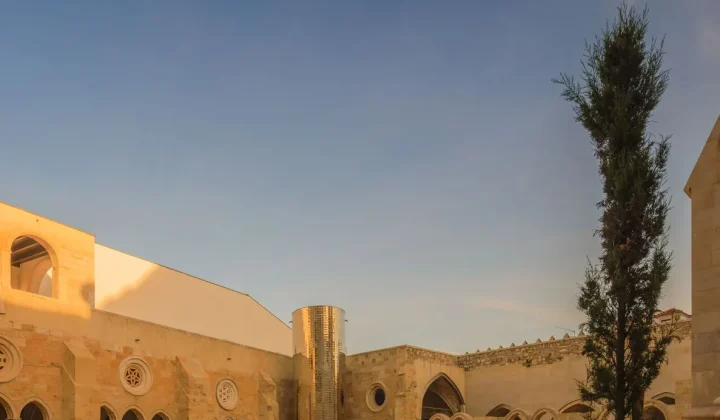
Adalberto Dias Architects Complete Restoration of Lisbon’s Patriarchal Cathedral and Archaeological Center
The restoration of the Sé de Lisboa by Adalberto Dias Arquitecto integrates a new archaeological center, preserved cloisters, and seven centuries of…
Read more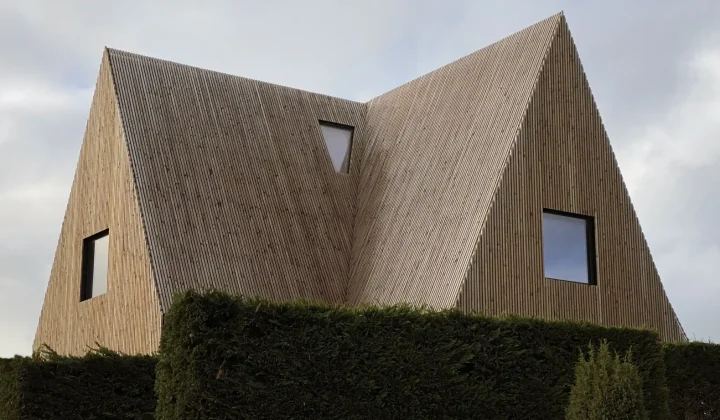
Vantieghem Talebi’s ‘House of Cards’ Brings Timber Geometry to Belgian Family Home
A new family house in Belgium by US- and Swiss-based practice Vantieghem Talebi uses a steeply pitched, card-house-inspired form clad in Douglas-fir…
Read moreRelated wiki
Adaptive Reuse in Architecture
Reference page for reuse, retrofit, conversion, embodied carbon and design constraints.
Read more