
Lake Verea Explores Queerness and Intimacy in Midcentury Palm Springs Architecture
An exhibition at the Palm Springs Art Museum, "Lake Verea: DarkRooms and Other Games," uses experimental photography to reveal hidden narratives of queer intimacy and interaction within iconic midcentury homes.
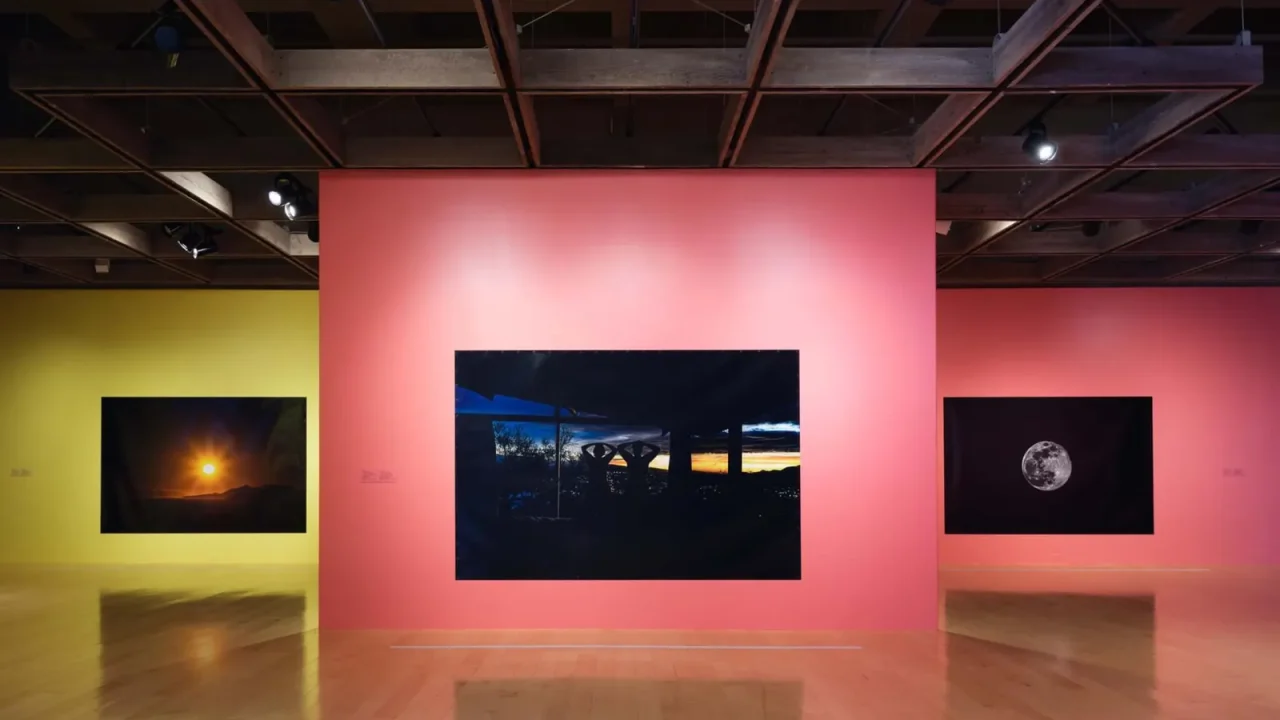
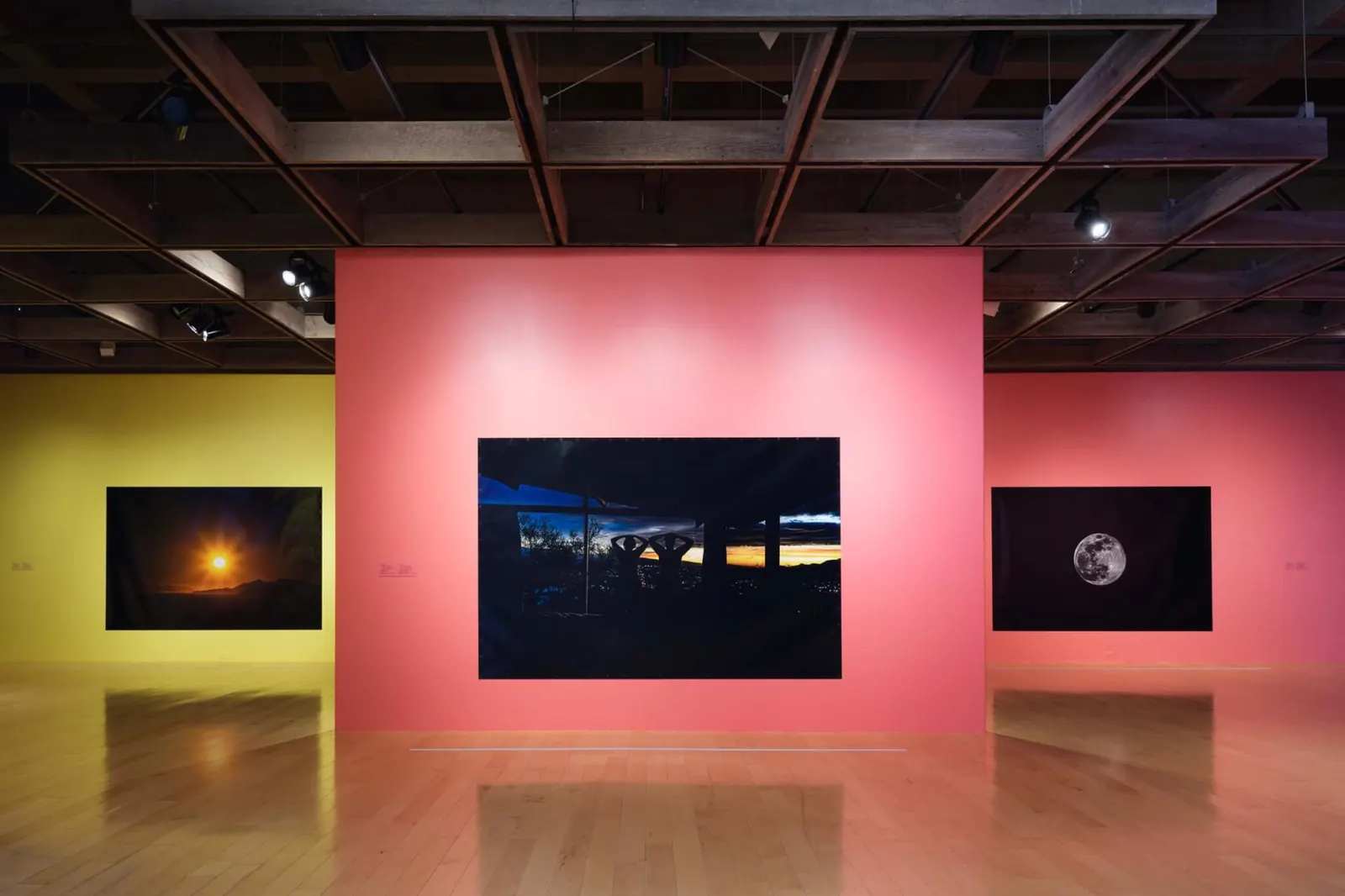
The Palm Springs Art Museum is currently hosting “Lake Verea: DarkRooms and Other Games,” an exhibition that delves into the intersection of queerness, intimacy, and the celebrated midcentury architecture of Palm Springs. The exhibition features the work of Mexico City-based artists Francisca Rivero-Lake and Carla Verea, who use experimental portraiture to capture a new perspective on these iconic homes.
Exploring Domestic Spaces After Dark
The exhibition’s core concept revolves around re-imagining how domestic spaces within midcentury architectural landmarks are experienced. Lake Verea’s photographic approach often places themselves, dressed in black, as obscured subjects within the frames of renowned houses like Richard Neutra’s Kaufmann House and Albert Frey’s Frey House II. This technique, combined with flash photography, aims to simulate the experience of exploring these homes in the middle of the night, illuminated only by a flashlight.
“By inhabiting and photographing these modern homes, they raise an unspoken question: Just what happens in these domestic spaces in the moonlit hours?” noted Mimi Zeiger, the exhibition’s guest curator. This framing encourages viewers to consider the lives and interactions that might have unfolded within these architectural settings beyond daylight hours.
Materiality and Moonlight
A particular focus is placed on the Albert Frey-designed Aluminaire House. The artists capture its aluminum facade under moonlight, drawing the viewer’s attention to the material’s subtle textures and curvature. This deliberate use of soft light shifts the focus from the building’s overall angularity to the tactile qualities of its construction, inviting a closer appreciation of its materiality.
“Lake Verea’s approach to the subversion of icon and domesticating works by Neutra and Frey ‘invites us to slow down and reconsider these architectural landmarks, revealing how design can be experienced through atmosphere, time, and human presence,’” stated Christine Vendredi, JoAnn McGrath Executive Director of Palm Springs Art Museum. This perspective highlights how art and photography can offer new interpretations of established architectural works.
Frottage as Architectural Exploration
Complementing the photographic works are pieces the artists call “frottragaphy.” These are 60-by-60 centimeter aluminum works created using a frottage technique, where the material is rubbed across architectural surfaces. These pieces serve as extensions of the exhibition’s narrative, exploring how replication and documentation can comment on architectural history. By emphasizing materiality through touch, these works offer a different way to engage with the essence of the architectural forms.
Exhibition Context and Initiatives
“DarkRooms and Other Games” is part of the Palm Springs Art Museum’s A+D and Q+ art initiative, which merges its architecture and design programs with its LGBTQ+ initiatives. This integration underscores the exhibition’s thematic exploration of queerness within the built environment and its cultural context. The exhibition is on view until September 13.
Key facts
| Feature | Detail |
|---|---|
| Exhibition Title | Lake Verea: DarkRooms and Other Games |
| Location | Palm Springs Art Museum |
| Dates | May 9, 2026 – September 13, 2026 |
| Artists | Lake Verea (Francisca Rivero-Lake and Carla Verea) |
| Focus | Queerness, intimacy, and interaction within midcentury architecture |
This exhibition is significant for Paionia7 readers as it offers a unique lens through which to view and understand iconic midcentury architecture, moving beyond purely aesthetic or functional analyses to explore themes of identity, human presence, and the hidden narratives within celebrated built spaces. It highlights how artistic interpretation can deepen our appreciation of architectural heritage.
Source: The Architect’s Newspaper – https://www.archpaper.com/2026/07/darkrooms-games-queerness-interaction-midcentury-architecture/
Source
The Architect's Newspaper Original publication: 2026-07-06T20:04:08+00:00
Related news
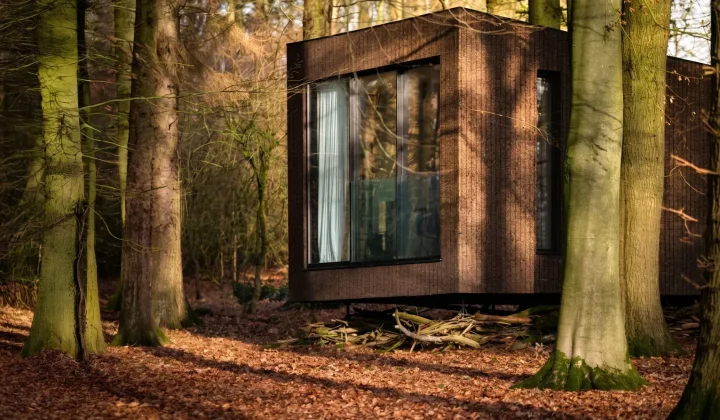
Koto launches Haku, a mobile prefab hotel suite built on a wheeled chassis to bypass UK planning restrictions
UK architecture studio Koto has unveiled Haku, a fully mobile prefabricated suite that legally qualifies as a caravan, allowing landowners and hotel…
Read more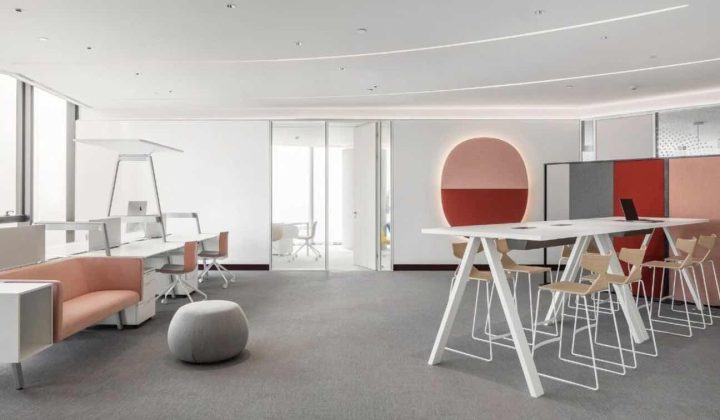
HONG Designworks Completes Private Office in Xi’an That Balances Memory, Materiality, and Long-Term Use
The Xi’an office by HONG Designworks integrates a folded steel staircase, retained furniture from a previous workspace, and a restrained purple-gray palette…
Read more
Handwoven Teak and Cord Outdoor Seating Debuts from Masaya and Abril Zepeda
Nicaraguan furniture brand Masaya has introduced two new handcrafted outdoor chairs — a rocking chair and a lounge chair — designed by…
Read more
Place in Mind: Hendricks Churchill Launches Hospitality Group to Revive Historic Properties
The architecture and interior design studio Hendricks Churchill has launched Place in Mind, a new hospitality group focused on acquiring, restoring, and…
Read moreRelated wiki

Adaptive Reuse in Architecture
Reference page for reuse, retrofit, conversion, embodied carbon and design constraints.
Read more